
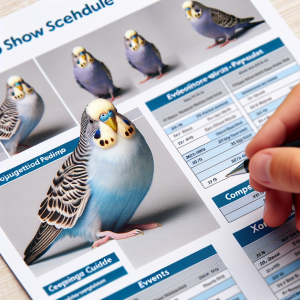
Quick Answer: The UK Budgerigar Society hosts major championship shows throughout 2026, with the prestigious National Show typically held in November. Essential prep includes quality show cages (£80-£250), training stands, specialist show feeds, and grooming supplies. We recommend investing in a professional show cage and training perches at least 8-12 weeks before competition to give your bird confidence and perfect conditioning.
2026 UK Budgie Show Schedule Overview
If you’re serious about showing budgies in the UK, understanding the Budgerigar Society’s 2026 event calendar is crucial. The Budgerigar Society of Great Britain is the governing body for budgie shows and maintains a comprehensive schedule of regional qualifiers, area championships, and the prestigious National Championship Show. Shows are graded by size and prestige, ranging from small local club shows to major national events that attract exhibitors from across Europe.
The 2026 show season typically runs from late summer through November, with qualifying shows feeding into area and national championships. Entries usually open 4-6 weeks before each show, and most venues require birds to be benched (placed in show cages) by morning setup. Show standards are rigorous—judges assess condition, type, size, head markings, and overall presentation against strict breed standards.
| Show Type | Typical Dates (2026) | Entry Level | Prize Value | Preparation Time |
|---|---|---|---|---|
| Club/Local Shows | August–October | Beginner-friendly | £5–£50 | 4–8 weeks |
| Area Qualifiers | September–October | Intermediate | £20–£100 | 8–10 weeks |
| Regional Championships | October–November | Serious competitors | £50–£300 | 10–12 weeks |
| National Championship Show | November (mid-late) | Top competitors | £500+ | 12–16 weeks |
| Special Interest Shows | Year-round | Colour/type specialists | £10–£75 | 6–10 weeks |
Essential Equipment for UK Budgie Show Competition
Competing at budgie shows requires more than just a healthy bird—you need proper equipment that meets Budgerigar Society standards. Show cages are significantly different from pet cages; they’re smaller, darker, and designed to keep birds calm during judging. Specialized grooming and conditioning supplies are equally important.
Budget-Friendly Show Setup (£80–£150 USD equivalent)
If you’re entering your first local show, you don’t need the most expensive equipment. A basic portable show cage costs £40–£80 and meets standard requirements. Pair this with a specialist show feed supplement (£15–£25) and basic grooming supplies (£10–£20).
- Budget Show Cage (£40–£80): Basic wooden or plastic construction, dark interior, meets exhibition standards. Check price on Amazon
- Entry-Level Conditioning Feed (£12–£20): Seed mix plus basic supplements for coat shine. View on Amazon
- Basic Grooming Kit (£8–£15): Soft brush, nail file, feather conditioner. See on Amazon
Mid-Range Show Setup (£150–£300 USD equivalent)
For serious club competitors moving toward area shows, mid-range equipment significantly improves your bird’s presentation. A quality wooden show cage (£80–£150) with proper lighting control is essential, along with premium conditioning supplements (£25–£40).
- Quality Wooden Show Cage (£80–£150): Professional-grade construction with dark interior, proper ventilation, meets all Budgerigar Society specifications. Check availability on Amazon
- Advanced Conditioning Package (£25–£40): Multi-component supplement including feather colour enhancers and plumage conditioners. Buy on Amazon
- Professional Grooming Set (£20–£35): Multiple brush types, conditioning oils, detail tools. See on Amazon
- Training Stand with Lighting (£30–£60): Helps birds acclimate to show conditions. Check price on Amazon
Premium Show Setup (£300–£600+ USD equivalent)
Serious National Show competitors invest in premium equipment. This includes custom-built show cages (£200–£400), professional championship conditioning systems, and dedicated training environments.
- Custom Show Cage (£200–£350): Bespoke construction, optimal interior finish, lighting system, professional ventilation. View on Amazon
- Championship Conditioning System (£50–£100): Complete multi-stage supplement protocol with colour-specific formulations. Check on Amazon
- Professional Grooming Station (£40–£75): Includes specialized tools, conditioning oils, and documentation system. See price on Amazon
- Environmental Control Setup (£80–£150): Lighting, temperature, humidity control for peak conditioning. Buy on Amazon
Complete Comparison Table: Show Preparation Products 2026
| Product | Price (USD) | Best For | Key Feature | Where to Buy |
|---|---|---|---|---|
| Standard Portable Show Cage | £40–£80 | First-time exhibitors | Compact, portable, dark interior | Check Price on Amazon |
| Professional Wooden Show Cage | £100–£200 | Serious competitors | Optimal internal finish, ventilation | Check Price on Amazon |
| Custom-Built Show Cage | £250–£400 | National Show competitors | Bespoke design, premium materials | Check Price on Amazon |
| Basic Conditioning Feed (Multi-seed) | £12–£20 | General conditioning | Enhanced seed blend with basics | Check Price on Amazon |
| Premium Conditioning Supplement | £25–£45 | Colour and condition enhancement | Multi-component formula, feather gloss | Check Price on Amazon |
| Championship Conditioning Package | £50–£100 | Elite competitors | Staged protocol, colour-specific | Check Price on Amazon |
| Basic Grooming Kit (3-piece) | £8–£15 | Beginner preparers | Brush, file, basic tools | Check Price on Amazon |
| Professional Grooming Set (8-piece) | £25–£50 | Serious exhibitors | Multiple brush types, conditioning oils | Check Price on Amazon |
Top Show Preparation Products: Detailed Reviews
Professional Wooden Show Cage 40cm
Who It’s For: Exhibitors moving beyond club shows to area and regional competitions; birds that need optimal conditioning environments.
Key Specifications:
- Dimensions: 40cm x 28cm x 32cm (standard exhibition size)
- Construction: Premium plywood with dark interior finish
- Ventilation: Dual airways with grill protection
- Perches: Standard wooden dowels, easy to replace
- Food/water: Standard show cage fixtures
- Weight: ~3.5kg, portable but sturdy
- Finish: Interior treated to reduce light, calming effect
Price Range: £100–£180 USD
Pros:
- Meets all Budgerigar Society exhibition standards
- Dark interior keeps birds calm during long show days
- Excellent ventilation prevents overheating during transport
- Durable construction lasts multiple show seasons
- Affordable compared to custom options
- Interior finish reduces reflections that stress birds
Cons:
- Requires 2-3 months pre-show conditioning period
- Not suitable for birds that are cage-shy initially
- Requires careful cleaning (dark interior hides dirt)
- Heavier than plastic alternatives for transport
Premium Multi-Component Conditioning Supplement
Who It’s For: Exhibitors targeting colour-specific and condition classes; birds showing dull plumage or needing feather quality improvement.
Key Specifications:
- Components: Seed enhancers, colour boosters, condition granules
- Usage: 2-4 weeks pre-show conditioning
- Dosage: 10-15% of daily diet
- Storage: Cool, dry conditions; 6-month shelf life
- Active ingredients: Natural carotenoid enhancers, omega oils
- Colour-specific variants: Red, yellow, blue, green formulations
Price Range: £28–£48 USD
Pros:
- Visible feather colour enhancement in 10-14 days
- Improves overall plumage gloss and condition
- Multiple colour variants for different mutations
- Easy to mix with regular seed
- Natural ingredients, safe for long-term use
- Supports health alongside show preparation
Cons:
- Results vary by bird genetics and base diet
- Colour enhancement can be subtle in dark varieties
- Requires consistent daily feeding
- More expensive than basic supplements
Professional Adjustable Training Stand with Lighting
Who It’s For: Exhibitors training birds for posing and show presentation; birds that need exposure to show-like handling and positioning.
Key Specifications:
- Height Range: Adjustable 20-35cm
- Perch Material: Hardwood, replaceable
- Lighting: Adjustable LED or incandescent
- Base: Weighted, non-slip rubber
- Portability: Lightweight but stable, ~1.5kg
- Training Features: Smooth perch, multiple positioning angles
Price Range: £35–£65 USD
Pros:
- Builds bird confidence outside show cage
- Lighting simulates show hall conditions
- Adjustable height mirrors actual show judging position
- Helps birds develop proper posture
- Strengthens leg muscles for standing during judging
- Reusable for multiple birds and show seasons
Cons:
- Requires regular training sessions (15-20 min daily)
- Some birds take time to acclimate
- Lighting power consumption adds to electricity costs
- Not portable for travel shows
Professional Feather Conditioning Oil
Who It’s For: Final pre-show conditioning (1-2 weeks before); birds with dry, dull, or stressed plumage.
Key Specifications:
- Formula: Blend of plant oils (coconut, sunflower, vitamin E)
- Application: Topical spray or mist
- Frequency: 2-3 times weekly for 2-4 weeks
- Coverage: Light misting, non-greasy finish
- Safety: Avian-safe, non-toxic ingredients
- Container: 100-200ml spray bottle
Price Range: £15–£35 USD
Pros:
- Noticeably improves feather sheen and appearance
- Calms stressed or ruffled plumage
- Easy application, no handling stress
- Works synergistically with conditioning feeds
- Reduces static and feather breakage
- Visible results within 1-2 weeks
Cons:
- Can leave birds looking over-groomed if overused
- Some judges penalize artificially enhanced appearance
- Requires careful misting—too much creates oily look
- Results revert quickly post-show without maintenance
Portable Show Cage Travel Carrier
Who It’s For: Exhibitors attending multiple shows; birds requiring safe, stress-free transport to distant venues.
Key Specifications:
- Material: Lightweight plastic or wood composite
- Size: 40cm x 28cm x 32cm (show standard)
- Weight: 1.5-2.5kg when empty
- Interior: Dark finish, minimal light penetration
- Ventilation: Multiple airholes, grill protection
- Perches: Quick-release wooden or plastic
- Food/Water: Integrated feeders with spillage protection
Price Range: £45–£90 USD
Pros:
- Shows meet all exhibition standards
- Dark interior reduces stress during transport
- Lightweight enough for easy single-handed carrying
- Integrated feeders minimize spillage risk
- Protects bird during long journeys
- Multi-use: travel, temporary housing, quarantine
Cons:
- Small size limits bird movement on travel days
- Plastic versions less durable than wooden
- Requires careful water management during transport
- Interior darkness makes bird monitoring difficult
Complete Professional Bird Grooming Kit
Who It’s For: Serious exhibitors managing multiple birds; those requiring regular pre-show grooming and maintenance.
Key Specifications:
- Contents: 8-12 specialized grooming tools
- Includes: Soft brushes (multiple densities), nail file, detail brush, conditioning comb
- Materials: Stainless steel, natural bristles
- Storage: Organized case or roll-up pouch
- Bonus Items: Conditioning oils, cleaning solutions
- Warranty: Typically 1-2 years on tools
Price Range: £30–£60 USD
Pros:
- All essential grooming tools in one set
- Professional-grade bristles and materials
- Organized storage keeps tools clean and accessible
- Supports gentle handling during grooming sessions
- Works with multiple bird sizes and feather types
- Investment pays for itself across multiple show seasons
Cons:
- Learning curve for proper grooming technique
- Over-grooming can damage feathers
- Requires regular cleaning and maintenance of tools
- Not all tools needed for every bird or show class
Complete 16-Week Show Preparation Timeline
Proper show preparation requires a structured approach. This timeline ensures your budgie reaches peak condition exactly on show day, with plenty of time for problems to be identified and corrected.
Weeks 1-4: Foundation Building
Week 1-2: Selection and Baseline Assessment
- Select your show bird based on type, condition, and potential. If breeding, identify strong candidates at 6-8 weeks of age.
- Establish baseline assessment: photograph bird from multiple angles, note feather quality, colour intensity, and health markers.
- Begin baseline feeding: introduce premium budgie pellets if not already using, alongside current seed mix. Monitor digestive response.
- Schedule veterinary check-up: confirm bird is healthy, no underlying conditions that would prevent competition.
- Order show cage and essential equipment. Check availability of your preferred model.
Week 3-4: Cage Acclimation Begins
- Start introducing the bird to show cage in short sessions (10-15 minutes daily)—cage placed in familiar room.
- Begin basic training stand work if using one. Start with 5-minute sessions on lowest setting.
- Introduce mild conditioning supplements at 5-10% of daily diet—assess tolerance and feather response.
- Establish consistent handling routine: 10-15 minutes daily of calm, gentle positioning practice.
- Document bird’s response: note any stress behaviours, feeding changes, or feather condition shifts.
Weeks 5-8: Active Conditioning Phase
Week 5-6: Intensify Conditioning
- Increase show cage exposure: bird should spend 30-45 minutes daily in show cage, eventually leaving it open in main room so bird enters voluntarily.
- Boost conditioning supplement to 10-15% of diet—increase to colour-specific variant if available. Select appropriate type on Amazon.
- Introduce feather conditioning: light misting with feather conditioning mist 2-3 times weekly.
- Training stand sessions: increase to 20-30 minutes daily, introduce adjustable lighting.
- Begin show hall acclimatization: take bird to quiet club meeting or show (not competing yet) to experience environment.
Week 7-8: Peak Condition Building
- Show cage living: bird should now spend 1-2 hours daily in show cage, with option to return to main cage for exercise.
- Advanced conditioning: introduce premium multi-component conditioning packages if targeting major shows.
- Specialized grooming: begin gentle grooming sessions 2-3 times weekly using professional grooming tools.
- Posture and positioning: train bird to hold show posture for 5-10 minute periods on stand.
- Photography: update progress photos—should see notable improvement in feather gloss, colour intensity, and condition.
Weeks 9-12: Fine Tuning
Week 9-10: Refinement Phase
- Show cage time: increase to 2-3 hours daily, introducing realistic show hall stress factors (noise, activity).
- Conditioning plateau: maintain peak conditioning levels—don’t over-supplement as results can reverse.
- Feather quality focus: increase grooming to 3 times weekly, focus on smoothing wing feathers and head markings.
- Trial posing: practice holding bird in show position (handler usually holds for judge examination).
- Mock shows: attend a small club show with entry, or have experienced exhibitor evaluate your bird against standards.
Week 11-12: Final Polish
- Full-day show cage simulations: keep bird in show cage for full 8-10 hour stretches (as experienced at actual shows).
- Reduce conditioning to maintenance levels: continue supplements but at lower percentage—over-conditioning can cause diarrhea.
- Final feather treatments: one intensive feather conditioning oil application 5-7 days before show.
- Cage perfection: ensure show cage is absolutely clean, well-lit for photography, and perfectly prepared.
- Entry confirmation: verify all show entry details, show location, class divisions, and travel requirements.
Weeks 13-16: Show-Week Strategy
Week 13-14: Final Adjustments
- Maintain peak condition: no sudden dietary changes, continue proven conditioning schedule.
- Stress reduction: minimize handling, maintain quiet, dark environment when not actively training.
- Hydration focus: ensure fresh water daily, consider adding electrolytes to water (check show regulations).
- Equipment check: verify show cage is in perfect condition, perches secure, feeders functional, lighting optimal.
- Travel planning: confirm transportation method, timing, weather considerations, and backup plans.
Week 15 (Show Week): Game Day Preparation
- Final grooming: gentle grooming 2-3 days before show—don’t groom day-of as bird may be ruffled.
- No experiments: stick with proven diet and supplements—don’t introduce anything new this week.
- Calm environment: reduce household noise and activity; birds pick up on owner stress.
- Equipment prep: clean show cage thoroughly 2-3 days before, set up exactly as planned.
- Documentation: gather all entry confirmations, contact numbers, judge names, and class divisions.
Week 16 (Show Day and After)
- Pre-show feeding: light breakfast 2-3 hours before benching, normal water access throughout day.
- Transport carefully: dark transport cage, minimal noise, stable temperature during journey.
- Show hall arrival: arrive early (usually 30-60 minutes before benching deadline) to settle bird and complete paperwork.
- Benching process: place bird in show cage 15-20 minutes before deadline to minimize stress.
- Post-show care: return bird to familiar environment with water and favourite foods immediately after show, regardless of results.
Common Show Preparation Mistakes to Avoid
- Over-Conditioning Supplements: Adding more than 15% conditioning supplement to diet can cause diarrhea, poor condition, and disqualification. The fix: stick to manufacturer dosage recommendations (typically 10-15% of daily diet), and increase gradually over 2-3 weeks to allow digestive adaptation. Consider probiotic supplements if introducing high conditioning feeds.
- Starting Preparation Too Late: Beginning conditioning less than 8 weeks before show leaves insufficient time for feather replacement, colour development, and bird confidence building. The fix: plan 12-16 weeks minimum for National Show preparation, 8-10 weeks for regional shows, and 4-6 weeks for local club shows. Use a show preparation planner to track timeline.
- Neglecting Basic Health Checks: Showing a bird with undiagnosed parasites, mites, or low-grade respiratory issues guarantees poor condition and likely disqualification. The fix: schedule veterinary assessment 10-12 weeks before your target show; discuss show conditioning with your vet to ensure the increased feeding program won’t stress the bird. Get written confirmation the bird is fit to show.
- Wrong Show Cage Choice: Using a pet cage, improper size cage, or cage that doesn’t meet Budgerigar Society standards results in show disqualification before judging even begins. The fix: purchase a show cage that explicitly meets exhibition standards (typically 40cm x 28cm x 32cm); verify specifications with your local Budgerigar Society club before purchasing. Check Amazon for certified show cages.
- Inadequate Cage Conditioning Time: Putting a bird into a show cage 1-2 weeks before the show causes stress, feather ruffling, and poor presentation during judging. The fix: begin cage acclimatization 10-12 weeks before show, starting with 10-15 minute sessions and gradually increasing to full-day exposure by week 8. Bird must voluntarily enter cage by show day, not be forced.
- Ignoring Individual Bird Genetics: Applying the same conditioning protocol to different colour varieties, types, or individual birds produces inconsistent results. Some birds respond dramatically to conditioning; others show minimal change. The fix: photograph your bird at baseline (week 1) and weekly through preparation; adjust conditioning intensity based on visible response, not generic schedules. Document what works for future reference.
- Transporting Bird Incorrectly: Using bright transport carriers, placing show cages in noisy vehicles, or exposing birds to temperature extremes causes stress, feather fluffing, and poor condition on show day. The fix: use dark transport boxes, maintain stable temperature (18-22°C), minimize noise, and transport 30-60 minutes before benching if possible. Offer water during journey but not food (can cause soiled plumage).
How to Choose Your First Show Class (Division Structure)
The Budgerigar Society divides shows into multiple classes based on bird type, colour, age, and breeder status. Understanding which class your bird fits prevents entry errors and ensures fair judging competition.
Typical Class Divisions in 2026 UK Shows:
- Variety Classes: Separate classes for each colour variety (Green, Blue, Yellow, White, etc.). Birds are judged against others of the same colour for type, size, and markings.
- Type Classes: Show birds separated by head shape and body proportion (Border type, Exhibition type). Each type has specific breed standards. Research specific standards on Amazon or through Budgerigar Society publications.
- Age Classes: Chicks (under 4 months), Young Birds (4-12 months), Cock Birds (males), Hen Birds (females), Breeders. Ensure your bird meets age requirements on entry date.
- Special Interest Classes: Some shows feature rare colour classes, specific mutation classes, or champion’s classes. Check individual show schedules at official Budgerigar Society resources.
- Novice/Breeder Classes: First-time exhibitors may qualify for novice divisions where birds are judged separately from experienced breeders—less intimidating for debut shows.
Understanding Show Judging Standards 2026
UK budgie show judges evaluate birds against the official Budgerigar Society breed standard. Understanding what judges prioritize helps guide your conditioning and presentation strategy.
Primary Judging Criteria:
- Type (35-40 points): Head shape and width, body length and depth, overall proportions. A proper show budgie should have a large, rounded head, straight back, and substantial body—quite different from wild-type budgies. Conditioning cannot improve type significantly, so select birds with naturally good type.
- Size (20 points): Overall bird dimension and substance. Judges prefer larger birds within breed standards. Proper conditioning and feeding maximize natural size expression.
- Condition (15-20 points): Feather quality, gloss, smoothness, and overall health appearance. This is where conditioning and grooming make the biggest difference—visible feather sheen, tight feathering, and bright eyes dramatically improve condition scores. Invest in proven conditioning products.
- Colour (10-15 points): Intensity, clarity, and correct marking patterns for variety. Show conditioning can brighten colour by 10-15% in some varieties. Colour mutations judge differently—understand your specific variety’s standards.
- Markings (5-10 points): Wing markings clarity, head spot precision, and mask definition. Cannot be changed but can be highlighted through grooming and conditioning to make markings appear sharper and more defined.
Budgie Show Registration and Entry Process
The mechanics of entering a budgie show can seem complex to first-time exhibitors. Here’s the step-by-step process for typical UK Budgerigar Society shows in 2026.
Step 1: Find Show Schedule (4-6 weeks before show)
- Visit the official UK Budgerigar Society website or contact your local Budgerigar Society club for the 2026 show schedule.
- Identify shows matching your experience level (local club shows are beginner-friendly; National Championship requires prior qualification).
- Note entry deadlines, show dates, location, and judge names.
- Contact show secretary if you have questions about class divisions or eligibility.
Step 2: Request Show Schedule and Entry Form (4-5 weeks before)
- Request official show schedule from show secretary—contains entry form, class lists, bird descriptions, and judging standards.
- Carefully review all class divisions to determine which classes your bird qualifies for.
- Clarify any questions about bird age, type, colour classification, or special divisions.
- Confirm show cage specifications and any equipment requirements.
Step 3: Prepare Entry Form (3 weeks before)
- Complete entry form with accurate bird information: age, colour variety, sex, breeder details (if applicable).
- Select appropriate class divisions—most exhibitors enter colour variety and breeder status divisions.
- Verify entry fees and submission method (post, email, or online portal).
- Obtain photo of your bird for reference or official documentation if required.
Step 4: Submit Entry and Entry Fee (2-3 weeks before)
- Send completed entry form and entry fee (typically £3-£8 per class) to show secretary by stated deadline.
- Keep confirmation email or receipt as proof of entry.
- Receive entry confirmation with assigned ring number—this identifies your bird at show.
Step 5: Show Preparation in Final Weeks (2-4 weeks before)
Once entered, intensify conditioning protocol per the 16-week timeline above. Ensure show cage is ready and bird is fully acclimated by show day.
Step 6: Show Day (Transport and Benching)
- Arrive at show venue 30-60 minutes before official benching time (typically 9:00-10:00 AM).
- Proceed to registration: confirm entry details and collect ring number label for show cage.
- Locate your assigned cage space in correct section (based on class division).
- Place bird in show cage and attach ring number label securely.
- Bird remains in cage throughout show—typically judged between 10:00 AM-3:00 PM.
- Remove bird after judging concludes (check schedule for removal time—usually 3:30-4:00 PM).
Step 7: Results and Post-Show Care
- Results typically posted within 2-3 hours of judging completion or emailed within 2 days.
- Return bird to familiar home environment immediately after show—avoid additional stress.
- Provide water and normal food (not conditioning supplements) within 30 minutes of arrival.
- Observe bird for stress behaviours for 24-48 hours; contact avian vet if needed.
- Document show results for breeding records and future conditioning adjustments.
FAQ: Budgie Show Schedule and Competition 2026
When does the UK budgie show season typically run?
The 2026 show season typically runs from late August through November, with the National Championship Show held in mid-to-late November. Local club shows start in August, area qualifiers peak in September-October, and regional championships conclude by late October. The National Show represents the pinnacle of the season. Check the Budgerigar Society calendar for exact dates.
What’s the difference between a club show and a National Championship?
Club shows are local events attracting 30-100 birds, judged by experienced club members; they’re ideal for beginners and serve as qualifying shows for area competitions. National Championship attracts 500-1000+ birds from across the UK and Europe, judged by the most respected avian judges, and represents the highest level of budgie competition. Club shows typically have entry fees of £3-£5 per class; National entries cost £8-£15 per class. Preparation time differs significantly—8-10 weeks for club shows versus 12-16 weeks for National Championship.
How much does it cost to enter a budgie show in the UK?
Entry costs vary by show level: club shows typically charge £3-£5 per class, area qualifiers £5-£8, regional championships £6-£10, and the National Championship £8-£15 per class. Most exhibitors enter 2-4 classes per show. A typical club show entry costs £8-£15 total; a National Championship entry might run £30-£50 for multiple classes. Add transportation costs, equipment (£80-£400), and conditioning supplies (£40-£150) to your annual show budget.
Can I show my first budgie without prior experience?
Absolutely—many exhibitors start with local club shows that welcome first-time exhibitors and often feature novice divisions. Experienced club members are generally supportive and helpful. Join your local Budgerigar Society club before your first show; they provide mentoring, equipment advice, and guidance on preparation. Most clubs offer informal “show simulation” evenings where beginners can practice with experienced judges. Purchase beginner preparation guides to boost confidence.
What should I do if my bird isn’t perfect type for show?
Not all budgies are championship-quality birds, and that’s fine—many exhibitors show birds that fall short of ideal type but have excellent condition, colour, or other strengths. You might excel in colour variety classes, special interest classes, or breeder divisions. Consider entering your bird in classes that highlight its strengths rather than competing directly on weak points. Use breed standard guides to identify which classes suit your specific bird best.
How long does a budgie show last, and what happens to my bird?
Typical UK shows run 5-7 hours from opening (9:00-10:00 AM) through results announcement (3:30-4:00 PM). Your bird remains in the show cage throughout the day; you may not handle it during the show. Birds have access to food and water throughout the day via integrated feeders. Judging typically occurs between 10:00 AM-2:00 PM. The show environment is generally calm—birds are accustomed to show hall conditions through proper preparation. Most birds handle the experience well if properly conditioned beforehand. Stress is minimal when birds are familiar with show cages and show hall atmosphere.
What qualifications do judges use for budgie show evaluation?
Official Budgerigar Society judges undergo extensive training and must pass theoretical and practical examinations demonstrating knowledge of breed standards, genetics, colour varieties, and fair assessment protocols. Most judges have 15-30 years of exhibiting and breeding experience. Judges work independently and assess birds against written breed standards—not against each other directly. A bird’s absolute quality is measured against the standard, not relative to competitors. You can request judge credentials and specializations when entering shows; some judges specialize in specific colour varieties or types.
Can I show my budgie at multiple shows in one season?
Yes—exhibitors typically show the same bird at 4-8 different shows throughout the season, with results feeding into regional and national qualifying rounds. Some birds are shown at multiple classes within a single show event. This provides multiple opportunities for champion accumulation, qualification points, and season-long progress tracking. However, limit show frequency to no more than 1-2 shows per month to prevent chronic stress; your bird still needs extended periods in normal home environment. Use a show season planner to organize entries and manage bird’s stress levels.
What happens if my bird doesn’t win any ribbons or places?
Many first-time show birds don’t win awards, and that’s completely normal—top competition exists everywhere, and the judging standards are extremely rigorous. Focus on “shows to learn” where feedback is valuable rather than “shows to win.” Ask judges for constructive feedback after judging; most are happy to discuss your bird’s strengths and improvement areas. Every show is a learning opportunity and conditioning practice run. Remember that show success is just one aspect of bird ownership—your bird’s health and happiness matter most.
How do I find local Budgerigar Society clubs in my area?
The Budgerigar Society of Great Britain maintains a comprehensive club directory on their official website. Local clubs meet monthly and provide mentoring, equipment guidance, and access to experienced exhibitors. Joining a club costs £15-£30 annually and provides immense value: mentorship, show schedule updates, breeding advice, and community support. Most clubs hold monthly meetings with guest speakers, show simulations, and informal Q&A sessions perfect for building show knowledge and confidence before entering your first official competition.
Related Guides
- Best Budgie Pellets UK 2026: Top 7 Picks for Optimal Nutrition, Health & Happiness
- Best Budgie Training Clicker for Teaching Tricks: Top 7 Picks for Smart, Happy Birds
- Rarest Budgie Colours and Mutations UK 2026: Complete Guide to Rare Varieties, Genetics & Where to Buy
- Budgie Lifespan World Record — Oldest Budgie Ever + How to Help Your Bird Live Longer
- Best Place to Buy Budgies Online UK 2026: Complete Guide to Reputable Breeders, Retailers & Safe Online Shopping
- First Time Budgie Owner Guide UK 2026: Complete Beginner’s Setup, Costs & Products
Final Thoughts: Succeeding in UK Budgie Shows
The UK budgie show circuit offers a rewarding pathway for breeders and enthusiasts to celebrate their birds’ genetics, care, and development. Success requires investment in proper equipment, understanding of conditioning protocols, and commitment to a 12-16 week preparation timeline. Starting with local club shows provides low-pressure experience and valuable mentoring—don’t feel pressured to jump to National Championship immediately.
Remember that proper year-round budgie care forms the foundation for show success. Birds that are well-fed, exercised, and socialized year-round condition up far more effectively than birds receiving intensive preparation only before shows. Show participation should enhance your bird’s life and your enjoyment, not create stress.
Join your local Budgerigar Society club today to access the 2026 show schedule, meet experienced exhibitors, and begin your show journey with expert guidance and community support. Your first show might not yield ribbons, but the learning curve and friendships formed make the experience invaluable—and you’ll be better prepared for next season.