
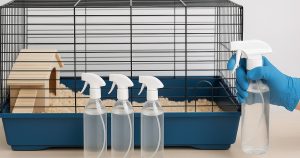
Budgie Cage Disinfectant Spray vs Natural Cleaning Solutions: The Complete 2026 Guide to a Safe, Spotless Cage
Quick Answer: Which Should You Use?
For most budgie owners, a purpose-formulated avian-safe disinfectant spray like F10SC Veterinary Disinfectant (around $18–$25) is the gold standard for deep cleaning, while a diluted white vinegar solution (pennies per use) handles routine daily wipe-downs perfectly. Our top overall pick is Poop-Off Bird Cage Cleaner (~$12–$15), which bridges the gap — it’s enzyme-based, non-toxic, and strong enough to tackle dried droppings without threatening your bird’s sensitive respiratory system. Check the current price on Amazon and keep reading for the full breakdown.
2026 Comparison Table: Best Budgie Cage Cleaning Solutions
Use this table to compare the top disinfectant sprays and natural cleaning alternatives side by side before diving into the detailed reviews below.
| Product | Price (USD) | Best For | Key Feature | Where to Buy |
|---|---|---|---|---|
| Poop-Off Bird Cage Cleaner Spray | $12–$15 | Everyday enzyme cleaning | Enzyme-based, non-toxic, ready-to-use | Check Price on Amazon |
| F10SC Veterinary Disinfectant | $18–$25 | Deep weekly disinfection | Vet-grade, broad-spectrum, bird-safe when diluted | Check Price on Amazon |
| Aviclens Water Sanitiser | $10–$14 | Water dish & drinker sanitation | Keeps water lines algae-free and safe | Check Price on Amazon |
| Nature’s Miracle Bird Cage Cleaner | $10–$13 | Odour elimination | Enzyme formula, removes stains and odour | Check Price on Amazon |
| Distilled White Vinegar (Natural) | $3–$6 per litre | Budget-friendly daily wipe-downs | Non-toxic, antibacterial, zero fumes | Check Price on Amazon |
| Baking Soda & Lemon DIY Paste | $2–$5 (ingredients) | Stubborn perch and grate scrubbing | Abrasive natural cleaner, odour-neutralising | Check Price on Amazon |
| Vetri-Science Cage & Crate Cleaner | $14–$18 | Multi-surface cage disinfection | pH-neutral, safe for perches and plastic | Check Price on Amazon |
| Prevue Hendryx Clean Life Bird Cage Spray | $9–$12 | Quick-clean between deep washes | Fast-drying, non-streaking, bird-safe formula | Check Price on Amazon |
Why Cage Cleaning Is More Important Than You Think
Budgies have an incredibly sensitive respiratory system — far more sensitive than dogs, cats, or even most other pet birds. Airborne chemicals that seem mild to humans can cause serious respiratory distress or even fatality in budgies within minutes. This is precisely why the question of disinfectant spray vs natural cleaning solutions isn’t just about cleanliness — it’s a genuine welfare issue.
A dirty cage is equally dangerous. Bacterial infections like Psittacosis, fungal growth, and parasite infestations all thrive in soiled cages with droppings left to accumulate. The key is finding cleaning products that eliminate pathogens without introducing toxic fumes or chemical residues. For more context on how your cage environment affects your bird’s day-to-day health, check out our guide on the best air purifiers for budgie cage rooms — clean air and a clean cage go hand in hand.
The cleaning frequency matters too. Here’s a simple schedule most avian vets recommend:
- Daily: Remove droppings from perches and the cage floor, wipe food and water dishes
- Weekly: Full cage wipe-down with a safe cleaner, replace cage liner
- Monthly: Deep disinfection of all cage components, toys, perches, and accessories
For the daily liner changes, our best budgie cage liner guide has everything you need to make that job quick and easy.
Disinfectant Sprays vs Natural Cleaning Solutions: The Core Differences
Chemical Disinfectant Sprays
Purpose-made avian disinfectants are formulated to kill bacteria, viruses, and fungi on contact. They go through testing to ensure they’re safe around birds when used as directed. The key phrase there is when used as directed — dilution ratios matter enormously.
Advantages:
- Clinically proven pathogen-killing power
- Effective against a broader spectrum of microorganisms
- Ideal for new birds, post-illness sanitisation, or multi-bird households
- Many are odourless once dry
Disadvantages:
- Require careful dilution — mistakes can be dangerous
- Some contain fragrances, phenols, or quaternary ammonium compounds (QACs) that are harmful to birds
- Higher upfront cost than natural alternatives
- The bird must be removed from the area during application and until fully dry
Natural Cleaning Solutions
White vinegar, baking soda, lemon juice, and even hydrogen peroxide (in diluted form) are all popular natural alternatives. They’re inexpensive, widely available, and genuinely effective for routine cleaning.
Advantages:
- Extremely low cost — often less than $5 to maintain a full month’s supply
- No chemical fumes or residues when used correctly
- Safe to use with birds present in some cases (e.g., vinegar wipes)
- Environmentally friendly
Disadvantages:
- Less effective against viruses and drug-resistant bacteria
- Vinegar smell, while not toxic, can be strong and some birds dislike it
- No standardised kill claims — you can’t guarantee pathogen elimination
- Require more scrubbing effort on tough dried droppings
The Verdict: Use Both Strategically
The smartest approach is a two-layer cleaning strategy: use a natural solution for daily and weekly maintenance, and a vet-grade disinfectant for monthly deep cleans or whenever disease risk is elevated (e.g., after bringing home a new bird — see our complete quarantine cage setup guide for more on this).
Product Deep Dives: Our Top Picks Reviewed
1. Poop-Off Bird Cage Cleaner Spray
Best for: Most budgie owners as an all-round everyday and weekly cage cleaner.
Price range: $12–$15 (available in 32oz and larger sizes)
- Enzyme-based formula digests organic waste rather than masking it
- Non-toxic, fragrance-free, and residue-free when rinsed
- Works on cage bars, perches, plastic accessories, and cage trays
- Ready-to-use spray — no dilution required
- Also safe for use on upholstery and surfaces outside the cage
Pros:
- Exceptionally effective at dissolving dried droppings
- No harsh chemical smell
- Widely available and good value for money
- Trusted by bird owners and rescue centres
Cons:
- Not a true disinfectant — won’t eliminate viruses or drug-resistant bacteria
- For very stubborn build-up, may need a second application
2. F10SC Veterinary Disinfectant
Best for: Breeders, multi-bird households, post-illness disinfection, or anyone wanting true vet-grade cleaning power.
Price range: $18–$25 (concentrate; a single bottle makes many litres)
- Broad-spectrum: kills bacteria, viruses, fungi, and spores
- Non-toxic and non-corrosive when properly diluted (1:250 to 1:500)
- Odourless once dried — safe for bird’s sensitive respiratory tract
- Used by professional aviculturists and avian veterinary practices worldwide
- Also suitable for nebulising in bird rooms for airborne pathogen control
Pros:
- Genuinely the most powerful safe option available to home users
- Excellent value — one bottle dilutes into enormous amounts of solution
- Kills pathogens that enzyme cleaners simply cannot
- Trusted by avian vets globally
Cons:
- Must be diluted precisely — overdilution reduces effectiveness, under-dilution risks toxicity
- Slightly higher upfront cost
- Bird must be completely removed during application
3. Nature’s Miracle Bird Cage Cleaner
Best for: Odour-conscious owners who want a reliable enzyme cleaner with strong deodorising action.
Price range: $10–$13 (24oz spray bottle)
- Enzyme-based formula tackles both stains and odours simultaneously
- Specifically formulated for bird cages — tested safe for avian use
- Fast-acting spray nozzle for even coverage
- Breaks down uric acid in droppings (the main cause of cage odour)
- Can be used on most cage materials including wood, plastic, and metal
Pros:
- One of the best odour eliminators on the market
- Affordable and widely available
- Great for households where cage smell is a concern
- Trusted Nature’s Miracle brand with a long track record
Cons:
- Slight scent that some sensitive birds may react to — ventilate well after use
- Not a disinfectant — use alongside F10SC for deep cleans
4. Distilled White Vinegar (Natural Solution)
Best for: Budget-conscious owners wanting a completely natural, chemical-free daily cleaning option.
Price range: $3–$6 per litre (or buy in bulk for even less)
- Active ingredient: acetic acid (~5%) — naturally antibacterial and antifungal
- Breaks down calcium and mineral deposits from droppings and water bowls
- Completely non-toxic to birds when diluted 1:1 with water
- No residues, no chemical fumes, no artificial fragrances
- Can be combined with baking soda for a fizzing scrub on tough spots
Pros:
- Virtually free compared to commercial products
- Completely safe — no risk of chemical toxicity
- Works brilliantly on water dishes, food bowls, and cage floors
- Odour dissipates quickly once dry
Cons:
- Not effective against viruses or drug-resistant bacteria
- Strong smell during application — some birds dislike it
- Requires more physical scrubbing effort
5. Vetri-Science Cage & Crate Cleaner
Best for: Owners wanting a step-up from enzyme cleaners without the complexity of a concentrate disinfectant.
Price range: $14–$18 (ready-to-use spray)
- pH-neutral formula safe on all common cage materials
- Hospital-grade cleaning efficacy in a ready-to-spray format
- Deodorises and sanitises simultaneously
- No rinsing required after normal use on hard surfaces
- Made by a well-regarded pet health brand (Vetri-Science)
Pros:
- Easier to use than concentrate disinfectants
- Gentle on cage materials — won’t corrode metal bars
- Good bridge between natural cleaning and full disinfection
- Pleasant, neutral scent
Cons:
- More expensive per use than vinegar or enzyme cleaners
- Not quite as powerful as F10SC for true pathogen elimination
How to Clean Your Budgie’s Cage Safely: Step-by-Step 2026 Guide
What You’ll Need
- Avian-safe disinfectant spray (e.g., F10SC for monthly deep cleans)
- Enzyme cage cleaner (e.g., Poop-Off for weekly use)
- White vinegar spray bottle (for daily wipe-downs)
- Dedicated scrub brushes — one for bars, one for perches, one for dishes
- A bird-specific cage cleaning brush set
- Fresh cage liners for the tray
- Disposable gloves
- Microfibre cloths or paper towels
- A carrier or travel cage to safely house your budgie during cleaning
- Move your budgie to a safe temporary space. Place your bird in a travel cage or let them perch on a freestanding perch stand in a different room — completely away from any cleaning chemicals, even natural ones.
- Remove all cage accessories. Take out all perches, toys, food dishes, water dishes, and the cage tray. Separate them into groups: items for scrubbing (perches, metal dishes), items for soaking (plastic toys, food bowls), and items to inspect for replacement.
- Remove old cage liner and dispose of it. Fold it inward to trap droppings and bin it immediately. Wash your hands before touching anything else.
- Dry-scrub or brush off loose debris. Use a stiff brush to remove dried droppings from cage bars before applying any liquid cleaner. This step dramatically improves the effectiveness of whatever cleaner you use next.
- Apply your chosen cleaner to cage surfaces. For daily/weekly cleans, spray on your enzyme cleaner or diluted vinegar solution and leave it to dwell for 3–5 minutes. For monthly disinfection, apply diluted F10SC at the correct ratio and allow the full recommended contact time (usually 5–10 minutes). Check avian-safe disinfectant sprays on Amazon.
- Scrub all surfaces thoroughly. Use your dedicated cage brushes to scrub bars, corners, the floor tray, and any hinges or clips where debris accumulates. Pay special attention to perch attachment points — these are bacterial hotspots.
- Clean all accessories separately. Soak wooden perches briefly in diluted vinegar solution (do not soak in chemical disinfectant — wood absorbs it). Scrub ceramic and metal food dishes with enzyme cleaner. Check our best budgie food bowl guide for dish recommendations that are easiest to clean.
- Rinse everything thoroughly with clean water. This step is non-negotiable. Any cleaning residue — natural or chemical — can irritate your budgie’s feet, skin, or respiratory system. Rinse twice if in doubt.
- Allow to dry completely before reassembly. Moisture encourages bacterial and mould growth. Let the cage air dry in a well-ventilated spot, or use a clean dry cloth to speed things up. Never return the bird to a wet cage.
- Fit fresh cage liner and replace accessories. Add a new liner to the tray, replace cleaned perches, toys, and dishes, and return your budgie to their freshly cleaned home.
7 Mistakes to Avoid When Cleaning Your Budgie’s Cage
-
Using household bleach or general disinfectants.
Bleach, Dettol, Zoflora, and standard multi-surface cleaners contain phenols, chlorine, or quaternary ammonium compounds that are severely toxic to birds — even at low concentrations. The fumes alone can cause fatal respiratory distress. Always use products specifically labelled as bird-safe or avian-safe, such as avian-safe disinfectants. -
Cleaning the cage with the bird still inside.
Even “natural” solutions like vinegar have a pungent smell that can stress or irritate your budgie. Always relocate your bird first. Use a small travel carrier to make this step quick and stress-free. -
Skipping the rinse step.
Leaving cleaning solution residue on perches or bars means your budgie will walk through it, chew on it, and ingest it. Always rinse thoroughly with clean water after any cleaning product — even vinegar. -
Returning the bird before the cage is fully dry.
Damp environments promote bacterial and fungal growth — the exact thing you’re trying to eliminate. A damp perch can also cause foot problems. Always wait until surfaces are completely dry. -
Using the same brush for food dishes and cage bars.
Cross-contamination between droppings and food areas is a genuine health risk. Keep separate, colour-coded brushes for different cleaning zones. Grab a dedicated brush set on Amazon. -
Over-relying on natural solutions for disease outbreaks or new bird introductions.
Vinegar and enzyme cleaners are great for routine maintenance, but they won’t reliably eliminate viruses, Chlamydophila psittaci, or other serious pathogens. After illness or when quarantining a new bird (see our quarantine cage guide), step up to a vet-grade disinfectant like F10SC. -
Neglecting toys, perches, and accessories in favour of just the cage body.
Wooden perches are prime breeding grounds for bacteria and mould, especially if they’ve absorbed droppings. Inspect them regularly and replace them when they can no longer be cleaned effectively. Our best budgie wooden perch guide can help you find hygiene-friendly options.
DIY Natural Cleaning Recipes That Actually Work
If you prefer to go the natural route as much as possible, here are three tried-and-tested recipes used by experienced budgie owners:
1. All-Purpose Vinegar Spray (Daily Use)
- 1 part distilled white vinegar + 1 part water in a spray bottle
- Optional: 2-3 drops of plain (fragrance-free) castile soap for extra grease-cutting power
- Spray, leave 2 minutes, wipe or rinse
- Buy white vinegar on Amazon
2. Baking Soda Scrub Paste (Weekly Deep Perch Cleaning)
- 3 tablespoons baking soda + squeeze of lemon juice + enough water to form a paste
- Apply to perches with an old toothbrush, scrub, leave 5 minutes, rinse thoroughly
- Excellent at removing mineral deposits and deodorising wood
- Buy baking soda in bulk on Amazon
3. Hydrogen Peroxide Spray (Occasional Disinfection)
- 3% food-grade hydrogen peroxide (diluted to 1.5% with equal parts water)
- Spray on hard surfaces, leave 5 minutes, rinse thoroughly before returning bird
- Provides genuine antimicrobial action without toxic residues
- Important: Never use above 3% concentration — higher concentrations are harmful
- Check food-grade hydrogen peroxide on Amazon
Frequently Asked Questions
Is white vinegar safe to use around budgies?
Yes — diluted white vinegar (1:1 with water) is safe for cleaning budgie cages as long as the bird is removed during cleaning and the surface is thoroughly rinsed and dried before your budgie returns. The acetic acid in vinegar has genuine mild antimicrobial properties, but the smell can briefly irritate birds if they’re present. Check white vinegar options on Amazon.
Can I use Dettol or Zoflora to clean my budgie’s cage?
No — absolutely never. Dettol contains chloroxylenol (a phenol) and Zoflora contains various compounds that are highly toxic to birds. Even residue left after rinsing can cause serious illness or death. Always use products specifically formulated as bird-safe or avian-safe, like F10SC or enzyme cleaners.
How often should I disinfect my budgie’s cage?
For a single healthy budgie, a thorough enzyme clean once a week combined with a vet-grade disinfection once a month is typically sufficient. If you have multiple birds, have recently introduced a new bird, or your bird has been unwell, increase deep disinfection to every two weeks. Daily spot-cleaning of droppings and dish washing should happen every single day without exception.
What is F10SC and is it really safe for birds?
F10SC is a veterinary-grade broad-spectrum disinfectant used extensively in avian medicine, bird sanctuaries, and breeding facilities worldwide. When diluted at the correct ratio (1:250 for general use), it is non-toxic, non-corrosive, and odourless once dry — making it uniquely suitable for bird environments. See F10SC on Amazon for current pricing.
Does vinegar kill bacteria on bird cage surfaces?
Vinegar kills some common bacteria (such as E. coli and Salmonella) at sufficient concentrations, but it is not effective against all pathogens, including many viruses and drug-resistant bacteria. It is best used as a routine maintenance cleaner rather than a substitute for proper disinfection when disease risk is present. For deeper sanitation, combine routine vinegar cleaning with monthly use of an avian-approved disinfectant.
Can I use baking soda to clean my budgie’s cage?
Baking soda is safe and works well as an abrasive scrub and deodoriser. Mix it with lemon juice to create a paste for scrubbing perches and the cage floor, then rinse thoroughly. It’s not a disinfectant but is very effective for lifting mineral deposits and neutralising odours. Buy baking soda on Amazon for an affordable natural cleaning staple.
How do I clean wooden perches without damaging them?
Wooden perches should be scrubbed with a stiff brush under warm water, then wiped with diluted white vinegar and rinsed thoroughly. Avoid soaking them in chemical disinfectants — wood is porous and will absorb chemicals that can later irritate your bird’s feet. Replace wooden perches every 2–3 months or sooner if they’re cracked, deeply stained, or can’t be effectively cleaned. Check our wooden perch guide for hygiene-friendly options.
What’s the safest way to clean budgie food and water dishes?
Food and water dishes should be washed daily with hot water and a drop of fragrance-free dish soap, then rinsed very thoroughly. Once a week, soak them for 10 minutes in a diluted enzyme cleaner like Poop-Off or a diluted F10SC solution, then rinse again. Stainless steel and ceramic dishes are far easier to sanitise than plastic ones, which can harbour bacteria in microscopic scratches over time.
Are essential oil-based cleaners safe for budgies?
No — essential oils, including tea tree, eucalyptus, lavender, and peppermint, are toxic to birds. Many “natural” or “eco” cleaning products use essential oils as preservatives or fragrances, so always check the ingredient list carefully. Stick to fragrance-free, specifically bird-safe products or simple vinegar and baking soda solutions instead.
What cleaning products should I always keep stocked for budgie care?
At minimum, keep distilled white vinegar for daily cleaning, an enzyme cleaner like Poop-Off for weekly use, and a vet-grade disinfectant like F10SC for monthly deep cleans. Add a dedicated cage cleaning brush set and you’ll have everything you need to keep your budgie’s home hygienic, safe, and smelling fresh year-round.