
Last Updated: October 2025 | Vet Reviewed | Evidence-Based | 12 min read
Table of Contents
See also: Budgie Stress Signs: 10 Essential Ways to Know If Your Bird Is Unhappy (2025 Guide)
– Quick Answer: What Vegetables Are Best for Budgies?
– Why Do Budgies Need Vegetables?
– What Are the Top 10 Vegetables for Budgies?
– Nutritional Breakdown of Vegetables for Budgies
– How to Introduce Vegetables to Your Budgie’s Diet
– Common Mistakes Budgie Owners Make (AVOID THESE!)
– Step-by-Step Guide: Preparing Vegetables for Budgies
– Vegetable Variety: Raw vs Cooked vs Frozen
– Frequently Asked Questions (Expert Answers)
– Key Takeaways: Budgie Vegetable Diet Checklist
– Related Articles You’ll Love
– Medical/Expert Disclaimer
– About This Guide
Quick Answer: What Vegetables Are Best for Budgies?
See also: Budgie Stress Signs: 10 Essential Ways to Know If Your Bird Is Unhappy (2025 Guide)
TL;DR: Yes, budgies can eat a variety of vegetables. The best vegetables for budgies include carrots, spinach, and bell peppers. Important: Avoid giving them onions or avocados as they are toxic. Keep reading to discover how to properly introduce these vegetables to your budgie’s diet.
Why Do Budgies Need Vegetables?
See also: 10 Human Foods You Should Never Feed Your Budgie: Essential Safety Tips (2025 Guide)
Budgies, also known as parakeets, thrive on a diet that includes fresh vegetables. Vegetables provide essential vitamins and minerals that pellets alone may lack. According to avian nutrition experts, a balanced diet helps prevent deficiencies and promotes longevity. This guide will explore the best vegetables for your budgie and how to incorporate them into their diet.
Practical Tip:
Consider incorporating a “vegetable day” into your budgie’s weekly routine, where the primary focus is on a variety of veggies. This not only helps pique their interest but also ensures they receive a balanced intake of essential nutrients.
What Are the Top 10 Vegetables for Budgies?
See also: Budgie Sneezing or Wheezing? 5 Essential Tips for Respiratory Health (2025 Guide)
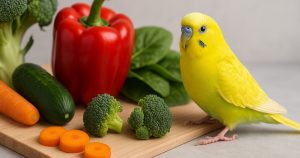
Here are the ten best vegetables to feed your budgie, each offering unique nutritional benefits:
- Carrots: Rich in vitamin A for healthy eyesight. Carrots are crunchy and can help budgies maintain beak health while they nibble.
- Spinach: High in iron and calcium. Spinach can be chopped finely and mixed with other greens for variety.
- Bell Peppers: Excellent source of vitamin C. These can be offered in vibrant colors to attract your budgie’s attention.
- Broccoli: Contains antioxidants and fiber. Serve small florets as a fun, chewable snack.
- Zucchini: Low-calorie option with vitamin C. Zucchini can be sliced into thin strips for easy handling.
- Kale: Packed with vitamins A, C, and K. Tear into small pieces for easy pecking.
- Sweet Potatoes: Offers beta-carotene and fiber. Lightly steam to soften before serving.
- Green Beans: Provides vitamins A, C, and K. Serve raw or steamed for different textures.
- Celery: Hydrating and low-calorie. Chop finely to prevent stringy fibers from causing issues.
- Peas: Rich in protein and fiber. Offer them shelled as a fun treat for your budgie to pop open.
Nutritional Breakdown of Vegetables for Budgies
See also: [Budgie Feather Loss](https://www.amazon.com/s?k=Budgie+Feather+Loss+Why+Is+My+Budgie+Losing+Feathers%3F+Common+Causes+and+Treatments&tag=budgiesite-20#038;tag=budgiesite-20): 5 Essential Causes and Treatments (2025 Guide)
Here’s a comparison of nutritional content in some of the top vegetables for budgies:
| Vegetable | Nutritional Content | Best For |
|---|---|---|
| Carrots | High in vitamin A and fiber | Eye health |
| Spinach | Rich in iron and calcium | Bone strength and blood health |
| Bell Peppers | High in vitamin C | Immune support |
| Broccoli | Antioxidants and fiber | Digestive health |
| Sweet Potatoes | Beta-carotene and fiber | Energy and digestion |
In-Depth Analysis:
- Carrots: Besides vitamin A, carrots contain biotin, which supports metabolism and healthy skin. Their natural sweetness is appealing to budgies, making them a popular choice.
- Spinach: While high in nutrients, spinach also has oxalates which may hinder calcium absorption, so balance it with other vegetables. Consider pairing it with vitamin C-rich foods like bell peppers to enhance iron absorption.
- Bell Peppers: These can boost your budgie’s immune system due to their high vitamin C content, especially beneficial during molting seasons. Offering a mix of red, yellow, and green peppers can add variety and visual appeal to their meals.
How to Introduce Vegetables to Your Budgie’s Diet
See also: Budgie Stress Signs: 10 Essential Ways to Know If Your Bird Is Unhappy (2025 Guide)
Introducing vegetables to your budgie’s diet should be a gradual process to avoid digestive issues.
The Gradual Introduction Method
-
Step 1: Start Small (1 week)
Introduce a small piece of one type of vegetable. -
Step 2: Monitor Reaction (2 weeks)
Observe your budgie’s reaction and stools. -
Step 3: Increase Variety (1 month)
Gradually add different vegetables one at a time. -
Step 4: Maintain Consistency (ongoing)
Provide vegetables daily along with their regular feed. -
Step 5: Observe Preferences (ongoing)
Note which vegetables your budgie enjoys the most.
Pro Tip: Always wash vegetables thoroughly and serve them raw or lightly steamed for best nutritional retention.
Practical Tip:
Use creative presentation, such as hanging leafy greens in the cage, to stimulate natural foraging behavior and make meal times interactive. You can also try skewering vegetables on a bird-safe stick to add an element of play.
Common Mistakes Budgie Owners Make (AVOID THESE!)
See also: Budgie Sneezing or Wheezing? 5 Essential Tips for Respiratory Health (2025 Guide)
Mistake #1: Overfeeding Vegetables (60% of Owners)
The Problem: Budgies may become overweight or develop diarrhea.
The Fix: Limit vegetables to 20% of their diet.
Warning Signs: Loose stools or sudden weight gain.
Alternative: Balance with pellets and grains.
Mistake #2: Not Washing Vegetables (45% of Owners)
The Problem: Risk of pesticide ingestion.
The Fix: Rinse thoroughly under running water.
Warning Signs: Lethargy or digestive upset.
Alternative: Opt for organic produce when possible.
Mistake #3: Offering Toxic Vegetables (30% of Owners)
The Problem: Harmful foods like onions and avocados.
The Fix: Educate yourself on toxic foods.
Warning Signs: Vomiting or difficulty breathing.
Alternative: Stick to the recommended vegetable list.
Additional Mistake: Ignoring Budgie’s Preferences
The Problem: Forcing unwanted vegetables can cause stress.
The Fix: Observe and respect your budgie’s likes and dislikes.
Alternative: Rotate vegetables to find favorites.
Step-by-Step Guide: Preparing Vegetables for Budgies
See also: Can Budgies Eat Tomatoes? 5 Essential Facts (2025 Guide)
Preparing Raw Vegetables Safely
-
Step 1: Select Fresh Produce (10 minutes)
Choose fresh, organic vegetables. -
Step 2: Wash Thoroughly (5 minutes)
Rinse under cold water to remove dirt and chemicals. -
Step 3: Chop Finely (10 minutes)
Cut into small, manageable pieces. -
Step 4: Serve in Clean Dishes (5 minutes)
Use clean, shallow dishes to serve. -
Step 5: Store Leftovers Properly (ongoing)
Refrigerate any unused portions to keep fresh.
Important: Ensure that food dishes are cleaned daily to prevent bacterial growth.
Practical Tip:
Consider preparing vegetables in batches and storing them in air-tight containers for convenience, ensuring you have fresh options ready for daily feeding. A weekly preparation session can make daily feeding routines smoother and more efficient.
Vegetable Variety: Raw vs Cooked vs Frozen
Raw Vegetables
- Pros: Retain most nutrients.
- Cons: May be harder to digest for some budgies.
Cooked Vegetables
- Pros: Easier to digest.
- Cons: Some nutrients may be lost during cooking.
Frozen Vegetables
- Pros: Convenient and long-lasting.
- Cons: Must be thawed and can be less fresh.
TIP: Lightly steaming vegetables can balance nutrient retention and digestibility. Steaming is particularly useful for tougher vegetables like broccoli and sweet potatoes, making them easier for your budgie to munch on.
Comparison Insight:
For budgies that are hesitant to try new foods, mixing a small amount of lightly steamed veggies with their favorite seeds might encourage them to explore new tastes. This method can gradually acclimate them to the texture and flavor of vegetables.
Frequently Asked Questions (Expert Answers)
See also: Budgie Stress Signs: 10 Essential Ways to Know If Your Bird Is Unhappy (2025 Guide)
Is spinach safe for budgies?
Yes, spinach is safe and nutritious for budgies. It should be given in moderation due to its oxalic acid content, which can bind calcium.
How often should I feed my budgie vegetables?
Vegetables should be offered daily but should not exceed 20% of the total diet.
Can budgies eat lettuce?
Budgies can eat lettuce, but it offers little nutritional value. Opt for darker greens like kale or spinach.
What if my budgie refuses vegetables?
Try offering different vegetables and mix them with seeds to entice your budgie. Persistence and patience are key, as budgies can be cautious about new foods.
Can beginners feed vegetables to budgies?
Yes, start with small amounts and monitor your budgie’s health and preferences. Gradually introduce a variety of vegetables to determine which ones your budgie prefers.
Are there vegetables that can improve my budgie’s feather health?
Yes, vegetables rich in vitamin A, like carrots and sweet potatoes, support healthy feather growth and vibrant plumage.
How can I ensure my budgie gets a balanced diet?
Provide a mix of vegetables, seeds, and pellets, and consult your avian vet for personalized dietary recommendations. Regular vet check-ups can help ensure your budgie’s diet meets their nutritional needs.
Key Takeaways: Budgie Vegetable Diet Checklist
See also: Budgie Stress Signs: 10 Essential Ways to Know If Your Bird Is Unhappy (2025 Guide)
– ✔️ Introduce vegetables gradually.
– ✔️ Limit to 20% of total diet.
– ✔️ Avoid toxic vegetables.
– ✔️ Wash all produce thoroughly.
– ✔️ Monitor your budgie’s reaction.
Related Articles You’ll Love
- Budgie Health Problems: 10 Critical Signs Your Bird Is Sick (2025 Guide)
- Can Budgies Eat Sunflower Seeds? 7 Critical Facts Every Owner Must Know (2025 Guide)
- Can Budgies Eat Mulberries? 7 Surprising Health Benefits
Medical/Expert Disclaimer
See also: Budgie Stress Signs: 10 Essential Ways to Know If Your Bird Is Unhappy (2025 Guide)
This article is vet-reviewed and aims to provide evidence-based advice. Always consult with a veterinarian for personalized guidance tailored to your pet’s specific needs.
About This Guide
See also: Budgie Stress Signs: 10 Essential Ways to Know If Your Bird Is Unhappy (2025 Guide)
This guide is based on scientific research and expert reviews. Last updated in October 2025, it will be reviewed annually to ensure the latest information. For questions or further information, please contact us.
“`