
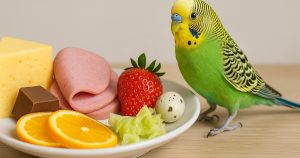
Quick answer: Budgies should never eat avocado, chocolate, caffeine, alcohol, onion, garlic, salty foods, sugary foods, mouldy food, fruit pits or heavily processed human meals. When in doubt, do not offer it until you have checked that it is bird-safe.
This guide lists the highest-risk foods for budgies, why they are unsafe, and what to do if your bird eats something worrying.
Table of Contents
Quick Answer: Can Budgies Eat Human Food?
Budgies are delightful companions known for their vibrant plumage and cheerful demeanor. However, their dietary requirements are vastly different from ours. While it might be tempting to share your snacks with your feathered friend, doing so can pose significant risks. Understanding these differences is crucial in preventing accidental exposure to harmful substances that may be present in human food.
What Makes a Food Unsafe for Budgies?
Budgies’ small size also means they are more susceptible to the effects of toxins, and even small amounts of certain foods can be dangerous. For example, whereas a human might consume chocolate without harmful effects, for a small bird, this could be lethal. It’s also essential to consider that certain compounds benign to humans can be toxic to birds, such as theobromine in chocolate or persin in avocados.
Top 10 Foods to Avoid
1. Chocolate
The Problem: Contains theobromine, which can be toxic to birds.
The Fix: Keep chocolate and chocolate products out of reach.
Chocolate, especially dark and baking chocolate, contains theobromine and caffeine, both of which are toxic to budgies. Symptoms of chocolate poisoning include hyperactivity, increased heart rate, tremors, and even seizures. Always ensure that your chocolate treats are stored securely, far from your budgie’s reach.
2. Avocado
The Problem: Contains persin, a toxin particularly harmful to birds.
The Fix: Never include avocado in your budgie’s diet.
While avocados are a healthy snack for humans, they contain persin, which is highly toxic to birds. Ingesting avocado can lead to respiratory distress, congestion, and even heart failure in budgies. To keep your pet safe, it’s best to exclude avocado from their environment entirely.
3. Caffeine
The Problem: Can cause cardiac distress in birds.
The Fix: Avoid coffee, tea, and any caffeine-containing products.
Caffeine, found in coffee, tea, and some soft drinks, can cause increased heart rate, arrhythmia, and hyperactivity in birds. Even small amounts can be dangerous, so it’s vital to ensure your budgie does not have access to caffeinated beverages.
4. Alcohol
The Problem: Even a small amount can be deadly.
The Fix: Ensure alcoholic beverages are never left near your budgie.
Alcohol can severely impair a budgie’s liver and nervous system. Since birds are smaller and metabolize substances differently than humans, even a small sip of alcohol can be fatal. Always keep alcoholic drinks away from your budgie’s vicinity to prevent accidental ingestion.
5. Salty Foods
The Problem: Excessive salt can lead to dehydration and kidney failure.
The Fix: Avoid chips, pretzels, and other salty snacks.
Budgies have a low tolerance for salt, and consuming salty foods can lead to excessive thirst, dehydration, and kidney damage. Foods that are heavily salted, like chips and pretzels, should be kept out of their diet.
6. Onion and Garlic
The Problem: Can cause digestive issues and damage red blood cells.
The Fix: Keep these off your budgie’s menu.
Onions and garlic contain compounds that can irritate a bird’s stomach lining and cause hemolytic anemia, a condition where red blood cells are destroyed faster than they can be produced. It’s best to avoid these ingredients entirely to prevent potential health issues.
7. Raw Beans
The Problem: Contain hemagglutinin, which is toxic to birds.
The Fix: Ensure beans are cooked thoroughly or avoided altogether.
Raw beans, particularly kidney beans, contain hemagglutinin, a toxin that can be harmful to birds. Cooking beans thoroughly neutralizes this toxin, but to err on the side of caution, it’s best to avoid them entirely or ensure they are fully cooked before offering them to your budgie.
8. Apple Seeds
The Problem: Contain cyanide, which is toxic to birds.
The Fix: Remove seeds before feeding apples.
While apples themselves are a safe and nutritious treat for budgies, the seeds contain cyanide, a potent toxin. Always remove the seeds before giving apples to your budgie to prevent accidental poisoning.
9. Dairy Products
The Problem: Budgies are lactose intolerant.
The Fix: Avoid milk, cheese, and other dairy products.
Birds, including budgies, lack the enzyme lactase necessary to digest lactose found in dairy products. Consuming dairy can lead to digestive upset, including diarrhea. It’s best to avoid these products and opt for lactose-free options if necessary.
10. Junk Food
The Problem: High in fat and sugar, leading to obesity.
The Fix: Stick to specially formulated bird treats.
Junk foods like cookies, chips, and candy are high in fats and sugars that can lead to obesity and other health issues in budgies. Instead, provide them with bird-safe treats specifically designed to meet their nutritional needs.
How to Recognize Toxicity in Budgies
Warning Signs of Toxicity
- STOP IMMEDIATELY If You See:
- Difficulty breathing
- Vomiting or diarrhea
- Weakness or lethargy
Recognizing the signs of toxicity early can be lifesaving. Symptoms such as difficulty breathing, changes in droppings, or unusual behavior may indicate that your budgie has ingested something harmful. If you observe these signs, seek veterinary assistance immediately.
ACTION: Contact a veterinarian immediately if you suspect your budgie has ingested something toxic.
Safe Alternatives to Avoided Foods
- Fruits: Apples (seedless), bananas, berries
- Vegetables: Carrots, spinach, peas
- Grains: Whole grain bread, cooked rice
These alternatives provide essential nutrients without the risk of toxicity. Offering a variety of safe fruits, vegetables, and grains can help ensure your budgie receives a balanced diet. Always introduce new foods gradually and monitor your budgie for any adverse reactions.
Expert Tips for a Healthy Budgie Diet
To maintain a healthy diet, it’s crucial to offer a balanced mix of seeds, pellets, and fresh produce. This variety mimics their natural foraging habits and provides complete nutrition. Avoid over-reliance on seeds alone, as this can lead to nutrient deficiencies.
Comparison: Safe vs Unsafe Foods for Budgies
Understanding the difference between safe and unsafe foods helps prevent accidental exposure to harmful substances. Always prioritize foods that are well-tolerated and nutritionally beneficial for your budgie.
Frequently Asked Questions (Expert Answers)
Is chocolate bad for budgies?
Yes, chocolate contains theobromine, which is toxic to budgies and can cause serious health issues.
Can budgies eat bread?
Yes, but it should be whole grain and given in moderation to avoid obesity.
Are grapes safe for budgies?
Yes, grapes are safe in small quantities and can be a healthy treat.
What should I do if my budgie eats something toxic?
Contact a veterinarian immediately to get professional advice on the next steps.
How often should I feed my budgie fresh fruits and vegetables?
Daily, but ensure they are in small quantities to prevent digestive issues.
Can budgies have seeds from all fruits?
No, certain seeds like those from apples and cherries can be toxic. Always remove seeds before offering fruit to your budgie.
Can budgies eat peanuts?
Peanuts are not recommended due to the risk of mold and aflatoxin, which can be harmful to budgies.
10 Common Mistakes Budgie Owners Make (AVOID THESE!)
Mistake #1: Overfeeding Treats
The Problem: Leads to obesity and nutritional imbalance.
The Fix: Stick to recommended daily allowances for treats.
Mistake #2: Ignoring Food Expiry Dates
The Problem: Stale food can cause health issues.
The Fix: Regularly check and replace expired foods.
Mistake #3: Offering Unsafe Human Foods
The Problem: Can lead to toxicity.
The Fix: Refer to safe food lists and keep harmful foods out of reach.
Mistake #4: Not Providing Enough Variety
The Problem: Can cause nutritional deficiencies.
The Fix: Offer a diverse diet to ensure all nutritional needs are met.
Mistake #5: Not Consulting a Vet for Dietary Advice
The Problem: Lack of expert guidance can lead to dietary mistakes.
The Fix: Regularly consult with a vet for advice tailored to your budgie.
Related Articles You’ll Love
- Safe and Toxic Foods for Budgies: 10 Essential Tips
- Budgie Health Problems: 10 Critical Signs Your Bird Is Sick
- How to Care for a Budgie: 10 Essential Tips for Happy, Healthy Birds
- Can Budgies Eat Peanut Butter a Complete Guide to Feeding Y…
- Can Budgies Eat Rice a Complete Guide to Feeding Rice Safel…
- Can Budgies Eat Tomato a Complete Guide to Feeding Tomatoes…
- Can Budgies Eat Spinach a Complete Guide to Feeding Spinach…
- Can Budgies Eat Turmeric? (Safe, Benefits & Tips)
Medical Disclaimer
About This Guide
“`json