
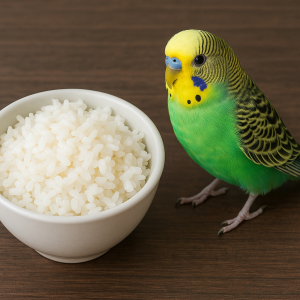
Introduction: Rice and Your Budgie’s Diet
Wondering whether to offer your budgie rice? This guide looks at cooked and uncooked rice, preparation, storage and the questions to discuss with your avian vet about your bird’s diet.
The Cornell Lab of Ornithology explains that the story about rice making birds’ stomachs explode is a myth. That does not establish a suitable rice portion or feeding schedule for a pet budgie; those are separate diet questions.
This article provides general information, not an individual feeding plan or veterinary advice. Your avian vet can help you choose foods and portions appropriate for your budgie.
Can Budgies Eat Uncooked Rice?
The short answer is yes—budgies can safely eat uncooked rice. The persistent myth that raw rice expands in a bird’s stomach and causes harm comes from a misunderstanding about avian digestive physiology. The rice-expansion myth is not a reason to distinguish budgies from poultry.
Budgies have a crop—a small pouch in the oesophagus where food is stored briefly before moving into the proventriculus and gizzard. Their gizzard is a muscular organ that grinds food efficiently, breaking down grains, seeds, and hard foods into digestible particles. Uncooked rice grains are similar in size and texture to millet and other seeds that budgies naturally crack and consume. The bird’s gizzard is designed to handle this type of food without difficulty.
That said, safety and practicality are different things. Whilst uncooked rice poses no inherent danger, cooked rice is softer, easier to consume, and presents no possibility of concern. If you’re offering rice as an occasional treat, uncooked rice is fine; but most avian nutrition experts recommend cooked rice as the better choice for regular offerings.
Cooked vs. Uncooked Rice
Cooked rice is generally the preferred option for budgie feeding, for several practical reasons:
Digestibility: Cooked rice is softer and requires less work from your budgie’s digestive system. The cooking process breaks down some of the starches, making it marginally easier to process.
Consistency: Cooked rice holds moisture, which can help hydrate your bird. Uncooked rice is completely dry, offering no water content.
Ease of feeding: Soft rice is easier for younger budgies, older birds, or any budgie with a mild beak injury to consume. Uncooked grains require more effort to crack.
Peace of mind: Even though uncooked rice is safe, cooked rice eliminates any lingering uncertainty. For new owners, this simplicity is valuable.
From a nutritional standpoint, the difference between cooked and uncooked rice is minimal. Both provide carbohydrate energy and some B vitamins. Rice is not a nutrient-dense food for budgies—it’s best viewed as a treat or side dish, not a nutritional cornerstone.
Types of Rice and What to Avoid
Not all rice products are equal. When feeding rice to your budgie, type and preparation matter.
Brown rice: This is the best choice if you’re selecting between common varieties. Brown rice retains the bran and germ layers, making it higher in fibre and B vitamins than white rice. It takes longer to cook (around 45 minutes) but offers slightly more nutritional value.
White rice: Perfectly safe for budgies and easier to cook. It’s lighter and less fibrous than brown rice, but still appropriate for occasional feeding.
Wild rice: Also safe, though it’s more expensive and offers similar nutritional benefits to brown rice. Some budgies may find the texture less appealing.
Instant or quick-cook rice: These products are often heavily processed and may contain additives. Avoid them and stick with regular varieties.
Flavoured or seasoned rice: Never offer rice with salt, butter, garlic, onion, or any seasoning. These additives can harm your budgie. Even mild flavouring is unnecessary and poses a risk.
Rice cakes or puffed rice products: These are processed snacks with added ingredients. Stick to whole grains only.
Always prepare rice plain—boil or steam it in water with no salt, oil, or seasoning of any kind. Cool it completely before offering it to your bird.
How Often Can Budgies Eat Rice?
Frequency depends on the form. Rice should never become a staple or a major part of your budgie’s daily intake.
Cooked rice: Discuss the frequency of rice treats with your avian vet as part of the overall feeding plan. A small spoonful mixed with vegetables, or a few rice grains as a separate treat, is appropriate.
Uncooked rice: There is no fixed interval recommended here for uncooked rice treats. There is no harm in being cautious with uncooked items, even when they are safe.
Keep the overall diet balanced: VCA’s budgie feeding guidance recommends approximately 60-80% pellets and no more than 20-25% fruits, vegetables and greens together. These are general diet guidelines, not an extra allowance for rice. Ask your avian vet how treats fit into your bird’s feeding plan.
Change diets gradually: Do not abruptly remove familiar food. Confirm that your budgie is actually eating replacement foods, and involve your avian vet in a transition from seed to pellets.
Rice is nutritionally similar to seeds—it provides energy and carbohydrates but lacks the protein, healthy fats, and micronutrients that pellets, vegetables, and certain nuts provide. Think of rice as you would a small portion of mixed seed treat, not as a primary food.
How to Prepare, Serve and Store Rice
Proper preparation ensures rice is as safe and nutritious as possible for your budgie.
Step 1: Rinse the rice. Rinse dry rice under cool water to remove dust and any loose particles. This step takes 30 seconds but improves cleanliness.
Step 2: Cook without additives. Boil or steam the rice using water only. For cooked rice, use a 2:1 water-to-rice ratio. Bring to a boil, then simmer for 18–20 minutes until soft. Do not add salt, oil, butter, or any seasoning.
Step 3: Cool completely. Let the cooked rice cool to room temperature before offering it. Warm food can burn your budgie’s mouth, and budgies should never be given hot food.
Step 4: Serve in small portions. Offer only as much rice as your budgie will eat in one sitting. A teaspoon or two is usually enough.
Step 5: Remove uneaten rice promptly. Do not leave rice in the cage for more than 30 minutes. It can spoil and harbour bacteria if left at room temperature.
Step 6: Cool and store leftover cooked rice promptly. For general cooked-rice hygiene, the Food Standards Agency advises cooling rice quickly, ideally within one hour, then refrigerating it and using it within 24 hours. Divide leftovers into small portions to help them cool; do not leave a pan of rice sitting out for hours. This storage guidance is not a budgie feeding-portion recommendation.
Digestive Changes and When to Call a Vet
Whilst rice is safe for budgies, any new food introduction warrants observation. Watch for these signs over the following 24–48 hours:
Normal droppings: Healthy budgie droppings consist of three components—white urate, dark faeces, and clear urine. They should be firm or slightly pasty, not runny or discoloured.
Warning signs: If you notice loose or discoloured droppings, decreased appetite, lethargy, or any sign of distress after introducing rice, remove it from the diet and consult an avian veterinarian. These symptoms are rare with rice, but it’s important to know what to watch for.
For detailed guidance on what healthy droppings look like and when to seek help, read our guide on essential signs in your budgie’s droppings.
How Rice Fits Into a Varied Diet
Rice works best as part of a varied, balanced feeding routine. Here are practical ways to include it without overdoing it:
Mix with vegetables: Combine a small amount of cooked rice with finely chopped vegetables like broccoli, carrot, or spinach. This adds fibre and nutrients whilst keeping portion sizes modest.
Companion treat: Offer rice alongside other safe treats like millet spray, sunflower seeds, or small pieces of fruit to add variety without excess calories.
For broader guidance on structuring a nutritionally complete diet, consult our article on what budgies can eat and essential budgie feeding guidelines.
| Rice Type | Cooked or Raw? | Safety | Frequency |
|---|---|---|---|
| White rice | Cooked preferred | Safe | Discuss frequency with your avian vet |
| Brown rice | Cooked preferred | Safe (most nutritious) | Discuss frequency with your avian vet |
| Uncooked rice | Raw | Safe but less practical | Occasional treat only |
| Wild rice | Cooked preferred | Safe | Discuss frequency with your avian vet |
| Instant/flavoured rice | Any | Avoid | Never |
| Rice with seasoning | Any | Unsafe | Never |
Quick-reference guide: Rice types, preparation, and safe feeding frequency.
Frequently Asked Questions
Can budgies eat uncooked rice?
Yes, budgies can eat uncooked rice in moderation. However, uncooked rice should only be offered occasionally as a treat, not as a staple food. Cooked rice is generally safer and easier to digest, making it the preferred option for regular offerings.
Is cooked rice better than uncooked rice for budgies?
Cooked rice is generally preferred over uncooked rice for budgies. It is softer, easier to digest, and poses no risk of expansion in the stomach. Cooked rice can be offered more regularly as part of a varied diet, though it should still be only one component of their meals alongside seeds, vegetables, and pellets. The difference in nutritional content is minimal, so the practical advantage of cooked rice—ease of consumption and peace of mind—makes it the better choice.
What type of rice is safest for budgies?
Brown rice and white rice are both safe for budgies when cooked. Brown rice contains more fibre and nutrients, making it slightly more nutritious. Avoid instant rice, flavoured rice, and rice with added salt or seasoning, as these can be harmful. Always offer rice plain, without butter, oil, or spices. White rice is faster to cook, while brown rice offers marginally better nutrition.
How often can budgies eat rice?
There is no universal weekly rice schedule recommended here; ask your avian vet about your bird’s overall diet. It should never replace a budgie’s main diet of seeds, pellets, and fresh vegetables. Uncooked rice should be reserved for occasional treats only, not a regular feeding component. Ask your avian vet how any rice treats fit into the overall diet; there is no rice percentage prescribed by the veterinary source linked above.
Can budgies choke on uncooked rice?
Choking risk from uncooked rice is very low for budgies, as they are skilled at cracking and consuming seeds of similar size. However, monitoring your bird while eating is always good practice. Offer rice grains in moderation and remove any uneaten portions after 30 minutes. If you observe your budgie struggling to crack or consume grains, cooked rice is a safer alternative.
Can I mix rice with other foods?
Yes, cooked rice mixes well with vegetables, creating a balanced treat. Combine a teaspoon of cooked rice with finely chopped broccoli, carrot, or spinach for added nutrition. You can also use rice as a base for foraging toys or hide small amounts in shredded paper. This increases enrichment value and keeps portions controlled. Always ensure mixed foods are safe for budgies and free from any harmful ingredients.