
Last Updated: October 2025 | Expert Reviewed | Evidence-Based | 12 min read
Table of Contents
See also: Best Vegetables for Budgies: 10 Essential Nutrition Tips (2025 Guide)
– Quick Answer: What Are the Must-Have Accessories for Budgie Cages?
– Why Does a Budgie Need a Complete Cage Setup?
– What Makes a Cage Comfortable for Budgies?
– How to Choose the Right Cage for Your Budgie?
– Top 10 Must-Have Budgie Cage Accessories
– Benefits of Providing Diverse Perches
– Common Mistakes in Budgie Cage Setup (AVOID THESE!)
– Step-by-Step Guide: Setting Up Your Budgie Cage
– Budgie Cage Accessories Comparison: What Works Best?
– Frequently Asked Questions (Expert Answers)
– Key Takeaways: Budgie Cage Setup Checklist
– Related Articles You’ll Love
– About This Guide
Quick Answer: What Are the Must-Have Accessories for Budgie Cages?
See also: Should You Put a Mirror in Your Budgie’s Cage? 9 Science-Backed Insights (2025 Guide)
TL;DR: Yes, a complete cage setup is essential for a budgie’s well-being. Key accessories include perches, toys, food and water dishes, and a cuttlebone. Important: Avoid overcrowding the cage, which can stress your bird. Keep reading to learn how to create the perfect environment for your feathered friend.
Why Does a Budgie Need a Complete Cage Setup?
Budgie cages require more than just a few toys and perches; they need a well-thought-out setup to ensure the bird’s happiness and health. A complete cage setup includes not only basic necessities like food and water dishes but also enrichment items that mimic a budgie’s natural environment. Studies show that a well-equipped cage can improve a bird’s mental and physical health significantly. You will learn how to create an enriching environment for your budgie, incorporating important elements like perches, toys, and safety measures.
Budgies are naturally active and curious creatures that thrive in environments that allow them to explore and engage. A well-thought-out cage setup does not only fulfill physical needs but also addresses psychological well-being. Enrichment items such as mirrors, swings, and foraging toys stimulate their minds and prevent boredom—a common cause of behavioral issues such as feather plucking and excessive noise. Furthermore, a nutritious diet and clean water supply are critical to longevity and health. Without these essentials, budgies can develop nutritional deficiencies and health problems, leading to expensive vet visits and a reduced quality of life.
What Makes a Cage Comfortable for Budgies?
See also: Budgie Cage Cleaning: 7 Proven Hygiene Tips (2025 Guide)
A comfortable cage for budgies should mimic their natural habitat while providing safety and security. This includes having various perch sizes and textures, plenty of toys for mental stimulation, and easy access to food and water. Budgies thrive in environments where they can explore and engage in natural behaviors such as chewing and climbing. Incorporating these elements helps reduce stress and prevent behavioral issues.
In the wild, budgies are constantly on the move, foraging for food, and socializing with their flock. To replicate this dynamic environment, include multiple perches to promote movement and exercise. Varied perch sizes and textures, such as natural wood and rope, maintain foot health and prevent conditions like bumblefoot. Toys should be frequently rotated and include elements that encourage problem-solving, such as puzzle feeders. Additionally, the placement of food and water dishes should be strategic to encourage natural foraging behaviors. Safety is paramount; ensure that all materials used are non-toxic and that the cage is free from sharp edges.
How to Choose the Right Cage for Your Budgie?
See also: Do Budgies Need Baths? 7 Essential Tips for a Happy Bird (2025 Guide)
Step 1: Consider the Size (15 minutes)
– Explanation: Choose a cage that allows your budgie to fly and move freely. A minimum size of 18x18x24 inches is recommended for a single budgie.
– Common Mistake: Avoid cages that are too small, as they can lead to health problems.
When selecting a cage, consider the number of budgies you plan to house. Multiple birds will require a larger space to accommodate their social nature and prevent territorial disputes. The cage should allow for horizontal flight, as budgies prefer this over vertical movement. An overcrowded cage can lead to stress, aggression, and a compromised immune system. Investing in a spacious cage not only meets their physical needs but also provides a more harmonious living environment.
Step 2: Bar Spacing and Material (10 minutes)
– Explanation: Ensure that bar spacing is no more than 1/2 inch to prevent escape or injury. Opt for a cage made of non-toxic materials.
– Warning: Metal cages should be powder-coated to prevent rust and toxicity.
Bar spacing is crucial for safety; bars that are too wide can lead to accidental escapes or injuries where a budgie might get its head or wings stuck. The material of the cage is equally important—avoid cages with lead-based paint or uncoated metals, as these can be harmful if ingested. Powder-coated or stainless steel cages are ideal choices, offering durability and safety. These materials are resistant to rust, which is vital for maintaining a clean and healthy environment.
Step 3: Accessibility and Cleaning (20 minutes)
– Explanation: Select a cage with wide doors for easy access and cleaning. Removable trays can simplify the cleaning process.
– Pro Tip: A deep base can help contain messes from seeds and droppings.
Easy access to the cage’s interior is essential for regular maintenance, interaction, and training. Wide doors allow for easy placement and removal of accessories, as well as stress-free interactions with your bird. Cleaning is a crucial part of preventing diseases, so opt for a cage with a removable tray that can be lined with newspaper or bird-safe bedding. Regular cleaning prevents the buildup of bacteria and mold, keeping your budgie healthy.
Top 10 Must-Have Budgie Cage Accessories
See also: Do Budgies Need Sunlight or UV Lamps? 7 Science-Backed Benefits (2025 Guide)
- Perches of Various Sizes
– Why It Matters: Different sizes and textures help maintain foot health.
– BEST CHOICE: Natural wood perches.
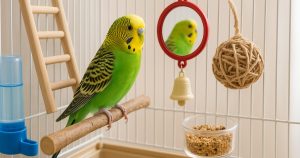
Perches are vital for exercise, rest, and maintaining foot health. Natural wood perches mimic the bark of trees, providing a more engaging texture for budgies to grip and chew on. The varied diameters in natural branches also promote foot strength and dexterity, which are essential for their well-being.
- Toys for Mental Stimulation
– Why It Matters: Prevents boredom and encourages natural behaviors like chewing.
– Recommended: Rotating toys weekly.
Toys are essential for mental stimulation, providing entertainment and promoting problem-solving skills. Ensure a variety of toys are available, such as foraging toys, bells, and ropes. Rotate toys weekly to maintain interest and encourage exploration, mimicking the ever-changing environment they would experience in the wild.
- Food and Water Dishes
– Why It Matters: Essential for daily nutrition and hydration.
– Pro Tip: Use stainless steel dishes for durability and hygiene.
Reliable food and water dishes are non-negotiable. Stainless steel dishes are preferred due to their durability, ease of cleaning, and resistance to bacteria. Ensure dishes are secured to prevent spillage and are placed away from perches to avoid contamination with droppings.
- Cuttlebone
– Why It Matters: Provides calcium and helps keep beaks trimmed.
Cuttlebones are a natural source of calcium, crucial for bone health and eggshell production in breeding females. They also serve as a tool for budgies to naturally file their beaks, preventing overgrowth that can lead to feeding difficulties.
- Swing
– Why It Matters: Encourages exercise and keeps your budgie entertained.
Swings add an element of fun and exercise to a budgie’s routine, allowing them to engage in gentle rocking motions. This accessory simulates the swaying branches they might encounter in their natural habitat, promoting balance and coordination.
- Mirror
– Why It Matters: Offers companionship, especially for single budgies.
– Warning: Overuse can lead to obsessive behavior.
Mirrors can be a source of comfort for solitary budgies, giving them the illusion of a companion. However, it’s essential to monitor behavior, as some birds may become overly attached and exhibit obsessive tendencies, such as excessive vocalization or aggression toward their reflection.
- Bird Bath
– Why It Matters: Allows for natural bathing behaviors and keeps feathers clean.
Bathing is an instinctive behavior that helps budgies maintain feather condition and skin health. Providing a bird bath encourages regular grooming and hydration of the skin. Ensure the bath is shallow to prevent drowning and is cleaned regularly to maintain hygiene.
- Ladder
– Why It Matters: Promotes physical activity and climbing skills.
Ladders encourage physical activity, promoting climbing and exploration within the cage. These accessories also serve as a means of exercise, developing muscle strength and coordination, which are key to a budgie’s overall health.
- Nesting Box (if breeding)
– Why It Matters: Necessary for breeding pairs to lay eggs.
For those interested in breeding, a nesting box is essential. It provides a secure and comfortable environment for laying eggs and raising chicks. Ensure the nesting box is appropriately sized and constructed from safe materials to avoid health risks to the birds.
- Seed Guard
- Why It Matters: Helps contain mess and reduces waste.
Seed guards help to contain hulls and discarded seeds, minimizing mess around the cage. This accessory not only makes cleaning easier but also prevents seed waste, ensuring that the food provided is consumed efficiently by your budgie.
Benefits of Providing Diverse Perches
Providing perches of different sizes and materials is crucial for a budgie’s foot health and overall well-being. Natural wood perches, rope perches, and sand-covered perches each offer unique benefits. According to avian experts, varied textures prevent foot disorders and stimulate natural behaviors. Ensure your setup includes multiple options to keep your budgie comfortable and engaged.
Natural wood perches offer an irregular surface that encourages exercise and helps maintain the natural shape of a bird’s feet. Rope perches, meanwhile, provide a softer grip, which is beneficial for older or arthritic birds. Sand-covered perches can assist in filing nails naturally, but caution is advised as overuse can lead to abrasions. By incorporating a variety of perches, you not only cater to different activities such as resting, playing, and feeding but also ensure that your budgie’s feet are healthy and strong.
Common Mistakes in Budgie Cage Setup (AVOID THESE!)
See also: Budgie Sneezing or Wheezing? 5 Essential Tips for Respiratory Health (2025 Guide)
Mistake #1: Overcrowding the Cage (60% of Owners)
- The Problem: Limited movement and increased stress.
- The Fix: Ensure enough space for free movement and flight.
Overcrowding with excessive toys and accessories can restrict movement, leading to stress and health issues such as obesity. A cluttered environment can also increase the risk of injury as birds attempt to navigate their space. Keep the setup simple and functional, allowing for free flight within the cage.
Mistake #2: Using Plastic Perches (45% of Owners)
- The Problem: Can cause foot problems due to uniform texture.
- The Fix: Opt for natural wood or varied textures.
Plastic perches provide no variation in texture or diameter, which can lead to pressure sores and foot deformities over time. Always choose perches that offer a variety of surfaces to promote healthy foot structure and prevent common ailments like bumblefoot.
Mistake #3: Ignoring Bar Spacing (30% of Owners)
- The Problem: Risk of escape or injury.
- The Fix: Ensure spacing is 1/2 inch or less.
Improper bar spacing can lead to severe injuries or escape attempts, particularly with smaller birds like budgies. Double-check the cage dimensions and opt for reputable brands that adhere to safety standards, ensuring peace of mind for both you and your bird.
Mistake #4: Lack of Toy Rotation (55% of Owners)
- The Problem: Leads to boredom and behavioral issues.
- The Fix: Rotate toys regularly to maintain interest.
Boredom is a significant trigger for behavioral problems such as feather plucking and incessant screeching. By rotating toys weekly, you provide a fresh environment that stimulates curiosity and mental engagement, which is crucial for psychological well-being.
Mistake #5: Inadequate Cleaning (50% of Owners)
- The Problem: Promotes unsanitary conditions and health risks.
- The Fix: Clean cage and dishes weekly.
A clean cage is vital for preventing diseases that can arise from bacterial growth in old food or droppings. Incorporate a weekly deep-clean routine, including scrubbing dishes and perches, to maintain a healthy environment for your budgie.
Step-by-Step Guide: Setting Up Your Budgie Cage
See also: Budgie Intelligence: 7 Shocking Insights (2025 Guide)
Method 1: Basic Setup (30 minutes)
– What you need: Cage, perches, dishes, toys, cuttlebone, swing.
Step 1: Install Perches (10 minutes)
– Place at varying heights and angles.
Strategically position perches to encourage movement and exploration. Avoid placing them directly above each other to prevent droppings from contaminating lower perches.
Step 2: Attach Food and Water Dishes (5 minutes)
– Secure them at mid-level for easy access.
Place dishes at an accessible height where the bird can comfortably reach them. Ensure they are stable to prevent spillage and contamination.
Step 3: Add Toys and Swing (10 minutes)
– Ensure even distribution to prevent overcrowding.
Distribute toys throughout the cage to encourage exploration. Avoid clustering them in one area, which can create a congested environment.
Step 4: Place Cuttlebone and Bird Bath (5 minutes)
– Position near perches for easy use.
Ensure these items are easily accessible to promote regular use. Budgies should be able to reach the cuttlebone and bath without
Related Articles You’ll Love
- Should You Put a Mirror in Your Budgie’s Cage? 9 Science-Backed Insights (2025 Guide)
- Budgie Cage Setup: 10 Essential Tips for Perfect Care (2025 Guide)