
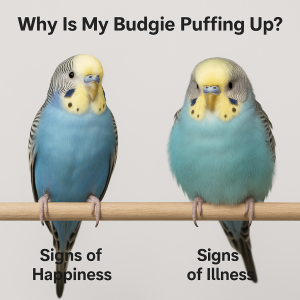
Quick answer: A budgie may puff up when relaxed, sleepy or keeping warm, but puffing up can also signal illness. If your budgie stays fluffed up for long periods, sits low, stops eating, has tail bobbing, laboured breathing or unusual droppings, contact an avian vet urgently.
Use this guide to separate normal relaxed puffing from warning signs that need fast action.
Affiliate disclosure: This article may contain affiliate links. If you purchase through them, we may earn a small commission at no extra cost to you. We only recommend items that support safe, evidence-informed budgie care.
Understanding Budgie Puffing: Deeper Context
Budgies, also known as parakeets, use their feathers to communicate a range of emotions and physical states. Puffing up their feathers is one of the most common behaviours you’ll notice. But what exactly does it mean when your budgie looks like a fluffy ball?
Feather puffing is a natural behaviour that helps budgies regulate their body temperature, express comfort, or signal distress. To interpret your budgie’s puffing correctly, it’s important to observe the context and accompanying signs.
Why Do Budgies Puff Up?
- Temperature Regulation: Puffing traps warm air close to the body, helping your budgie stay cosy in cooler environments.
- Comfort and Relaxation: Budgies often puff up when they are relaxed, sleepy, or feeling safe.
- Communication: Sometimes puffing can be a way to show contentment or to attract attention.
- Health Concerns: Persistent puffing combined with other symptoms can indicate illness or discomfort.
Nutrition and Compounds Affecting Feather Health
Healthy feathers are essential for your budgie’s ability to puff up properly. Nutrition plays a vital role in feather quality and overall wellbeing.
Key Nutrients for Feather Health
- Protein: Feathers are primarily made of keratin, a protein. Ensure your budgie’s diet includes adequate protein from seeds, pellets, and occasional egg food.
- Vitamins A and E: Important for skin and feather condition. Found in fresh vegetables like carrots, spinach, and broccoli.
- Omega-3 Fatty Acids: Support feather sheen and skin health. Sources include flaxseed and certain nuts (in moderation).
- Calcium and Minerals: Vital for overall health and feather strength.
Providing a balanced diet with fresh greens, quality pellets, and occasional treats supports your budgie’s ability to maintain healthy feathers and regulate temperature effectively.
Risks & Contraindications: When Puffing Signals Trouble
While puffing can be normal, certain signs alongside puffing should raise concern:
- Persistent Puffing: If your budgie remains puffed up for hours or days, it could indicate illness.
- Fluffed with Lethargy: A budgie that is puffed up and inactive may be unwell.
- Laboured Breathing or Tail Bobbing: Respiratory distress often accompanies sickness.
- Loss of Appetite or Weight: Illness often causes reduced eating and weight loss.
- Discharge from Eyes or Nostrils: Signs of infection or respiratory issues.
Preparation & Serving: How to Create a Comfortable Environment
To help your budgie feel comfortable and reduce unnecessary puffing due to cold or stress, follow this step-by-step checklist:
- Maintain Ideal Temperature: Keep the room temperature between 18–24°C (65–75°F).
- Provide a Draft-Free Space: Position the cage away from windows, doors, and air vents.
- Offer Soft Perches and Nesting Areas: These encourage relaxation and natural behaviours.
- Ensure Fresh Water and Balanced Diet: Nutritional health supports feather condition.
- Include Toys and Social Interaction: Reduce stress and boredom.
- Regular Cage Cleaning: Prevents infections and respiratory issues.
Checklist: Preparing Your Budgie’s Environment
| Task | Frequency | Purpose |
|---|---|---|
| Room temperature check | Daily | Maintain comfort |
| Cage cleaning | Weekly | Prevent illness |
| Fresh food & water | Daily | Nutrition & hydration |
| Social interaction | Daily | Reduce stress |
Portion & Frequency of Feeding for Optimal Feather Health
Feeding your budgie the right portions and frequency supports their health and feather condition, which in turn affects puffing behaviour.
| Food Type | Daily Portion | Frequency | Notes |
|---|---|---|---|
| Pellets | 1–2 teaspoons | Once daily | Balanced nutrition base |
| Seeds | 1 teaspoon | Once daily | Use sparingly to avoid obesity |
| Fresh Vegetables | Small handful | Daily | Rich in vitamins & minerals |
| Fresh Fruits | Small pieces | 2–3 times weekly | Occasional treat |
Signs of Problems & What To Do
Recognising when puffing is a sign of illness can save your budgie’s life. Watch for these warning signs:
- Continuous puffing for more than an hour
- Fluffed feathers with closed eyes during the day
- Weakness or reluctance to move
- Changes in droppings (colour, consistency)
- Laboured breathing or wheezing sounds
- Excessive scratching or feather plucking
“If your budgie’s puffing up is accompanied by any of these symptoms, contact your avian vet immediately.”
Vet Guidance: When and How to Seek Professional Help
Regular check-ups with an avian vet are essential for maintaining your budgie’s health. If you notice persistent puffing or any worrying signs, schedule a visit promptly.
What to Expect at the Vet
- Physical examination including feather and skin inspection
- Weight and hydration assessment
- Possible blood tests or swabs
- Advice on diet, environment, and care adjustments
Follow your vet’s recommendations carefully and monitor your budgie’s progress closely.
FAQs About Budgie Puffing
Q: Is it normal for my budgie to puff up at night?
A: Yes, budgies often puff up their feathers while sleeping to keep warm and comfortable.
Q: Can stress cause my budgie to puff up?
A: Yes, stress or fear can cause puffing. Look for other signs like frantic movements or vocalisations.
Q: How can I tell if puffing is due to illness?
A: Illness-related puffing is usually persistent and accompanied by lethargy, loss of appetite, or respiratory symptoms.
Q: Should I warm my budgie if it’s puffing up?
A: Ensure the environment is warm and draft-free, but avoid overheating. Use a safe heat source if necessary.
Q: Can puffing up be a sign of happiness?
A: Yes, budgies puff up when relaxed or preening, which are signs of contentment.
Key Takeaways
- Budgie puffing is a normal behaviour for warmth and comfort but can also indicate illness.
- Observe accompanying signs like activity level, appetite, and breathing to assess health.
- Maintain a balanced diet rich in protein, vitamins, and minerals for feather health.
- Provide a stable, warm, and stress-free environment to support your budgie’s wellbeing.
- Seek veterinary advice promptly if puffing is persistent or paired with worrying symptoms.
For more on budgie care and health, explore our guides on [[link:Budgie Molting Guide]] and [[link:Budgie Behaviour Explained]].
{AMAZON_TAG}
Recommended on Amazon
We’ve hand-picked useful items related to Why Is My Budgie Puffing Up? Signs of Happiness vs Illness.