
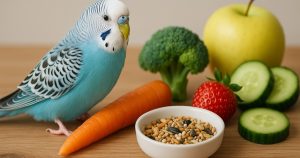
Quick answer: A healthy budgie diet is varied, not just seed. Most budgies do best with an appropriate base diet plus daily vegetables or greens, fresh water, and small measured treats. Any diet change should be gradual so your budgie keeps eating safely.
This guide explains the main parts of a budgie diet, common feeding mistakes, and simple ways to improve variety.
Table of Contents
Quick Answer: What Can Budgies Eat?
Why Does a Balanced Diet Matter for Budgies?
7 Essential Foods for Budgies (Vet-Approved)
Selecting the proper diet for your budgie can be daunting due to the multitude of options available. Here are seven essential foods that should be incorporated into your budgie’s diet:
-
Seeds
– The Seed Blend Approach: Seeds are a traditional part of a budgie’s diet, often found in mixed blends. However, they should not be the main diet component due to their high fat content, which can lead to obesity if consumed in excess.
– Best For: Occasional treats to complement a balanced diet. A good approach is to use seeds as a reward during training sessions or interactive playtime. -
Pellets
– The Pellet Solution: Pellets are formulated to provide a complete and balanced nutritional profile, covering all the essential vitamins and minerals a budgie needs. They are designed to reduce selective eating, ensuring that your budgie gets a consistent intake of nutrients.
– Best For: Daily feeding as the primary component of the diet. Look for pellets that are free from artificial colors and preservatives. -
Fresh Vegetables
– The Green Method: Fresh vegetables like spinach, broccoli, carrots, and bell peppers are rich in vitamins and antioxidants. These nutrients are crucial for maintaining healthy feathers and supporting the immune system.
– Best For: Daily nutrient variety. Offer a colorful assortment to keep mealtime interesting and nutritionally balanced. -
Fresh Fruits
– The Fruit Treat Approach: Fruits like apples, pears, berries, and melons provide essential vitamins and hydration. However, due to their sugar content, they should be offered in moderation.
– Best For: Occasional treats. Use fruit to encourage foraging behavior by hiding small pieces around their cage. -
Grains and Legumes
– The Grain Mix: Cooked grains such as brown rice, quinoa, and oats, along with legumes like lentils and chickpeas, are excellent sources of protein, fiber, and complex carbohydrates.
– Best For: Weekly variety to provide additional protein and energy. Ensure grains are cooked and cooled before serving. -
Eggs
– The Protein Boost: Hard-boiled eggs are a fantastic source of protein and essential amino acids, supporting muscle development and repair.
– Best For: Weekly protein supplement. Serve the egg in small, manageable pieces and remove any uneaten portions promptly. -
Calcium Supplements
– The Calcium Enrichment: Items such as cuttlebone and mineral blocks are vital for maintaining strong bones and healthy beaks.
– Best For: Continuous availability. Position these supplements in an easily accessible area of the cage.
How to Introduce New Foods to Budgies
-
Step 1: Start Small (1-2 days)
Offer a tiny piece of the new food alongside their usual diet to gauge initial reactions. -
Step 2: Observe Reactions (2-3 days)
Monitor your budgie for any signs of adverse reactions, such as changes in droppings or behavior, and note any preferences they show. -
Step 3: Increase Quantity (3-4 days)
If no issues arise, gradually increase the portion size, mixing it with their regular food. -
Step 4: Mix with Favorites (5-7 days)
Combine the new food with their favorite items to enhance palatability and encourage consumption. -
Step 5: Monitor Health (Ongoing)
Keep an eye on your budgie’s overall health and activity levels, adjusting their diet as needed to ensure they remain energetic and healthy.
Pro Tip: Always wash fruits and vegetables thoroughly to remove any pesticides and contaminants that could harm your budgie.
Common Mistakes Budgie Owners Make (AVOID THESE!)
Mistake #1: Overfeeding Seeds (60% of Owners)
The Problem: A diet excessively high in seeds can lead to obesity and related health problems.
The Fix: Limit seeds to about 25% of the total diet, focusing on variety.
Warning Signs: Look for weight gain, lethargy, and reluctance to perch or exercise.
Alternative: Incorporate more pellets and vegetables into their daily meals.
Mistake #2: Ignoring Fresh Foods (40% of Owners)
The Problem: Skipping fresh foods can result in vitamin deficiencies, affecting overall health.
The Fix: Make fresh fruits and vegetables a staple part of daily feeding.
Warning Signs: Watch for dull feathers, low energy, and increased susceptibility to illness.
Alternative: Use a feeding schedule to ensure your budgie receives a diverse diet.
Mistake #3: Not Providing Calcium (30% of Owners)
The Problem: Calcium deficiency can cause skeletal issues and affect egg-laying females.
The Fix: Always provide access to a cuttlebone or mineral block.
Warning Signs: Be alert for beak and bone abnormalities, as well as egg-binding in females.
Alternative: Introduce calcium-rich foods like broccoli and kale into their diet.
Mistake #4: Sudden Diet Changes (25% of Owners)
The Problem: Abrupt changes can disrupt digestion and stress your budgie.
The Fix: Implement dietary changes gradually to allow for adjustment.
Warning Signs: Look for signs such as loose stools, reduced appetite, and increased stress.
Alternative: Follow a gradual introduction method to ease transitions.
Mistake #5: Feeding Toxic Foods (15% of Owners)
The Problem: Certain foods are toxic to budgies and can cause severe health issues.
The Fix: Avoid items like chocolate, avocado, onions, garlic, and caffeine.
Warning Signs: Symptoms include vomiting, distress, and rapid breathing.
Alternative: Stick to a vet-approved list of safe foods and educate yourself on toxic foods.
Step-by-Step Guide: Preparing Homemade Budgie Food
Preparing homemade food for your budgie can be a fulfilling way to ensure they receive a balanced and varied diet. Here’s a step-by-step guide:
- What You Need: Fresh vegetables, fruits, grains, and proteins like eggs.
Step 1: Choose Ingredients (10 min)
Select a variety of fresh, organic produce and whole grains. Ensure that all ingredients are safe and free from pesticides.
Step 2: Wash and Prepare (15 min)
Thoroughly wash and finely chop all ingredients to eliminate any harmful residues and make them manageable for your budgie to eat.
Step 3: Cook Grains and Eggs (20 min)
Properly cook grains such as brown rice or quinoa, and hard-boil eggs. Allow them to cool completely before mixing.
Step 4: Mix Ingredients (5 min)
Combine all ingredients in a balanced ratio, ensuring a diverse mix of nutrients that cater to your budgie’s dietary needs.
Step 5: Serve and Store (5 min)
Serve fresh to your budgie. Store any leftovers in an airtight container in the refrigerator, but ensure they are consumed within 24 hours to maintain freshness.
Warning: Avoid adding salt, sugar, or any seasoning to the food, as these can be harmful to your budgie.
Budgie Diet Comparison: Seeds vs Pellets vs Fresh Foods
| Diet Component | Nutritional Value | Best For | Why It Matters |
|---|---|---|---|
| Seeds | High in fat | Occasional treats | Can lead to obesity if overconsumed |
| Pellets | Balanced nutrition | Daily feeding | Provides a complete and consistent diet option |
| Fresh Foods | Vitamins & minerals | Daily nutrient variety | Supports overall health and hydration |
Expert Tips for a Healthy Budgie Diet
Frequently Asked Questions (Expert Answers)
Is it safe for budgies to eat bread?
Budgies can eat small amounts of whole grain bread on occasion. However, bread should not become a dietary staple due to its low nutritional content and potential to fill them up without providing essential nutrients.
How often should I feed my budgie fresh food?
Fresh foods should be offered daily to provide essential vitamins and minerals that seeds and pellets may lack. This helps keep their diet balanced and nutritious.
Can budgies eat bananas?
Yes, budgies can eat bananas in moderation. Bananas are a good source of potassium and vitamins, which can be beneficial when included as part of a varied diet.
What is the best time to feed budgies?
Budgies are most active during the day and require energy to support their activities. Feed them in the morning and evening, providing them with the nutrients they need to stay active and healthy.
Should I give my budgie vitamin supplements?
If your budgie is on a balanced diet that includes pellets, fresh fruits, and vegetables, additional supplements are often unnecessary. Always consult your vet before adding supplements to your budgie’s diet.
How do I know if my budgie is overweight?
Signs that your budgie might be overweight include a pronounced keel bone, difficulty flying, and reduced activity levels. A health check by a veterinarian can provide a more accurate assessment.
Can budgies eat cooked rice?
Yes, budgies can eat cooked rice as a carbohydrate source, provided it is plain, unsalted, and cooled. Rice can be mixed with other fresh foods for variety.
What if my budgie refuses new foods?
Patience is key. Keep offering new foods alongside their favorites, and minimize stress during feeding times to encourage them to try new items. Persistence often pays off as budgies can be curious and eventually willing to try new things.
Is it necessary to provide grit for budgies?
Budgies do not need grit since they hull their seeds, and providing it can lead to impaction. It is best to avoid grit and focus on offering a varied diet instead.
How do I ensure my budgie is hydrated?
Ensure your budgie is hydrated by providing fresh water daily and including hydrating foods like fruits and vegetables in their diet. Regularly check and clean their water source to prevent contamination.
Key Takeaways: Budgie Diet Checklist
Related Articles You’ll Love
- Can Budgies Eat Pomegranate 2? (Safe, Benefits & Tips)
- Can Budgies Eat Bread a Complete Guide to Feeding Your Budg…
- Can Budgies Eat Rosemary? (Safe, Benefits & Tips)
- Can Budgies Eat BBQ Sauce? Safe, Benefits & Tips for Your Feathered Friend
- Can Budgies Eat Bread? A Complete Guide to Bread Safety for Your Pet Bird
- Can Budgies Eat Buckwheat?
- Can Budgies Eat Bulgur Wheat?
- Can Budgies Eat Chilli Peppers? The Surprising Truth About Spicy Foods
Veterinary Disclaimer
About This Guide
This comprehensive guide ensures your budgie receives the nutrition it needs to thrive, combining expert advice and practical tips for optimal health.
“`json