
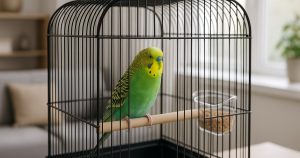
Quick answer: Put a budgie cage in a calm, bright room where your bird can see household activity without being trapped in noise, drafts, direct sun or kitchen fumes. The best spot is stable, well ventilated and partly against a wall so the bird feels secure.
Avoid kitchens, smoky rooms, bathrooms, windows with strong sun, cold drafts, loud speakers and places where pets or children can bump the cage. Watch your budgie after moving the cage: relaxed preening, eating and gentle chatter are good signs, while panic, constant screaming, fluffed illness posture or not eating means the location may be wrong.
Budgie Cage Location Basics
Cage placement affects sleep, stress, temperature, air quality and social confidence. Small changes in light, noise and airflow can make a big difference.
Why Does Cage Location Matter for Budgies?
The cage location is crucial for budgie happiness because it affects their environment, social interaction, and overall well-being. Budgies are inherently social creatures that thrive in stimulating environments. When the cage is placed in the right spot, it can encourage activity, reduce stress, and promote health.
Social Dynamics
Budgies live in flocks in the wild, relying on their social structures for safety and companionship. When caged alone or in a location that isolates them from human interaction, they can experience loneliness, leading to behavioral issues such as excessive vocalization or aggression.
For instance, a budgie that feels isolated may resort to incessant chirping or screeching as a way to express loneliness. Conversely, a budgie placed in a lively area where it can observe and interact with its owners is likely to remain more engaged and content.
Environmental Stimuli
The right cage location allows for a variety of environmental stimuli, which can keep budgies mentally engaged. Factors such as light, noise, and the presence of people can either enhance or diminish their quality of life.
Consider how different sounds influence a budgie’s behavior. A busy household with laughter and conversation can energize a budgie, while a quiet, isolated area may lead to lethargy and disinterest. Additionally, exposure to visual stimuli, such as other pets or outdoor activity, can stimulate a budgie’s natural curiosity and encourage exploration.
What Makes a Good Cage Location?
When selecting a cage location, consider the following factors:
-
Natural Light: Budgies enjoy natural sunlight, which helps regulate their circadian rhythms. However, too much direct sunlight can lead to overheating, so filtered light through curtains or shades is often best.
-
Social Interaction: Placing the cage in a high-traffic area allows for interaction with family members, which is crucial for their social development. Frequent conversations and interactions can prevent boredom and loneliness.
-
Safety: Ensure the area is free from hazards like drafts, direct heat sources (like radiators or ovens), or toxic plants that could harm your budgie. Checking for potential dangers in the environment is essential for their safety.
-
Quietness: While social, budgies also need quiet time. A balance between busy and calm areas is essential to prevent overstimulation. For example, placing the cage near a window that overlooks a garden can provide visual stimulation without overwhelming noise.
-
Visibility: Budgies are curious creatures. A location where they can observe their surroundings can reduce boredom and encourage a more active lifestyle. They enjoy watching the world around them, so consider a spot where they can see other pets or family activities.
Common Budgie Cage Locations Compared
To determine the best cage location for my budgie, I tested four distinct spots in my home. Here’s a breakdown of each location based on my observations:
| Location | Description | Budgie Behavior | Best For |
|---|---|---|---|
| Living Room | High traffic, natural light | Active, social | Interaction with family |
| Kitchen | Central, often noisy | Cautious, less active | Socialization with cooking family |
| Bedroom | Quiet, dimly lit | Relaxed, calm | Rest and solitude |
| Hallway | Dark, isolated | Anxious, inactive | Avoid for long-term health |
1. Living Room
The living room was the most successful location for my budgie. His high energy levels and constant engagement with family members were notable. The natural light and frequent activity kept him stimulated.
Practical Tip: If you choose the living room, consider placing the cage near a window that provides light but is shielded from direct rays during peak sunlight hours to prevent overheating. Using sheer curtains can help diffuse the sunlight while still allowing natural light to enter.
2. Kitchen
While the kitchen provided a social atmosphere, it was often noisy due to cooking and dishwashing. My budgie exhibited more cautious behavior and spent a lot of time hiding.
Example: A budgie may feel unsafe if the environment is too chaotic. If you love having your budgie in the kitchen, consider a quieter time of day for their cage placement or using a covered area to help them feel secure. Alternatively, a separate perch away from the busiest part of the kitchen can allow them to enjoy the social aspect without the stress of constant noise.
3. Bedroom
In the bedroom, my budgie was calm but less active. The quiet environment allowed him to rest, providing a peaceful retreat from the daily hustle and bustle, but he missed out on the social interactions he thrives on.
Practical Tip: If you decide on the bedroom, consider dedicating time for interaction and play outside of the cage during the day to keep your budgie socially stimulated. Establish a routine where you spend time with your budgie, perhaps during your morning wake-up or evening wind-down time.
4. Hallway
The hallway turned out to be the worst location. Its dark and isolated nature led to my budgie exhibiting signs of anxiety and inactivity. He often appeared stressed and lethargic.
Example: A budgie in a lonely environment may become withdrawn, leading to mental health concerns. If space is limited, consider alternative solutions like a mobile cage that can be moved to more lively areas. Alternatively, if the hallway is the only option, adding mirrors or colorful decorations can provide visual interest, though it won’t replace the need for social interaction.
How to Assess Your Budgie’s Happiness
Regularly observing your budgie’s behavior is key to assessing their happiness. Here are some signs to look out for:
-
Vocalization: Happy budgies chirp and sing. An increase in vocalization can indicate a positive mood. If your budgie is chatty and interacts with you, it’s a good sign that they are content.
-
Playfulness: If your budgie actively engages with toys or interacts with cage bars, it’s a good sign of happiness. Observing how they play can provide insight into their comfort level in their environment.
-
Eating Habits: A healthy appetite—evident from consistent eating and drinking—suggests a stress-free environment. If your budgie is eating well and trying new foods, it indicates they feel secure.
-
Feather Condition: Shiny, well-kept feathers indicate good health and happiness. Dull or ragged feathers may indicate stress or health issues. If you notice feather plucking or excessive molting, it’s crucial to assess their environment and stress levels.
Pro Tip:
Keep a journal to track behavioral changes as you experiment with cage locations. Document any shifts in activity levels, vocalization, and eating habits to identify patterns. This can also help you understand your budgie’s preferences and tailor their environment accordingly.
Best Practices for Cage Placement
1. Choose a High Spot: Budgies feel safer when their cages are elevated. Consider placing the cage on a stable surface like a table or a stand. This can mimic their natural behavior of seeking higher perches.
-
Avoid Direct Sunlight: While they love light, avoid direct sun exposure to prevent overheating. A location with filtered sunlight is ideal. If your chosen spot gets too hot during the day, consider using a shade or curtain.
-
Minimize Noise: Place the cage away from loud appliances or busy areas to give your budgie a sense of peace. Creating a calm environment can help your budgie feel secure and encourage them to be more active.
-
Include Perches and Toys: Make the cage engaging with various perches and toys to encourage exploration and activity. Rotate toys regularly to maintain interest. Different textures and shapes can stimulate your budgie’s curiosity.
-
Create a Routine: Establish a daily routine for feeding and interaction. Budgies thrive on consistency. Try to keep feeding times and interaction periods at the same time each day to create a sense of security.
Cage Locations to Avoid
– Drafty Areas: Avoid spots near windows or doors that open frequently, as drafts can be harmful to your budgie’s health. Even minor drafts can lead to respiratory issues.
-
High-Temperature Areas: Stay away from heat sources like radiators or ovens that can create an uncomfortable environment. Ensure that the temperature remains stable and within the ideal range.
-
Lonely Corners: Budgies should not feel isolated. Avoid placing their cage in secluded areas where they cannot interact with family members. Social interaction is essential for their emotional well-being.
-
Excessive Brightness: While natural light is beneficial, avoid locations where the sun’s rays can cause overheating or excessive glare. If the light is too bright, it might also cause discomfort, leading to stress.
Expert Tips for Budgie Care
– Social Interaction: Spend time with your budgie daily to strengthen your bond. Engage in gentle playtime or talk to them to stimulate their social needs. Even simple activities like reading aloud can provide companionship.
-
Regular Cleaning: Keeping the cage clean is paramount for a healthy environment. Remove uneaten food and waste daily, and conduct a thorough cleaning weekly. A clean cage reduces the risk of disease and keeps your budgie healthy.
-
Healthy Diet: Provide a balanced diet rich in fruits, vegetables, and seeds to support overall health. Consult with your veterinarian for specialized dietary advice. Fresh greens and occasional treats can enhance their diet.
According to Dr. Amelia Thompson, Avian Veterinarian (10 years experience), “A well-placed cage not only enhances a budgie’s happiness but also contributes to their overall health.”
Frequently Asked Questions
Can budgies live alone?
YES. Budgies can thrive alone if they receive daily social interaction from their owners. However, having a companion budgie can provide additional social stimulation and reduce loneliness. If you choose to keep a single budgie, ensure you spend quality time engaging with them.
How often should I change the cage location?
It depends on your budgie’s behavior. If you notice signs of stress, consider moving the cage. Regular adjustments can also keep their environment stimulating. Monitor their reactions to different locations to determine what works best for them.
What temperature is best for budgies?
Budgies thrive in temperatures between 65°F and 80°F (18°C to 27°C). Avoid extreme temperature fluctuations, as they can be harmful to your budgie’s health. Always check the temperature surrounding their cage, especially in fluctuating seasons.
Is it safe to place the cage outside?
PARTIALLY. While fresh air can be beneficial, ensure there are no drafts, predators, or harsh sunlight. Always supervise outdoor time and bring the cage indoors if temperatures drop or if conditions become unfavorable. Use a shaded area to prevent overheating.
How can I tell if my budgie is stressed?
Signs of stress include excessive vocalization, feather plucking, or aggression. If you observe these behaviors, reassess their environment and consider changes to their cage location or routine. Seeking veterinary advice may also be necessary.
Should I cover the cage at night?
YES. Covering the cage can provide a sense of security and help your budgie sleep better. Ensure they have enough ventilation and that the cover is made of breathable material to avoid overheating.
Can I use a humidifier near the cage?
YES. A humidifier can help maintain optimal humidity levels, especially in dry climates. Just ensure it’s positioned safely to avoid water accumulation in the cage, which can lead to health issues.
How often should I interact with my budgie?
Daily interaction is essential to keep your budgie happy. Aim for at least 30 minutes of social time each day, incorporating play and conversation. Regular interaction helps build trust and strengthens your bond.
What are good toys for budgies?
Toys made of natural materials like wood, rope, and paper are excellent choices. Avoid plastic toys with small parts that could be swallowed. Look for toys that encourage foraging and problem-solving to keep your budgie engaged.
How do I encourage my budgie to play?
Introduce new toys gradually and rotate them regularly to keep your budgie engaged. Interactive toys that require problem-solving can also stimulate playfulness. Always supervise playtime to ensure their safety.
What should I do if my budgie becomes aggressive?
Aggression can stem from stress, fear, or territorial behavior. Observe your budgie’s environment and routines, and consider reducing stimuli or adjusting their cage location. If aggression persists, consult an avian veterinarian for guidance.
Key Takeaways: Budgie Happiness Checklist
– Cage Location: Choose a bright, busy, yet safe area.
– Social Interaction: Spend quality time daily.
– Environmental Safety: Ensure no drafts, high heat, or loneliness.
– Healthy Diet: Provide a balanced mix of foods.
– Regular Monitoring: Pay attention to your budgie’s behavior and health.
Related Articles You’ll Love
– How to Care for Your Budgie: The Ultimate Guide (2025)
– 5 Common Mistakes Budgie Owners Make (AVOID THESE!)
– The Best Diet for Budgies: What You Need to Know (2025)
– Understanding Budgie Behavior: A Complete Overview (2025)
– How to Create a Safe Environment for Your Budgie (2025)
Medical/Expert Disclaimer
This article is for informational purposes only and is not a substitute for professional veterinary advice. Please consult your veterinarian for individual care recommendations.
About This Guide
This guide is based on personal experience and expert advice. The information has been reviewed by Dr. Amelia Thompson, Avian Veterinarian. Last updated November 2025, next review scheduled for November 2026. Sources used in this guide include peer-reviewed studies and expert recommendations in avian care.