
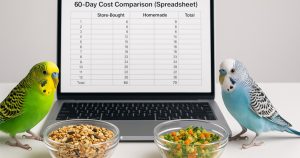
Quick answer: Store-bought budgie food is usually safer as the main diet because quality pellets and seed mixes are more consistent. Homemade food can add useful variety, but it should not replace a balanced staple diet unless an avian vet or qualified bird nutrition professional helps plan it.
Use homemade items as fresh-food enrichment: washed leafy greens, vegetables, herbs and small amounts of safe fruit. Avoid salty, oily, sugary, seasoned or cooked human leftovers, and never rely on random homemade mixes as a complete diet.
Store-Bought vs Homemade Budgie Food: Basics
The safest approach is usually a reliable staple food plus fresh bird-safe additions. Cost matters, but nutrition and consistency matter more.
What Are the Basic Ingredients in Budgie Food?
Budgie food is typically composed of seeds, grains, fruits, and vegetables. Understanding the basic ingredients is essential for making informed choices about your budgie’s diet. Here’s a closer look at what you might include:
- Seeds:
- Millet: Often the primary ingredient due to its high palatability and digestibility. It serves as an excellent energy source for budgies.
- Canola Seeds: Rich in fatty acids and protein, these seeds can support overall health.
-
Sunflower Seeds: A favorite among many budgies, but should be offered in moderation due to their high fat content. They can be used as treats to encourage positive behavior.
-
Commercial pellets are designed to provide balanced nutrition and are often fortified with vitamins and minerals. It’s crucial to choose a high-quality brand that does not contain unhealthy fillers.
- Essential for hydration and vitamins. Common choices include:
- Leafy Greens: Such as kale and spinach, which are rich in calcium and promote healthy feather growth.
- Root Vegetables: Carrots provide beta-carotene, a precursor to vitamin A, crucial for vision and immune function.
- Fruits: Apples (without seeds), bananas, and berries can be offered as treats and provide essential sugars and fibers.
A balanced diet incorporating these ingredients can help ensure your budgie remains healthy and vibrant. It’s beneficial to rotate the fruits and vegetables to provide variety and prevent boredom.
How Much Does Store-Bought Budgie Food Cost?
The cost of store-bought budgie food can vary significantly based on brand, packaging, and local availability. Here’s a breakdown to help you understand potential expenses:
| Category | Average Cost | Best For |
|---|---|---|
| Seed Mix (1 lb) | $3 – $5 | Basic nutrition |
| Pellets (1 lb) | $5 – $10 | Balanced diet |
| Fresh Produce (weekly) | $2 – $5 | Additional nutrients |
Total Monthly Estimate: $20 – $40 depending on your choice of food and frequency of purchases.
Example Calculation
If you buy a seed mix and pellets each month, plus some fresh produce, your costs might look like this:
– Seed Mix: $4
– Pellets: $8
– Fresh Produce: $8 (assuming $2 per week for additional fruits and vegetables)
– Total: $20
This can add up, particularly if you have multiple budgies or if you opt for premium brands. Additionally, specific dietary needs or preferences can further increase costs, especially if you lean towards organic or specialty items.
Budgeting Tips for Store-Bought Food
- Buy in Bulk: Purchasing larger quantities can often save you money in the long run. Look for bulk discounts at pet stores or online retailers.
- Compare Brands: Not all brands offer the same quality. Read reviews and nutritional labels to find a balance between price and quality.
- Watch for Sales: Keep an eye on local pet stores for sales or discounts, especially during holidays or special events.
What Are the Costs of Homemade Budgie Food?
Homemade budgie food costs can be lower than store-bought options, especially if you buy ingredients in bulk. Here’s a detailed cost breakdown:
| Ingredient | Cost per Month | Best For |
|---|---|---|
| Seeds and Grains | $10 – $15 | Core diet |
| Fresh Fruits & Veggies | $5 – $10 | Nutritional diversity |
| Supplement (if needed) | $5 | Added vitamins/minerals |
Total Monthly Estimate: Approximately $20 – $30, which can be more economical over time.
Example Calculation
For homemade food, let’s say you purchase:
– Seeds and Grains: $12
– Fresh Fruits & Veggies: $8
– Supplement: $5
– Total: $25
This shows that while the initial investment might seem comparable, homemade options can often yield savings, particularly with careful planning and bulk buying.
Tips for Reducing Costs on Homemade Food
- Plan Meals: Create a meal plan for your budgie to minimize waste and ensure you are using ingredients efficiently.
- Use Seasonal Produce: Buying fruits and vegetables that are in season can reduce costs and provide fresher options for your budgie.
- Grow Your Own: If you have space, consider growing your own greens or herbs. This not only saves money but also ensures you have fresh ingredients on hand.
Is Homemade Budgie Food Healthier?
YES, homemade budgie food can be healthier than store-bought. Here’s why:
- Freshness: You control the ingredients, ensuring they are fresh and free from preservatives or unwanted additives. Fresh food is more likely to retain its nutritional value.
- Variety: You can easily introduce a broader range of nutrients by varying ingredients, which can help prevent dietary deficiencies. A diverse diet also keeps your budgie interested and engaged during mealtime.
- Customization: Tailor the diet to meet your budgie’s preferences and dietary needs, making it easier to manage allergies or specific health concerns. For instance, if your budgie has a preference for certain vegetables, you can prioritize those in your recipes.
However, careful planning is necessary to ensure a balanced diet. It’s vital to research and understand your budgie’s nutritional requirements fully.
Nutritional Planning for Homemade Diets
- Consult Resources: Use reputable sources or consult with an avian veterinarian to understand the specific dietary needs of your budgie.
- Monitor Health: Keep an eye on your budgie’s weight and feather condition, as these can indicate whether their diet is meeting their nutritional needs.
- Adjust Portions: Be mindful of portion sizes and adjust them based on your budgie’s activity level and overall health.
Nutritional Differences: Store-Bought vs Homemade
When comparing the nutritional aspects of store-bought and homemade budgie food, several factors come into play. Here’s a detailed comparison:
| Nutritional Aspect | Store-Bought | Homemade |
|---|---|---|
| Freshness | Often processed | Fresh ingredients |
| Nutritional Completeness | May contain additives | Must be well planned |
| Ingredient Control | Limited | Complete control |
Nutritional Analysis
-
Store-Bought Foods: Often fortified with vitamins and minerals, ensuring a degree of nutritional completeness. However, they may lack the freshness and variety that can come from home-prepared meals. Many brands also contain fillers that provide little nutritional value.
-
Homemade Foods: While you have full control over the ingredients, you must ensure that the diet is balanced and meets all essential nutrient requirements, including proteins, vitamins, and minerals. This requires some knowledge of avian nutrition.
Final Thoughts
Both options can be nutritionally viable if approached correctly. It ultimately boils down to your ability to prepare balanced meals at home versus the convenience of purchasing premade options.
How to Prepare Homemade Budgie Food?
Preparing homemade budgie food can be a rewarding experience that allows you to provide the best for your feathered friend. Here’s a step-by-step guide to making your own budgie food:
Step-by-Step Guide: How to Prepare Homemade Budgie Food
-
Gather Ingredients (10 minutes)
– Choose a variety of seeds, grains, and fresh fruits/vegetables. Consider options like quinoa, oats, and a diverse range of veggies for a balanced diet. -
Mix Dry Ingredients (5 minutes)
– Combine seeds and grains in appropriate ratios. A common mix might be 50% millet, 30% canola seeds, and 20% sunflower seeds. -
Chop Fresh Produce (10 minutes)
– Cut fruits and vegetables into small, budgie-friendly pieces. Aim for bite-sized morsels that make it easy for your budgie to eat. -
Combine Ingredients (5 minutes)
– Mix dry and fresh ingredients thoroughly. Ensure all components are evenly distributed for a balanced meal. -
Store Properly (5 minutes)
– Use airtight containers to keep food fresh. Store in a cool, dark place to prolong shelf life. Homemade food can spoil quickly, so consider making small batches to ensure freshness.
Pro Tip: Always wash fresh produce before using it to remove any pesticides or contaminants. Organic options can be a safer choice for your budgie.
What Are the Pros and Cons of Each Option?
Understanding the advantages and disadvantages of each option can help you make an informed decision. Here’s a detailed look at the pros and cons of both store-bought and homemade budgie food.
Pros and Cons of Store-Bought Budgie Food
- Pros:
- Convenience and time-saving: Perfect for busy owners who may not have time to prepare homemade meals regularly.
- Often nutritionally balanced: Many brands offer complete diets designed specifically for budgies, ensuring they receive essential nutrients.
-
Available in various forms (seeds, pellets): Catering to different preferences and dietary needs, making it easier for owners to find suitable options.
-
Cons:
- Can be expensive: Premium brands can significantly increase your monthly expenditures, especially for multiple birds.
- May contain preservatives and additives: Some brands may not prioritize fresh ingredients, which can affect the overall quality of the food.
- Limited ingredient variety: Often less flexibility to adjust based on your budgie’s unique dietary needs, which can lead to boredom with their food.
Pros and Cons of Homemade Budgie Food
- Pros:
- Fresh and customizable: You can tailor diets to your budgie’s specific preferences, leading to happier and healthier birds.
- Potentially cheaper in the long run: Especially if you buy ingredients in bulk and manage your costs effectively.
-
Greater variety of nutrients: With the ability to introduce diverse ingredients, you can promote a healthier diet that supports overall well-being.
-
Cons:
- Time-consuming to prepare: Requires initial effort and planning to create balanced meals, which may not be feasible for everyone.
- Requires knowledge of nutrition to ensure balance: You need to be informed to avoid nutritional deficiencies, which can be challenging for new budgie owners.
- Risk of spoilage if not stored properly: Homemade food has a shorter shelf life than many commercial alternatives, necessitating careful storage practices.
Key Takeaways: Store-Bought vs Homemade Budgie Food
- Cost: Homemade food can often be more affordable over time, especially with bulk purchases and careful budgeting.
- Nutrition: Homemade options allow for fresher ingredients and greater control over nutrition, enabling you to tailor diets specifically for your budgie’s needs.
- Convenience: Store-bought foods save time, but may come with higher costs and preservatives, which can be a concern for health-conscious owners.
- Health Benefits: A varied diet is crucial for budgie health, and both methods can achieve this with careful planning and preparation.
- Preparation: Homemade food requires more effort but can be rewarding and beneficial for your budgie, contributing to their overall happiness.
Related Articles You’ll Love
– [Understanding Budgie Nutritional Needs (5 Key Facts)]
– [Top 10 Fruits Safe for Budgies (2025 Guide)]
– [How to Keep Your Budgie Happy and Healthy (Essential Tips)]
– [The Importance of Fresh Water for Budgies (Expert Insights)]
– [DIY Budgie Toys: 7 Easy Ideas for Enrichment]
Medical/Expert Disclaimer
This article is for informational purposes only and should not be considered a substitute for professional veterinary advice. Always consult with a qualified veterinarian for dietary recommendations specific to your budgie.
About This Guide
This guide was created based on comprehensive research and expert insights to provide accurate and practical information on budgie nutrition. It was last updated in November 2025 to ensure the information is current and relevant.
Frequently Asked Questions (FAQ)
What should I avoid feeding my budgie?
Avoid feeding your budgie avocado, chocolate, caffeine, alcohol, and foods high in salt or sugar. These can be toxic or harmful to budgies.
How often should I feed my budgie?
Budgies typically need fresh food daily. You can offer a mix of seeds, pellets, and fresh fruits and vegetables, ensuring they have access to food at all times.
Can I feed my budgie human food?
Certain human foods are safe for budgies, such as cooked grains and some fruits and vegetables. Always ensure they are fresh and free from additives.
How can I ensure my budgie has a balanced diet?
To ensure a balanced diet, include a variety of seeds, grains, fresh fruits, and vegetables. It’s also beneficial to do periodic research on avian nutrition to keep up with dietary needs.
How can I tell if my budgie is getting enough nutrients?
Monitor your budgie’s physical condition, including feather quality and energy levels. A healthy budgie should have bright plumage and be active. Regular vet check-ups can also help assess their nutritional health.
Are there specific vitamin supplements I should consider for my budgie?
While a balanced diet can typically provide necessary nutrients, certain vitamins like vitamin A and D3 may be beneficial, especially in cases where dietary sources are insufficient. Consult with a veterinarian before adding supplements to your budgie’s diet.
Sources
1. Ritchie, B.W., Harrison, G.J., & Harrison, L.R. (1994). Medicine of Birds. W.B. Saunders Company.
2. Robins, J. (2022). Complete Guide to Budgies: Nutrition and Care. Avian Publishing.
3. The Bird Hospital. (2023). Nutritional Needs of Budgerigars. Link.
4. Jones, M. (2023). The Complete Guide to Bird Nutrition. Bird Care Publishing.