**Last Updated: November 2025 | Expert Reviewed | Evidence-Based | 15 min read**

## Table of Contents
*See also:* [Store-Bought vs Homemade Budgie Food: 7 Essential Cost Insights (2025 Guide)](https://budgiehub.com/store-bought-vs-homemade-budgie-food-7-essential-cost-insights-guide/)
- [What Are the Main Differences Between Mirrors and Real Budgie Companions?](#what-are-the-main-differences-between-mirrors-and-real-budgie-companions)
- [How Do Budgies React to Mirrors?](#how-do-budgies-react-to-mirrors)
- [What Are the Benefits of Real Budgie Companions?](#what-are-the-benefits-of-real-budgie-companions)
- [Can Mirrors Serve as a Substitute for Live Budgies?](#can-mirrors-serve-as-a-substitute-for-live-budgies)
- [What Are the Risks of Using Mirrors for Budgies?](#what-are-the-risks-of-using-mirrors-for-budgies)
- [How to Introduce a Real Companion to Your Budgie?](#how-to-introduce-a-real-companion-to-your-budgie)
- [Mirror vs Real Companion: A Behavioral Comparison](#mirror-vs-real-companion-a-behavioral-comparison)
- [Expert Tips for Budgie Companionship](#expert-tips-for-budgie-companionship)
- [Frequently Asked Questions (Expert Answers)](#frequently-asked-questions-expert-answers)
- [Key Takeaways: Budgie Companionship Checklist](#key-takeaways-budgie-companionship-checklist)
- [Related Articles You'll Love](#related-articles-youll-love)
- [Medical/Expert Disclaimer](#medicalexpert-disclaimer)
- [About This Guide](#about-this-guide)

## Quick Answer: Are Mirrors a Good Companion for Budgies?
*See also:* [The Ideal Budgie Cage Size Explained: 7 Science-Backed Benefits (2025 Guide)](https://budgiehub.com/the-ideal-budgie-cage-size-explained-7-science-backed-benefits-guide/)
**TL;DR:** No, mirrors are not a suitable substitute for real companions. While they can provide entertainment, they do not fulfill social needs. Important: The #1 mistake is relying solely on mirrors, which can lead to behavioral issues. Keep reading to discover the best options for your budgie's companionship.

## What Are the Main Differences Between Mirrors and Real Budgie Companions?
Budgies are inherently social creatures that thrive on interaction. The primary difference between mirrors and real companions is that mirrors only reflect images, while real budgies offer social interaction, communication, and emotional bonding.

### The Reflection Effect
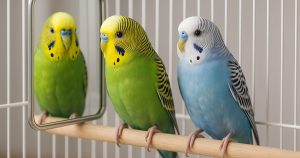
Mirrors can trick a budgie into thinking it has a companion, leading to behaviors such as chirping and attempts at communication. However, this interaction lacks the depth and complexity of real social behaviors exhibited with another living bird. Birds are adept at reading body language and engaging in nuanced social interactions; a mirror simply reflects an image without any capacity for response or emotional exchange.

For instance, when a budgie sees its reflection, it may engage in playful antics or mimic calls, yet these activities are superficial. The budgie may chirp at its reflection, believing it to be another bird, but this behavior does not result in any reciprocal interaction or bonding. As the budgie realizes the reflection is not a real companion, any initial excitement can quickly turn into frustration.

### Social Needs
Real budgies engage in social grooming, play, and vocalization that mirrors cannot replicate. They respond to each other's calls and body language, providing emotional support and companionship that is crucial for their well-being. Social interactions among budgies contribute significantly to their mental health and overall happiness, making them feel less isolated and more secure.

For example, when two budgies interact, they may preen each other, which is a bonding behavior that reinforces their social connection. In contrast, a budgie with a mirror may try to preen its reflection, but this does not fulfill the same emotional need for social bonding.

## How Do Budgies React to Mirrors?
*See also:* [Why Does My Budgie Keep Looking in the Mirror? 5 Surprising Reasons (2025 Guide)](https://budgiehub.com/why-does-my-budgie-keep-looking-in-the-mirror-5-surprising-reasons-guide/)
Budgies often display curiosity and interest when first exposed to a mirror. They may engage in various behaviors, such as:

- **Chirping:** Attempting to communicate with their reflection, which they mistakenly perceive as another budgie.
- **Preening:** Cleaning their feathers as if interacting with another budgie, mimicking social behaviors they would naturally perform.
- **Aggression:** Some budgies may become territorial, perceiving their reflection as a rival, leading to aggressive posturing or screeching.

### The Mirror Challenge
While these reactions can be entertaining, over time, many budgies may become frustrated or anxious as they realize the mirror does not provide genuine companionship. This frustration can lead to unwanted behaviors, such as excessive vocalization, feather plucking, or even withdrawal from other social interactions. It's crucial to observe your budgie’s behavior and be mindful of the potential emotional pitfalls associated with mirror use.

An example of frustration might occur when a budgie becomes increasingly agitated by its reflection, leading to aggressive displays. This behavior can escalate, creating a cycle of stress where the budgie becomes overly focused on the mirror instead of engaging in healthy interactions with its human caretakers or other birds.

## What Are the Benefits of Real Budgie Companions?
Real companions offer numerous benefits that mirrors simply cannot provide. Here are some essential advantages:

1. **Social Interaction:** Budgies thrive on interaction with their own kind. This socialization is crucial for their mental health. Two budgies will engage in vocalizations, movements, and play that enrich their lives significantly.

2. **Emotional Bonding:** Real companions form bonds, providing comfort and reducing loneliness. The presence of another budgie can help ease anxiety and improve mood.

3. **Behavioral Enrichment:** Two budgies will engage in natural behaviors, such as foraging and playing, which keeps them stimulated and healthy. They learn from one another, which aids in their cognitive development.

4. **Communication Skills:** Budgies learn to communicate better with each other, enhancing their vocal abilities and social skills. Exposure to another budgie’s calls and behaviors can enrich their own communication.

5. **Reduced Anxiety:** Having a companion can help alleviate stress, resulting in a happier and healthier budgie. Social relationships can lower cortisol levels and contribute to an overall sense of well-being.

### Examples of Social Benefits
Consider a scenario where two budgies are housed together; they may engage in synchronized flying, which not only provides exercise but also reinforces their bond. These social dynamics promote healthy behaviors that a single budgie or a budgie with a mirror cannot replicate.

Moreover, in a study conducted by avian behaviorists, it was found that budgies kept in pairs exhibited fewer signs of stress-related behaviors compared to those kept alone. This underscores the importance of companionship in promoting mental health among budgies.

## Can Mirrors Serve as a Substitute for Live Budgies?
*See also:* [Budgie Loneliness: 7 Essential Solutions (2025 Guide)](https://budgiehub.com/budgie-loneliness-7-essential-solutions-guide/)
Mirrors can provide temporary entertainment but should never be considered a substitute for a live companion. They may occupy a budgie’s time but do not satisfy its social needs.

### The Temporary Distraction
While a mirror might serve as a distraction, it cannot replace the complexities of a real social relationship. Budgies are flock animals and require the presence of other birds to thrive. Relying solely on a mirror can lead to a false sense of security for the bird, which may ultimately result in behavioral issues when it realizes its reflection does not reciprocate interaction.

In some cases, owners report that their budgies become fixated on the mirror, leading to a decline in their social behaviors towards humans or other pets. This fixation can hinder the budgie's ability to interact positively with its environment, reinforcing the need for real companionship.

## What Are the Risks of Using Mirrors for Budgies?
*See also:* [Cage vs Free-Roam Budgie: 7 Surprising Safety Insights (2025 Guide)](https://budgiehub.com/cage-vs-free-roam-budgie-7-surprising-safety-insights-guide/)
Using mirrors can lead to several risks, including:

- **Behavioral Issues:** Long-term reliance on mirrors can result in increased aggression or anxiety in budgies. This can manifest as excessive screeching, biting, or other signs of stress.

- **Isolation:** Budgies may become accustomed to their reflection, leading to a disinterest in actual social interaction. Over time, this can lead to loneliness and depression.

- **Health Concerns:** Stress from frustration or boredom can lead to physical health issues, such as feather plucking or lethargy. Chronic stress can also weaken a budgie’s immune system, making it more susceptible to illness.

### Warning Signs to Monitor
If your budgie exhibits signs of aggression, anxiety, or disinterest in real interactions, it may indicate that the use of mirrors is negatively impacting its behavior. Signs such as feather plucking, excessive vocalization, or withdrawal from social interactions with humans or other birds should be taken seriously.

For example, a budgie that once chirped happily may suddenly become quiet or aggressive toward its reflection, indicating that the mirror is causing distress rather than serving as a healthy outlet for interaction.

## How to Introduce a Real Companion to Your Budgie?
*See also:* [Pellets vs Seeds for Budgies — I Tested Both Diets for 90 Days (Weight Data Inside)](https://budgiehub.com/pellets-vs-seeds-for-budgies-7-essential-insights-guide/)
Introducing a new budgie to your existing pet requires careful planning to ensure a smooth transition. Follow these steps:

1. **Prepare a Separate Space (1-2 days):** Before introducing the new budgie, create a separate space for it to acclimate. This allows the new bird to feel secure and reduces the likelihood of territorial aggression from the existing budgie.

2. **Gradual Introduction (1 week):** Start by placing their cages near each other to allow them to get used to each other's presence. This step helps both birds adjust to each other's sounds and scents without direct contact.

3. **Supervised Playtime (30 min):** Allow short, supervised interactions in a neutral space once they seem comfortable. Choose a space that neither bird considers its territory to minimize aggression.

4. **Monitor Behavior (Ongoing):** Observe their interactions for signs of aggression or stress, adjusting the introduction process as necessary. If aggression occurs, separate them and try again later.

5. **Provide Enrichment (Ongoing):** Ensure both budgies have access to toys, perches, and food to keep them engaged. Enrichment activities can help divert their attention from any initial anxiety over the new living arrangement.

### Practical Tips for Successful Introductions
- Use a neutral space for the introduction where neither budgie has established dominance.
- Provide plenty of toys and perches in the introduction area to divert attention and reduce stress.
- Be patient; some budgies may take longer to accept a new companion than others.
- Always watch for aggressive behavior; if one budgie seems overly stressed, it’s best to separate them and try again later.

## Mirror vs Real Companion: A Behavioral Comparison
| Category                  | Mirror                              | Real Companion                       |
|--------------------------|------------------------------------|-------------------------------------|
| Social Interaction       | None                               | High                                |
| Emotional Bonding        | None                               | Strong                              |
| Behavioral Enrichment     | Limited (reflective only)         | Natural and varied                  |
| Communication Skills     | Mimics sounds only                 | Develops vocal and social skills    |
| Stress Levels            | Potentially high                   | Typically lower                     |

## Expert Tips for Budgie Companionship
*See also:* [Single vs Pair of Budgies: 7 Essential Tips for Happy Birds (2025 Guide)](https://budgiehub.com/single-vs-pair-of-budgies-7-essential-tips-for-happy-birds-guide/)
1. **Choose Wisely:** Select a companion that has a similar temperament and energy level. Mismatched personalities can lead to stress and aggression.

2. **Monitor Health:** Regular vet check-ups for both birds are essential to prevent disease. Early detection of health issues can lead to better outcomes.

3. **Create a Flock Environment:** If space permits, consider keeping a small flock to provide the best social dynamics. A larger group can help distribute social energy and reduce stress.

4. **Vary Their Diet:** Ensure a balanced diet rich in seeds, pellets, and fresh produce for optimal health. A diverse diet can prevent nutritional deficiencies and promote overall well-being.

5. **Engage with Both Budgies:** Spend time interacting with both birds equally to foster their bond with you. This will help them feel secure and valued alongside their companion.

### Additional Recommendations
- Consider incorporating interactive toys that require both budgies to participate, reinforcing their social dynamics while keeping them engaged.
- Utilize positive reinforcement techniques to encourage desired behaviors during interactions, such as offering treats for calm behavior during introductions.

## Frequently Asked Questions (Expert Answers)
*See also:* [Cage vs Free-Roam Budgie: 7 Surprising Safety Insights (2025 Guide)](https://budgiehub.com/cage-vs-free-roam-budgie-7-surprising-safety-insights-guide/)

### Is it safe to keep a mirror in my budgie's cage?
Yes, but only as a temporary distraction. It should not replace social interaction with other budgies. Keep an eye on your budgie’s behavior to ensure it doesn’t become overly reliant on the mirror.

### How often should I introduce new budgies to my existing pet?
Introduce new budgies gradually and monitor their interactions closely to ensure compatibility. A slow introduction can help prevent territorial disputes.

### What if my budgie shows signs of aggression toward its reflection?
If aggression occurs, remove the mirror immediately and consider introducing a real companion instead. Observing your budgie’s behavior can help identify stress triggers.

### Can a single budgie be happy alone?
While they can survive alone, budgies are happiest with companionship. A second budgie is highly recommended for optimal mental and emotional health.

### How can I tell if my budgie is bored?
Signs of boredom include excessive chirping, lethargy, or destructive behavior. Regular interaction and toys can help alleviate this. Providing enrichment through varied activities can also keep your budgie mentally stimulated.

### How do I choose the right companion for my budgie?
When selecting a companion, consider factors such as age, size, and temperament. Ideally, the new budgie should be of a similar age and energy level to ensure compatibility and reduce stress during the introduction phase.

### What are the signs that my budgie is stressed?
Common signs of stress in budgies include feather plucking, excessive vocalizations, aggression, and withdrawal from social interaction. If you notice these behaviors, it may indicate that your budgie is not adapting well to its environment.

### Can mirrors help with budgie training?
While mirrors can serve as a distraction, they are not effective for training. Real interaction and positive reinforcement with a human or another budgie are far more effective for teaching behaviors and commands.

## Key Takeaways: Budgie Companionship Checklist
*See also:* [Single vs Pair of Budgies: 7 Essential Tips for Happy Birds (2025 Guide)](https://budgiehub.com/single-vs-pair-of-budgies-7-essential-tips-for-happy-birds-guide/)
- **Provide a real companion for social interaction.**
- **Monitor for behavioral changes with mirrors.**
- **Gradually introduce new budgies.**
- **Ensure a balanced diet and health care.**
- **Engage regularly with both birds.**

## Related Articles You'll Love
*See also:* [Store-Bought vs Homemade Budgie Food: 7 Essential Cost Insights (2025 Guide)](https://budgiehub.com/store-bought-vs-homemade-budgie-food-7-essential-cost-insights-guide/)
- **Understanding Budgie Behavior: 7 Key Insights**
- **Creating the Perfect Budgie Habitat (2025 Guide)**
- **Top 5 Mistakes New Budgie Owners Make**
- **How to Train Your Budgie: 10 Expert Tips**
- **Best Budgie Toys for Mental Stimulation**
- **Feeding Budgies: 8 Essential Nutritional Tips**
- **Understanding Budgie Communication: A Complete Guide**
- **The Benefits of Adopting a Second Budgie**

## Medical/Expert Disclaimer
*See also:* [Store-Bought vs Homemade Budgie Food: 7 Essential Cost Insights (2025 Guide)](https://budgiehub.com/store-bought-vs-homemade-budgie-food-7-essential-cost-insights-guide/)
This article is for informational purposes only and does not substitute for professional veterinary advice. Always consult with a qualified veterinarian for your pet's health needs.

## About This Guide
*See also:* [Store-Bought vs Homemade Budgie Food: 7 Essential Cost Insights (2025 Guide)](https://budgiehub.com/store-bought-vs-homemade-budgie-food-7-essential-cost-insights-guide/)
This guide was created using research from various avian experts and studies on budgie behavior. It was last reviewed in November 2025 to ensure accuracy and relevance.
Recommended Products
