
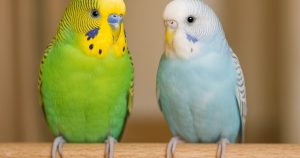
Quick answer: Male and female budgies can have different tendencies, but personality varies more by individual bird, age, socialisation and environment than by sex alone. Males are often described as more vocal and playful, while females may be more territorial, but either can be friendly, quiet, bold or shy.
This guide explains common male/female behaviour differences, which signs are reliable, and why personality should matter more than stereotypes when choosing a budgie.
Introduction: The myth of a simple male–female divide
When I brought home my first pair of budgies three years ago, I fell into the same trap as many newcomers: I assumed the breeder’s assurance that “males are chattier, females are quieter” would apply neatly to my birds. My male, Ollie, turned out to be a shy observer who rarely spoke. My female, Pearl, became the household alarm clock, chirping at dawn with unexpected vigour. That’s when I realised that while sex does influence budgie behaviour, it’s far from a rulebook.
The difference between male and female budgies is real but subtle, and understanding it matters most when you’re deciding whether to keep one bird, a pair, or a small group. The wrong pairing can lead to aggression. Choosing the wrong sex for your living situation can result in frustration. But knowing what’s actually backed by observation—rather than folklore—helps you set realistic expectations and build a happier, calmer avian household.
This guide draws on veterinary behaviour notes, breeding observations and the lived experience of long-term keepers to separate fact from assumption.
The socialisation problem—and why personality trumps sex
The first mistake most new owners make is treating sex as destiny. You read that males are friendlier and book a male, only to find your bird prefers solitude. Or you choose a female thinking she’ll be independent, and she bonds so intensely that she becomes destructive when you leave the room.
The truth is simpler: a budgie raised by hand in the first weeks of life, regardless of sex, will be more social than a parent-raised bird of the opposite sex. Hand-rearing builds comfort with humans. It’s the single strongest predictor of friendliness. VCA Animal Hospitals notes that early socialisation during the critical period (first 8–12 weeks) shapes a budgie’s long-term trust far more than hormones do.
That said, males do show some consistent behavioural tendencies. They are generally more likely to learn words and mimic sounds. They are less likely to show sudden mood swings linked to reproductive cycles. But a female raised gently can speak clearly and remain calm; a male from avoidant stock can remain aloof indefinitely.
When choosing your budgie, observe the individual bird’s behaviour during the sale or adoption process. Ask the breeder or rescue how the bird was raised. Watch how it reacts to your hand. That observation matters infinitely more than glancing at the cere colour and assuming a personality type.
The vocalisation difference—who actually talks more
Male budgies are statistically more talkative. This is one of the few sex-linked behavioural traits that holds up consistently across breeding populations.
Males typically have broader vocabularies and speak more clearly. They enjoy mimicking household sounds—doorbells, microwaves, your partner’s laugh—and often initiate “conversations” with other birds or humans. A male in a talkative mood will repeat phrases for hours. It’s charming until it’s 5 a.m. and he’s decided to practice your name on loop.
Females can absolutely learn to talk. But they often do so with quieter voices and smaller word banks. A female might learn 10–15 words; a male in the same environment might learn 30–40. Females also show less motivation to perform or repeat phrases unprompted. They’re more selective about when they “choose” to speak.
If noise sensitivity is a concern in your household, and you have a choice between two young birds, a female may be statistically quieter. But this is not a guarantee. Individual variation is significant. The only certainty is that an unhappy or under-stimulated budgie of either sex will become a screamer.
The temperament trap—aggression, moodiness and territorial behaviour
Female budgies are more prone to aggression than males, particularly in certain contexts. This is the one area where sex makes a measurable behavioural difference, and it’s critical to understand if you’re planning to keep more than one bird.
The aggression problem and what pairing research shows: Female budgies show nesting and territorial aggression more readily than males. This is hormonal and evolutionary—they’re primed to defend breeding space and resources. In a shared cage, a female may attack cage mates suddenly, especially if the environment triggers nesting instinct (warm temperatures, long daylight hours, soft nesting materials, nest boxes).
Male-to-male pairings are far more stable. Two males will either bond companionably or coexist peacefully, particularly if given adequate space (minimum 80 cm length for a pair). Female-to-female pairings carry high risk; aggression escalates as they mature, and injuries are common. Mixed-sex pairings introduce the breeding problem: constant egg production, egg-binding, behavioural conflict, and exhaustion in the female.
Females also show pronounced mood swings tied to hormonal cycles. A female might be affectionate one week and snap at you the next. This isn’t personal—it’s biochemistry. Males remain more steady in temperament year-round.
Why nesting triggers matter: If you have a female budgie and notice sudden aggression, check your environment. Nesting triggers include warm ambient temperature (above 75°F), extended daylight (16+ hours), soft materials in the cage, dark corners or hideouts, and repeated petting along the back or wings. Remove these triggers, and the aggression often subsides. This is prevention, not punishment.
The bonding question—how males and females attach to humans
Both male and female budgies form strong bonds with humans, but the *style* of attachment differs slightly.
Males often form friendly, interactive attachments. A bonded male will follow you room to room, call to you when you leave, learn your routine, and enjoy being part of your activities. The bond is present but relatively “social” rather than intensely focused.
Females frequently form deeper, more exclusive attachments. A bonded female may choose one human as her person and show indifference or mild hostility to others. She may sit on your shoulder for hours, groom your hair obsessively, and become distressed when you leave. This sounds wonderful until the exclusivity becomes problematic—she refuses interaction from other family members, or becomes aggressive when her chosen person shows attention to a partner or new bird.
Neither attachment style is inherently better. But if you live with multiple people and want your budgie to be social with everyone, a male is statistically more likely to cooperate. If you’re a single person seeking an intense, devoted companion, a female may naturally gravitate toward that bond (though she might also drive you to frustration with her territorial moods).
The reproductive health challenge—female-specific vulnerabilities
Female budgies face health challenges unique to their sex, and understanding these is essential if you’re choosing a female or keeping one long-term.
Egg-binding and chronic egg-laying: The most serious female-specific issue is egg-binding—when a female becomes stuck trying to lay an egg. This is a veterinary emergency. Signs include fluffing, straining, immobility, and distress. If your female shows these symptoms, get her to an avian vet immediately. Even slight delays can be fatal. Chronic, unprompted egg-laying exhausts females, depletes calcium, and increases the risk of reproductive tumours over time.
Prevention is straightforward: maintain a cool environment (65–75°F is ideal), provide no more than 10–12 hours of light daily, avoid soft nesting materials, don’t encourage back or wing petting, and feed a calcium-rich diet. If your female begins laying eggs without a mate, collect and discard them (don’t incubate), maintain cool temperatures, and reduce daylight further. See an avian vet if she continues laying excessively.
Males do not face this reproductive burden. They can breed with females, but they don’t experience the physiological stress or health risks that females do.
The training and speech development angle
If you’re specifically interested in teaching your budgie to talk, sex does play a role—but only a modest one.
Male budgies are more intrinsically motivated to produce sounds and learn speech. They’re more likely to spontaneously mimic words they hear and to practise them repeatedly. This makes training easier but not automatic. A male still needs consistent, patient repetition and a quiet learning environment.
Female budgies require more deliberate, one-on-one training to develop speech. But it’s entirely possible. Many female budgies become excellent talkers with consistent daily interaction. The key difference is that a female won’t do it for the joy of performance the way some males will; she’ll need higher motivation (treats, attention, trust in you as her primary person).
If speech is your priority, don’t let sex alone guide your choice. Choose a young, hand-raised bird from a talkative lineage if possible, ensure a quiet training space free from competing noises, and commit to daily 10–15 minute sessions. Sex influences the odds, but consistency determines the outcome.
Single budgie versus pair versus group—the sex dynamics
Your choice of how many budgies to keep should factor in sex, because companionship dynamics are safety-critical.
A single budgie: Sex is irrelevant here—your bird will bond with you. Ensure you provide enrichment, interaction, and mental stimulation daily. A solitary budgie needs you as their flock.
A same-sex pair: Male-male pairings are the safest option for two birds. They settle into companionable or tolerant coexistence and rarely fight seriously, especially if introduced young. Female-female pairings carry genuine aggression risk as the birds mature. If you want a pair and you’re choosing the sex, go with males.
A mixed-sex pair: This almost always leads to breeding behaviour, egg-laying, and exhaustion in the female. Even if you don’t intend to breed, the hormonal cycle will trigger courtship, territorial behaviour, and reduced interest in human interaction. Breeders do this intentionally; pet owners usually regret it. If you have one male and one female, understand you’re managing a breeding pair, not just two companions.
Groups of three or more: Larger groups work best with all males or predominantly males (e.g. three males, one female—though the female will still face pressure). A group of three females will fight. Mixed-sex groups become breeding collectives unless you actively prevent it through environmental management.
How to accurately sex your budgie
Before you can apply any of this knowledge, you need to know the sex of your bird. Most mistakes happen here.
The cere colour method: The most common approach is examining the cere—the fleshy area above the beak. In adult males, the cere is bright blue (or purple-blue in some colour mutations). In adult females, the cere is white, cream, or brown.
However, this only works reliably after 12–16 weeks of age. Young budgies of both sexes have pale or pinkish ceres. Many young females have ceres that look bluish, leading breeders to sell them incorrectly as males. If you buy a “male” budgie at 8 weeks and it turns out to be female at 6 months, the cere colour was read incorrectly early on.
For accurate sexing of young or uncertain birds, DNA testing is the only method with 100% certainty. A small feather or blood sample sent to an avian laboratory will provide definitive sex. This costs £20–£40 and eliminates all guesswork.
For mature birds, cere colour is reliable. Trust the colour—bright blue = male, white/brown = female. If you’re in doubt, ask an avian vet during your first health check.
Recommended products
If you’re managing a mixed-sex or multi-bird household, a divider allows you to separate birds temporarily without rehoming. Essential for preventing unwanted breeding or breaking up aggressive episodes.
Best for: Multi-bird households, breeding management, aggression prevention
Price range: £80–£180
Eliminates all uncertainty about your budgie’s sex with a simple feather or blood sample sent to a lab. Results in 5–7 working days. Invaluable if you’re unsure of a young bird’s sex or suspect a mislabelling.
Best for: Young budgies, uncertain sexing, breeding or pairing decisions
Price range: £20–£40
Keeps individual budgies and pairs mentally engaged, reducing boredom-driven aggression and screaming. Males and females both benefit from regular toy rotation. Check our full budgie toy guide for detailed picks.
Best for: Single birds, pairs, behavioural enrichment, aggression prevention
Price range: £15–£35
What to watch for: warning signs in male and female budgies
Frequently asked questions
| Question | Answer |
|---|---|
| Are male budgies friendlier than females? | Male budgies are generally more vocal and social, but not universally friendlier. Individual personality varies widely regardless of sex. Some females bond deeply with one person; some males remain aloof. Socialisation from a young age matters far more than sex. |
| Do female budgies have aggression issues? | Female budgies can show territorial or nesting aggression, especially when hormonally triggered. They may attack cage mates or show sudden mood swings. Males are generally calmer, though individual temperament always varies. Proper cage size and avoiding nesting triggers help prevent aggression in both sexes. |
| Which budgie sex is better for a pair or group? | Male-male pairings generally work best because they are less territorial. Female-female pairings carry high aggression risk. Mixed pairs can breed, leading to egg-binding and exhaustion. Same-sex males offer the calmest group dynamic when given adequate space and toys. |
| Can you tell if a budgie is male or female as a chick? | Not reliably until 6–8 weeks of age. Young budgies of both sexes have light or pinkish ceres. Around 8–12 weeks, males develop blue ceres and females develop white or brown ceres. Young birds can be sexed incorrectly by inexperienced breeders—DNA testing is the only 100% certain method at any age. |
| Do female budgies talk as much as males? | Male budgies are usually more vocal and pick up speech more readily. Females can learn to talk but often with smaller vocabularies and quieter voices. Consistent training and interaction help both sexes develop speech, though individual drive varies more than sex alone. |
| What health issues are specific to female budgies? | Females face reproductive challenges including egg-binding, chronic egg-laying, and ovarian tumours, especially if over-stimulated. Providing a cool environment (65–75°F), avoiding nesting triggers, and a balanced diet help prevent these conditions. See your vet immediately if your female shows signs of difficulty laying or straining. |
Bringing it together: which sex for your situation?
Choosing between a male and female budgie ultimately depends on your household, your expectations, and your ability to manage certain behavioural or health traits.
Choose a male if: You want a potentially talkative, social companion; you’re planning a pair (male-male) and want the safest dynamic; you prefer a calmer, more predictable temperament; you’re concerned about reproductive health management; or you’re a first-time owner looking for fewer complications.
Choose a female if: You’re willing to manage reproductive health proactively; you want an intensely bonded, devoted companion; you’re experienced with budgies; you can maintain cool temperatures and short daylight hours to prevent excessive egg-laying; or you’re adopting a rescue bird and bonding deeply with that individual matters more than sex.
Avoid mixed-sex pairs unless you plan to breed intentionally and have the expertise to do so responsibly.
Ultimately, the best budgie is the one you commit to, hand-raise early, and socialise consistently. Sex influences the journey, but it doesn’t determine it. Watch your individual bird, honour her or his personality, and adjust your expectations accordingly.
- VCA Animal Hospitals. “Budgerigars—Behaviour.” VCA Hospitals. Accessed April 2026.
- Birdfact. “Budgerigar behaviour and personality.” Birdfact. Accessed April 2026.
- Speer, B. L. “Avian reproductive behaviour and management.” Seminars in Avian and Exotic Pet Medicine, 2004.
- RSPCA. “Budgerigar care guide.” RSPCA UK. Accessed April 2026.
- Kubiak, M. et al. “Egg-binding in pet birds: clinical presentation and emergency management.” Journal of Avian Medicine and Surgery, 2015.
- Budgerigar Society. “Breeding and genetics guide.” Budgerigar Society UK. Accessed April 2026.