
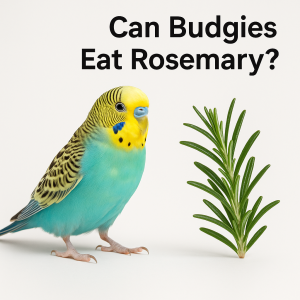
Quick answer: Yes, budgies can eat rosemary in small amounts. This fragrant herb is generally safe and can offer mild enrichment to your budgie’s diet. However, it should only be given occasionally and in moderation, as too much rosemary might cause digestive upset or irritation. Always introduce new foods gradually and observe your budgie’s reaction.
Affiliate disclosure: This article may contain affiliate links. If you purchase through them, we may earn a small commission at no extra cost to you. We only recommend items that support safe, evidence-informed budgie care.
Deeper Context: Why Consider Rosemary for Your Budgie?
Rosemary (Rosmarinus officinalis) is a popular culinary herb known for its aromatic leaves and potential health-supporting compounds in humans. For budgies, herbs like rosemary can provide sensory stimulation and variety beyond their usual seed or pellet diet.
Budgies are naturally curious and enjoy nibbling on fresh greens and herbs, which can support their mental well-being and encourage natural foraging behaviours. However, not all herbs are safe, and some can be toxic or cause digestive issues.
What Makes Rosemary Interesting for Budgies?
– **Aromatic stimulation:** The strong scent may intrigue your budgie and encourage exploration.
– **Mild antioxidants:** Rosemary contains compounds like rosmarinic acid and flavonoids, which have antioxidant properties.
– **Natural enrichment:** Offering fresh herbs can mimic natural foraging and provide mental stimulation.
Nutrition and Compounds in Rosemary
Rosemary leaves contain several bioactive compounds, including:
- Rosmarinic acid: An antioxidant that may help neutralise free radicals.
- Carnosic acid and carnosol: Phenolic diterpenes with antioxidant potential.
- Essential oils: Such as cineole, camphor, and borneol, which give rosemary its distinctive aroma.
- Vitamins and minerals: Small amounts of vitamin A, vitamin C, calcium, and iron.
While these compounds are beneficial in humans, their effects on budgies are less studied. The small quantities offered as treats are unlikely to cause harm and may provide mild benefits.
Risks & Contraindications of Feeding Rosemary to Budgies
Despite its general safety, rosemary does carry some risks if fed improperly:
- Essential oil sensitivity: Budgies have sensitive respiratory systems. High concentrations of rosemary’s essential oils might cause irritation or breathing difficulties.
- Digestive upset: Too much rosemary can lead to stomach discomfort or diarrhoea.
- Allergic reactions: Though rare, some birds may be allergic or intolerant.
- Pesticide contamination: Non-organic rosemary may carry harmful chemicals.
Preparation & Serving: How to Safely Offer Rosemary to Your Budgie
Introducing rosemary to your budgie’s diet should be done carefully. Follow this step-by-step guide:
- Choose fresh, organic rosemary: Avoid dried or processed forms.
- Wash thoroughly: Rinse under cold water to remove dirt and potential residues.
- Remove woody stems: Only offer soft leaves, as woody parts can be hard to digest.
- Chop finely: Cut leaves into small pieces to make nibbling easier.
- Offer a small pinch: Place a tiny amount in a separate dish or on a foraging toy.
- Observe your budgie: Watch for any adverse reactions over the next 24 hours.
- Remove leftovers: Discard uneaten rosemary after a few hours to prevent spoilage.
Checklist for Serving Rosemary to Budgies
- ✔ Fresh, organic rosemary
- ✔ Thoroughly washed
- ✔ Woody stems removed
- ✔ Finely chopped
- ✔ Small portion offered
- ✔ Monitor for reactions
- ✔ Remove uneaten portions promptly
Portion & Frequency: How Much Rosemary Can Budgies Eat?
Budgies are small birds with delicate digestive systems. Rosemary should be considered an occasional treat rather than a daily staple.
| Portion Size | Frequency | Notes |
|---|---|---|
| 1–2 small leaves (finely chopped) | 1–2 times per week | Start with very small amounts; increase gradually if tolerated |
| None | Daily | Avoid daily feeding to prevent essential oil build-up |
| More than 3 leaves | Rarely | May cause digestive upset or irritation |
Signs of Problems & What To Do
After introducing rosemary, watch for these signs that your budgie may be having trouble:
- Loss of appetite
- Diarrhoea or loose droppings
- Excessive scratching or feather plucking
- Respiratory distress (wheezing, sneezing, coughing)
- Lethargy or unusual behaviour
If you notice any of these symptoms, remove rosemary immediately and consult your avian vet.
Vet Guidance: When to Consult and What to Ask
Your avian vet is the best resource for personalised advice on your budgie’s diet. Consult your vet if:
- You want to introduce new herbs or supplements
- Your budgie shows signs of illness after eating rosemary
- You are unsure about safe portion sizes
- Your budgie has pre-existing health conditions
Questions to ask your vet:
- Is rosemary safe for my budgie given their health history?
- How often can I safely offer herbs like rosemary?
- Are there any herbs I should avoid?
- What signs should I watch for that indicate a problem?
FAQs About Budgies and Rosemary
Can budgies eat dried rosemary?
Dried rosemary is more concentrated in essential oils and can be harder to digest. It’s best to avoid dried rosemary and stick to fresh leaves.
Is rosemary toxic to budgies?
Rosemary is not toxic in small amounts, but excessive consumption can cause irritation or digestive upset.
Can rosemary help with budgie respiratory health?
There is no scientific evidence that rosemary treats respiratory issues in budgies. In fact, its strong aroma might irritate sensitive respiratory tracts.
What are some safe herbs to feed alongside rosemary?
Safe herbs include parsley, basil, coriander, dill, and mint. Always introduce herbs one at a time.
How do I know if my budgie likes rosemary?
Watch if your budgie eagerly nibbles the leaves without hesitation. If they ignore or avoid it, try another herb.
Figure: Fresh Rosemary for Budgies
Related Articles
- Can Budgies Eat Carrot
- Budgie Molting Guide
- Safe Herbs for Budgies
- Budgie Diet Essentials
{AMAZON_TAG}
Key Takeaways
- Rosemary is safe for budgies in small, fresh, and well-prepared amounts.
- Introduce rosemary gradually and watch for any adverse reactions.
- Do not feed dried rosemary or large quantities to avoid digestive or respiratory issues.
- Use rosemary as an occasional treat, not a dietary staple.
- Always consult your avian vet before making significant diet changes.
- Combine rosemary with other safe herbs for variety and enrichment.
Recommended on Amazon
We’ve hand-picked useful items related to Can Budgies Eat Rosemary?.
Also read
- Can Budgies Eat Xylitol?
- Can Budgies Eat White Chocolate?
- Can Budgies Eat Walnuts?
- Can Budgies Eat Vinegar?
- Can Budgies Eat Turmeric Safely? A Complete Guide to Feeding Turmeric to Your Pet Bird