
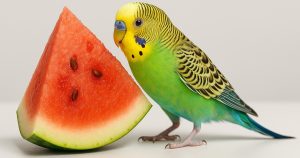
Quick answer: Watermelon flesh is the safest part for budgies. Remove seeds before serving, and be cautious with rind because it can carry pesticide residue and be harder to chew. If you offer any rind, it must be washed extremely well and given only as a tiny piece.
This guide focuses on watermelon seeds, rind, serving prep and safer ways to offer watery fruit.
What Makes Watermelon Safe for Budgies?
Watermelon’s high water content makes it an ideal treat during the warmer months, helping to prevent dehydration. Moreover, the lack of harmful substances such as high levels of sugar or toxins found in some other fruits makes watermelon a safer choice. However, it’s crucial to ensure that the watermelon is fresh and free from pesticides, which can be harmful to budgies’ delicate systems.
How to Serve Watermelon to Budgies Safely
To serve watermelon:
– Choose a ripe, firm watermelon.
– Wash thoroughly under running water to eliminate any residual chemicals.
– Cut into small, manageable pieces that are easy for your budgie to eat.
– Introduce gradually to observe any adverse reactions, such as digestive upset.
Comparison: Watermelon vs. Other Fruits for Budgies
| Fruit | Nutritional Value | Best For | Warning |
|---|---|---|---|
| Watermelon | High water content | Hydration, low calories | Remove seeds and rind |
| Apple | Fiber, Vitamin C | Digestive health | Avoid seeds (toxic) |
| Banana | Potassium, Vitamin B6 | Energy, muscle function | High sugar content |
| Grapes | Antioxidants | Heart health | Serve in moderation due to sugar |
Watermelon stands out among these fruits due to its high water content and low calorie count. Apples provide valuable fiber but come with the risk of toxic seeds. Bananas are excellent for energy but should be fed sparingly due to their sugar content. Grapes offer antioxidant benefits but, like bananas, should be given in moderation to avoid excessive sugar intake.
Common Mistakes When Feeding Watermelon to Budgies
Mistake #1: Feeding Watermelon with Seeds
The Problem: Seeds can cause choking or digestive blockage.
The Fix: Always remove seeds before serving.
Warning Signs: Watch for signs of choking or discomfort, such as coughing or difficulty breathing.
Alternative: Use seedless watermelon varieties.
Mistake #2: Offering Rind
The Problem: The rind is hard to digest and may contain pesticides.
The Fix: Remove the rind completely.
Warning Signs: Digestive upset or refusal to eat.
Alternative: Offer only the fleshy part, ensuring it’s fresh and properly prepared.
Mistake #3: Overfeeding Watermelon
The Problem: Excessive consumption can lead to diarrhea.
The Fix: Limit to small, occasional treats.
Warning Signs: Loose stools or lack of appetite.
Alternative: Balance with other fruits and vegetables to ensure a well-rounded diet.
Step-by-Step Guide: Preparing Watermelon for Budgies
What You Need:
- Fresh watermelon
- Knife
- Cutting board
Step 1: Select a Fresh Watermelon (5 min)
Choose a watermelon that is firm and free of blemishes. A ripe watermelon will have a uniform shape and a creamy yellow spot where it sat on the ground.
Step 2: Wash and Prepare (5 min)
Rinse the watermelon under running water to remove any dirt or chemicals. Use a scrub brush to clean thoroughly, ensuring no pesticide residues remain.
Step 3: Slice and Remove Seeds (10 min)
Cut the watermelon into slices and carefully remove all seeds. A melon baller or spoon can help scoop out seeds without cutting too deep into the flesh.
Step 4: Cut Into Small Pieces (5 min)
Dice the watermelon into small, manageable pieces for your budgie. The pieces should be small enough for easy consumption but large enough to encourage natural pecking behavior.
Step 5: Serve and Monitor (5 min)
Place the pieces in your budgie’s dish and observe how it reacts to the new treat. Look for signs of enjoyment or any adverse reactions.
Pro Tip: Introduce watermelon gradually to monitor your budgie’s reaction, and remove any uneaten pieces after a few hours to prevent spoilage.
Expert Tips for Feeding Budgies
Expert Tip: “Rotate different fruits to prevent dietary monotony and ensure a range of nutrients. Experiment with small portions of various fruits to see which ones your budgie enjoys the most.”
Frequently Asked Questions (Expert Answers)
Is Watermelon Safe for Budgies to Eat?
Yes, watermelon is safe when prepared correctly by removing seeds and rind.
How Often Can I Feed My Budgie Watermelon?
Offer watermelon as a treat 1-2 times a week to avoid overconsumption.
Can Watermelon Seeds Harm Budgies?
Yes, seeds can cause choking or digestive issues and should be removed.
What Are the Risks of Feeding Watermelon to Budgies?
Potential risks include choking on seeds and digestive upset from overfeeding.
Is Watermelon Better Than Other Fruits for Budgies?
Watermelon is hydrating and low in calories, but other fruits offer different nutrients.
Can Baby Budgies Eat Watermelon?
Introduce fruits gradually to young budgies, ensuring seeds and rind are removed.
Does Watermelon Affect Budgie’s Weight?
Watermelon, being low in calories, is unlikely to affect weight when fed in moderation.
What Should I Do If My Budgie Eats Watermelon Seeds?
Monitor for signs of distress and consult a vet if symptoms appear.
How Long Can Watermelon Stay in a Budgie’s Cage?
Remove uneaten watermelon within a few hours to prevent spoilage.
Can I Mix Watermelon with Other Fruits for Budgies?
Yes, mixing can provide variety but ensure each fruit is safe and prepared correctly.
Can Watermelon Be Part of a Budgie’s Regular Diet?
While watermelon can be a healthy treat, it should not replace a balanced diet of seeds, grains, and vegetables.
Key Takeaways: Watermelon for Budgies Checklist
- ✅ Hydration: Provides essential water content.
- ✅ Nutrients: Rich in vitamins and antioxidants.
- ✅ Safe Prep: Remove seeds and rind.
- ❌ Overfeeding: Limit to occasional treats.
- ❌ Spoilage: Don’t leave uneaten pieces too long.
Related Articles You’ll Love