
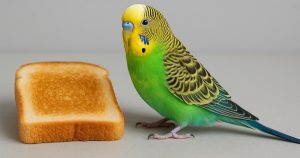
Quick answer: Budgies should only have toast rarely, if at all, and it must be plain with no butter, jam, salt, garlic, avocado or spreads. Toast is dry and low in nutrients, so safer fresh foods are usually a better choice.
This guide explains plain toast, crusts, toppings to avoid, portion size and safer treat options.
I’ve owned budgies for over a decade, and one of the most common questions I get from new owners is whether they can share their breakfast toast with their bird. It’s an understandable instinct — budgies seem curious about everything we eat, and plain toast looks harmless. But the answer is more nuanced than a simple yes or no. Toast presents specific nutritional and safety concerns that make it a poor choice as a regular treat, even though tiny amounts won’t cause immediate harm.
In this guide, I’ll walk you through what the research tells us about bread and budgies, which types of toast are safest (if you do choose to offer it), portion sizes, and — most importantly — what you should feed instead to keep your bird thriving.
Factor 1: Understanding Toast and Basic Safety
Plain toast on its own — made from white or wholemeal bread with no additives, salt, butter or spreads — is not toxic to budgies. A budgie will not become acutely ill from a tiny fragment. However, “not toxic” and “appropriate food” are very different things. Budgies have precise nutritional needs that are completely different from humans, and toast meets very few of them.
The main safety concern with toast is the fine crumb structure. Unlike seeds or pellets, which budgies are adapted to crack open and manipulate, toast fragments easily and can create small particles that may be inhaled rather than swallowed. This is particularly a concern with very young birds or those still developing proper feeding technique. For this reason, if you do offer toast, it should be moistened slightly with water so the crumbs hold together.
Factor 2: Nutritional Content and What Budgies Actually Need
A typical slice of white toast contains roughly 80–100 calories, mostly from carbohydrates, with minimal protein and almost no essential vitamins or minerals that budgies require. While toast does contain trace amounts of B vitamins and some minerals like manganese and selenium, the quantities are negligible compared to what your budgie needs daily.
According to research from the Journal of Avian Medicine and Surgery, budgies require a diet that is high in protein (12–16% for adults), rich in vitamin A, calcium, phosphorus and various amino acids. They also need whole seeds and fresh vegetables to maintain beak health and natural foraging behaviour. A diet heavy in carbohydrates like toast promotes obesity, fatty liver disease and metabolic disorders — conditions we see far too often in pet budgies.
| Food Item | Protein (%) | Fat (%) | Fibre (%) | Vitamin A (IU/100g) | Calcium (mg/100g) |
|---|---|---|---|---|---|
| White Toast | 3.2 | 1.1 | 1.8 | 0 | 145 |
| Wholemeal Toast | 3.7 | 1.5 | 2.4 | 0 | 20 |
| Budgie Pellets (quality) | 14–16 | 8–10 | 2–4 | 4000–8000 | 800–1000 |
| Millet Seed | 11.0 | 3.9 | 1.3 | 40 | 8 |
| Broccoli (fresh) | 2.8 | 0.4 | 2.4 | 1500 | 47 |
Source: USDA FoodData Central; Avian nutrition studies from VCA Animal Hospitals
As this table shows, even wholemeal toast falls far short of what budgies require. Quality pellets and fresh vegetables are vastly superior choices. If you’re looking to introduce variety into your budgie’s diet, fresh vegetables like leafy greens, carrots and broccoli will provide genuine nutritional benefit, alongside the protein and minerals they get from seed.
Factor 3: Types of Toast to Avoid Completely
Not all toast is created equal, and some varieties pose genuine health risks to budgies.
- Buttered toast: Butter is high in fat (80% fat by weight) and can quickly lead to obesity and fatty liver disease. Even a single small piece of buttered toast is too much for a bird that weighs only 30–40 grams.
- Salted or seasoned toast: Salt in any quantity is harmful to budgies. Their kidneys cannot process sodium the way mammalian kidneys can, and even small amounts can cause dehydration and organ damage. Garlic, onion powder and other seasonings are also toxic.
- Sweet toast: Toast made with added sugar, honey, jam or any sweetened spread is particularly dangerous. Budgies metabolise sugar differently than humans and are prone to rapid weight gain and diabetes-like conditions.
- Seeded bread: While seeds are normally excellent for budgies, seeds in bread are often treated with preservatives or sitting in an environment that promotes mould growth. Mouldy bread causes serious respiratory infections in birds.
- Sourdough and heavily processed breads: These often contain additives, preservatives, salt and sometimes yeast fermentation products that budgies should not consume.
The safest option — if you choose to offer bread at all — is plain, unsalted, additive-free white or wholemeal bread, given untoasted and in very small amounts. Toasting actually makes no difference to the safety profile, but it does make the crumbs drier and more likely to scatter.
Factor 4: Portion Sizes and Frequency Guidelines
If you decide to offer plain toast to your budgie, the guidelines are clear and very restrictive:
- Frequency: No more than once or twice per week.
- Portion size: A single small piece no larger than your budgie’s head — roughly the size of a postage stamp.
- Preparation: Break it into smaller fragments and moisten slightly with water to reduce crumb scatter.
- Context: This should only happen if your budgie is already receiving a complete diet of quality pellets, fresh vegetables and appropriate seed mixes.
To put this in perspective, PetMD recommends that treats (including bread products) should make up no more than 5% of a budgie’s weekly caloric intake. For a typical adult budgie consuming around 400–500 calories per week, this means no more than 20–25 calories from treats. A single piece of plain toast is roughly 80–100 calories, so if you offer it, it should be your only treat for that day — and your bird should be on a strict portion.
In practice, I rarely recommend offering toast at all. There are so many better treat options that provide actual nutritional value.
Factor 5: Recognising When Bread Has Gone Bad
One often-overlooked risk with bread products is mould. Mould grows rapidly on bread and is virtually invisible to the human eye in early stages. For budgies, mouldy bread causes serious respiratory infections including aspergillosis, a fungal disease that can be life-threatening.
Never offer toast or bread that has been left at room temperature for more than a few hours, or that shows any discolouration, soft patches or unusual smell. If you keep bread in the freezer for your own use, thaw only what you need, and discard anything that doesn’t look or smell completely fresh.
Factor 6: Better Treat Alternatives That Budgies Love
Rather than offering toast, consider these alternatives that provide genuine enrichment and nutrition:
- Sprouted seeds: Significantly higher in bioavailable vitamins and minerals than dry seed. A sprouted seed feeder makes preparation simple. See our guide to the best budgie seed sprouters for guidance.
- Fresh leafy greens: Kale, spinach, parsley and rocket are nutrient-dense and budgies often find them more interesting than bread. Wash thoroughly before offering.
- Vegetables: Refer to our article on budgie vegetables for ten essential safe options. Grated carrot and broccoli are particularly popular.
- Small amounts of fruit: Apple (without seeds), pear and small berries are safe as occasional treats. Avoid avocado, chocolate-containing anything, and salt.
- Millet spray: A natural foraging treat that most budgies adore, and far more nutritious than toast.
These options all provide something that toast cannot: actual nutritional value, mental enrichment, and the opportunity for natural foraging behaviour.
A natural, pesticide-free treat that encourages foraging behaviour and is far more nutritious than bread.
Best for: Weekly enrichment treats and mental stimulation during training.
Price: £3–£8 per pack
Factor 7: What Happens If Your Budgie Accidentally Eats Toast
If your budgie has eaten a small piece of plain toast, don’t panic. A single small fragment will not cause acute toxicity or immediate illness. Monitor your bird for the next 24 hours for any signs of distress: reduced appetite, ruffled feathers, excessive drinking or unusual droppings. If your budgie seems entirely normal, no veterinary intervention is needed.
However, if your budgie has consumed buttered toast, salted toast, or anything containing sugar or additives, contact an avian veterinarian as soon as possible. High-fat foods can cause complications that don’t show up immediately, and salt poisoning has a delayed presentation.
Prevention is always easier than managing a health crisis. Once you understand what budgies actually need, offering toast becomes an obvious choice to avoid.
A complete, species-appropriate diet designed by avian nutritionists to provide all essential nutrients budgies need.
Best for: Daily nutrition as the foundation of a balanced diet.
Price: £12–£18 per 1kg bag
FAQs: Common Questions About Budgies and Toast
Plain, unsalted, unbuttered white or wholemeal toast is safe for budgies in very small amounts as an occasional treat. A single small piece no more than twice weekly is appropriate. Avoid any toast with additives, salt, butter, jam, spreads or seasonings. However, plain bread (untoasted) is actually preferable because it has a less brittle crumb structure.
No. Buttered toast should never be fed to budgies. Butter is high in fat and can lead to obesity, fatty liver disease and other serious health issues in small birds. The same applies to any margarine or oil-based spreads. A single piece of buttered toast is far too much fat for a bird that weighs only 30–40 grams.
Budgies can safely eat small amounts of plain, unsalted white bread or wholemeal bread as an occasional treat. Avoid seeded bread, sourdough with additives, white bread with added sugar, and anything containing salt or preservatives. Untoasted plain bread is preferable to toast because the crumbs are less likely to scatter. Never offer bread that has been stored in warm, damp conditions where mould might have begun to grow.
Toast should be a rare treat only, no more than once or twice per week, and only a very small piece (roughly postage-stamp size). It should never form part of your budgie’s regular diet. Focus instead on pellets, fresh vegetables and millet seed for proper nutrition. In practice, most avian vets recommend eliminating bread entirely and choosing superior treat options like sprouted seed and fresh greens instead.
Toast provides minimal nutritional value to budgies. While it contains some carbohydrates and trace minerals, it lacks the vitamin and mineral density that budgies need. Quality budgie pellets contain 4–5 times the protein, vastly more vitamin A, and significantly more calcium than bread. Whole seeds, sprouted seeds and fresh vegetables are vastly superior alternatives that should form the basis of treat variety.
Plain toast is unlikely to cause acute digestive upset in small amounts, but the carbohydrate density can contribute to weight gain and metabolic imbalance over time. Any toast containing salt, butter, sugar or additives poses a genuine risk of digestive and systemic health issues. Budgies fed high-carbohydrate diets are significantly more prone to fatty liver disease, obesity and reproductive complications in breeding birds.
- PetMD — Avian Nutrition and Feeding Guidelines for Parakeets
- VCA Animal Hospitals — Bird Nutrition and Diet
- USDA FoodData Central — Nutritional Composition Database
- Journal of Avian Medicine and Surgery — Avian Nutrition Studies
- RSPB — Bird Health and Care (UK Resource)
- Birdfact.com — Budgerigar Diet and Nutrition (peer-reviewed avian care database)