
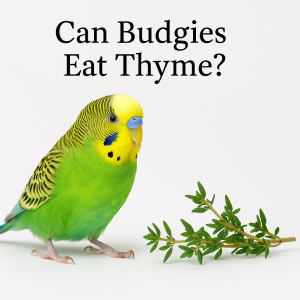
Quick answer: Yes, budgies can eat thyme in very small amounts. Fresh or dried plain thyme can be offered occasionally, but it should not replace leafy greens, vegetables, pellets, seed mix or fresh water.
Avoid thyme cooked with oil, salt, garlic, onion, sauces or seasoning blends. Introduce a tiny pinch or leaf first, then stop if your budgie shows loose droppings, reduced appetite, vomiting, irritation or any unusual behaviour.
Affiliate disclosure: This article may contain affiliate links. If you purchase through them, we may earn a small commission at no extra cost to you. We only recommend items that support safe, evidence-informed budgie care.
Deeper Context: Why Consider Thyme for Your Budgie?
Budgies, also known as parakeets, thrive on a varied diet that includes seeds, pellets, fruits, vegetables, and herbs. Herbs like thyme can add flavour and mild nutrients to their meals, potentially supporting their wellbeing. Thyme (Thymus vulgaris) is a common culinary herb known for its aromatic leaves and subtle medicinal properties in humans. But is it suitable for your budgie?
Understanding the role of herbs in budgie nutrition helps you make informed choices. Thyme is not a staple food but can be a delightful occasional treat that encourages natural foraging behaviour and dietary diversity.
Nutrition and Compounds in Thyme
Thyme contains several compounds that may be beneficial in small amounts:
- Vitamins: Thyme is a source of vitamin C, vitamin A, and some B vitamins, which support immune function and overall health.
- Minerals: It contains calcium, iron, and manganese, important for bone health and metabolism.
- Essential oils: Thymol and carvacrol are natural compounds with mild antimicrobial properties.
- Antioxidants: Thyme has flavonoids and phenolic acids that may help reduce oxidative stress.
Risks & Contraindications
Despite its benefits, thyme must be fed cautiously:
- Overconsumption: Too much thyme can cause digestive upset or irritation due to its essential oils.
- Allergic reactions: Some budgies may be sensitive to new herbs, showing symptoms like sneezing, itching, or changes in droppings.
- Contamination risk: Avoid thyme treated with pesticides or herbicides.
- Not a substitute for veterinary care: Thyme should never replace professional treatment for illnesses.
Preparation & Serving: Step-by-Step Guide
Follow these steps to safely prepare thyme for your budgie:
- Source fresh or dried thyme: Organic is best to avoid chemicals.
- Wash thoroughly: Rinse fresh thyme under cold water to remove dirt and possible residues.
- Remove stems: Budgies prefer leaves; stems can be tough and less palatable.
- Chop finely: Cut leaves into small pieces to make them easier to eat.
- Offer in moderation: Place a small pinch in a clean dish or scatter on their food tray.
- Observe: Watch your budgie’s reaction and ensure they eat it without issues.
Thyme Feeding Checklist
- ✔ Use organic, pesticide-free thyme
- ✔ Wash thoroughly before use
- ✔ Remove woody stems
- ✔ Chop leaves finely
- ✔ Offer small amounts initially
- ✔ Monitor for any adverse reactions
- ✔ Avoid additives or seasoning
Portion & Frequency Recommendations
Budgies have small digestive systems, so portion control is essential. Use the table below as a guideline:
| Budgie Size | Thyme Portion | Frequency |
|---|---|---|
| Single Budgie | 1–2 small sprigs or 1/4 teaspoon finely chopped leaves | 1–2 times per week |
| Pair or Small Group | 2–4 sprigs or 1/2 teaspoon finely chopped leaves | 1–2 times per week |
Signs of Problems & What To Do
After introducing thyme, watch for these signs that may indicate a problem:
- Loss of appetite or refusal to eat
- Changes in droppings (colour, consistency, frequency)
- Respiratory issues such as sneezing or wheezing
- Excessive scratching or feather plucking
- Lethargy or unusual behaviour
Vet Guidance: When to Consult a Professional
While thyme is generally safe, always seek veterinary advice if:
- Your budgie has a pre-existing health condition
- You plan to introduce multiple new foods simultaneously
- Signs of allergic reaction or illness appear after feeding thyme
- You are unsure about the safety of any herb or supplement
Regular check-ups with an avian vet ensure your budgie’s diet supports their health optimally. For more on vet care and nutrition, see Budgie Health and Vet Visits.
Frequently Asked Questions (FAQs)
Can I feed my budgie dried thyme instead of fresh?
Yes, dried thyme is safe as long as it is free from additives and pesticides. Use smaller amounts since dried herbs are more concentrated.
Is thyme better than other herbs for budgies?
Thyme is one of many safe herbs. Others like parsley, basil, and coriander are also excellent. Variety is key to a balanced diet.
Can thyme help with respiratory issues in budgies?
While thyme has mild antimicrobial properties, it should not replace veterinary treatment for respiratory problems. Always consult your vet.
How do I know if my budgie likes thyme?
Offer a small amount and observe if your budgie eats it eagerly or ignores it. Some budgies may take time to accept new flavours.
Can I grow thyme at home for my budgie?
Absolutely! Growing your own thyme ensures freshness and no chemical exposure. Just avoid using pesticides or fertilisers harmful to birds.
Key Takeaways
- Thyme is safe for budgies when offered in small, controlled amounts.
- It provides mild nutritional benefits including vitamins, minerals, and antioxidants.
- Always wash thyme thoroughly and remove stems before feeding.
- Introduce thyme gradually and monitor your budgie for any adverse reactions.
- Do not use thyme as a substitute for veterinary care or medication.
- Variety in your budgie’s diet, including herbs, supports overall health and wellbeing.
For more on safe herbs and budgie nutrition, check out Can Budgies Eat Carrot and Budgie Molting Guide.
{AMAZON_TAG}
Recommended on Amazon
We’ve hand-picked useful items related to Can Budgies Eat Thyme?.
Also read
- Can Budgies Eat Xylitol?
- Can Budgies Eat White Chocolate?
- Can Budgies Eat Walnuts?
- Can Budgies Eat Vinegar?
- Can Budgies Eat Turmeric Safely? A Complete Guide to Feeding Turmeric to Your Pet Bird