
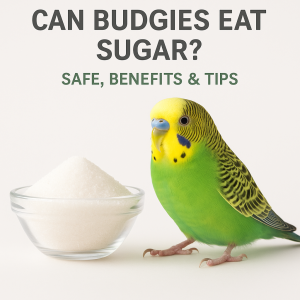
Quick answer: Budgies should not be given sugar as part of their diet. While small amounts of natural sugars found in fruits are generally safe, refined sugar and sugary treats can harm your budgie’s health, leading to obesity, digestive issues, and behavioural problems. It’s best to focus on a balanced diet rich in seeds, pellets, fresh vegetables, and occasional fruit to keep your budgie happy and healthy.
Affiliate disclosure: This article may contain affiliate links. If you purchase through them, we may earn a small commission at no extra cost to you. We only recommend items that support safe, evidence-informed budgie care.
Deeper Context: Why Consider Sugar in a Budgie’s Diet?
Budgies, also known as parakeets, are small, lively birds that require a carefully balanced diet to thrive. In the wild, their diet consists mainly of seeds, fruits, and vegetation, which naturally contain sugars in varying amounts. However, the question arises when it comes to feeding them sugar directly or sugary human foods.
Sugar is a carbohydrate that provides energy, but not all sugars are created equal. Natural sugars found in fruits and vegetables come with fibre, vitamins, and minerals, whereas refined sugars are stripped of nutrients and can be harmful.
Understanding the role of sugar in your budgie’s diet helps you make informed choices and avoid common pitfalls that could compromise their health.
Nutrition and Compounds: What Sugar Means for Budgies
Sugar, chemically known as saccharides, comes in several forms:
- Natural Sugars: Found in fruits (fructose), vegetables, and grains.
- Refined Sugars: Processed sugars like sucrose, glucose, and high-fructose corn syrup.
Budgies can metabolise natural sugars in moderation, but refined sugars offer no nutritional benefit and can cause health issues.
| Type of Sugar | Source | Effect on Budgies |
|---|---|---|
| Natural Sugar | Fruits, vegetables, grains | Safe in small amounts; provides energy and nutrients |
| Refined Sugar | Candy, sweets, processed foods | Harmful; can cause obesity, digestive upset, and behavioural problems |
Risks & Contraindications: Why Sugar Can Be Dangerous for Budgies
Feeding your budgie sugar, especially refined sugar, can lead to several health risks:
- Obesity: Excess sugar contributes to weight gain and related complications.
- Digestive Problems: Sugar can disrupt gut flora and cause diarrhoea or constipation.
- Behavioural Issues: Sugar highs and crashes may cause hyperactivity or lethargy.
- Dental Issues: Although budgies don’t have teeth, sugary residues can affect their beak and oral health.
- Increased Risk of Disease: Excess sugar may weaken the immune system, making budgies more prone to infections.
Preparation & Serving: How to Safely Offer Natural Sugars
If you want to include natural sugars in your budgie’s diet, here’s a step-by-step guide:
- Choose Safe Fruits and Vegetables: Apples (without seeds), berries, grapes, carrots, and leafy greens are good options.
- Wash Thoroughly: Remove pesticides and dirt by rinsing under cold water.
- Remove Seeds and Pits: Many fruit seeds are toxic to birds.
- Cut into Small Pieces: Ensure the pieces are bite-sized to prevent choking.
- Introduce Slowly: Offer small amounts initially to monitor tolerance.
- Remove Uneaten Portions: Fresh food should not be left in the cage for more than a few hours.
Checklist: Preparing Natural Sugars for Your Budgie
- ✔ Select fresh, organic fruits/vegetables
- ✔ Wash thoroughly
- ✔ Remove seeds and pits
- ✔ Cut into small, manageable pieces
- ✔ Offer in moderation
- ✔ Remove leftovers promptly
Portion & Frequency: How Much Sugar Is Safe?
Budgies do not require added sugar in their diet. Natural sugars from fruits should be considered treats rather than staples.
| Food Type | Recommended Portion | Frequency |
|---|---|---|
| Fresh Fruit (apple, berries) | 1-2 small pieces (approx. 5g) | 2-3 times per week |
| Vegetables (carrot, leafy greens) | Small handful (approx. 10g) | Daily |
| Refined Sugar (candy, sweets) | None | Never |
Signs of Problems & What To Do
If your budgie consumes too much sugar or sugary treats, watch for these signs:
- Diarrhoea or loose droppings
- Excessive thirst or urination
- Weight gain or puffed-up feathers
- Changes in behaviour such as hyperactivity or lethargy
- Loss of appetite or vomiting
If you notice any of these symptoms, remove sugary foods immediately and consult your vet.
Vet Guidance: When to Seek Professional Help
Regular check-ups with an avian vet are essential for your budgie’s wellbeing. If you suspect sugar-related health problems, such as obesity or digestive upset, your vet can:
- Perform a physical examination
- Recommend dietary adjustments
- Prescribe treatment for any infections or complications
- Provide advice on safe treats and feeding routines
FAQs: Common Questions About Budgies and Sugar
Can budgies eat honey or syrup?
Honey and syrups are high in refined sugars and should be avoided. They can upset your budgie’s digestion and cause health issues.
Is fruit juice safe for budgies?
Fruit juice is concentrated in sugars and lacks fibre, so it’s not recommended. Fresh fruit pieces are a better option.
What about sugar substitutes like xylitol?
Xylitol and other artificial sweeteners are toxic to birds and must never be given.
Can sugar cause diabetes in budgies?
While diabetes is rare in budgies, excessive sugar intake can contribute to obesity and metabolic problems, increasing health risks.
Are there any safe sugary treats for budgies?
Natural fruits in moderation are the safest sugary treats. Avoid processed or sugary human snacks.
Figure: Healthy Treat Options for Budgies
Key Takeaways
- Budgies should not be fed refined sugar or sugary human foods.
- Natural sugars from fresh fruits are safe in small amounts and provide nutritional benefits.
- Always prepare fruits and vegetables carefully by washing and removing seeds.
- Offer sugary treats sparingly—2-3 times per week at most.
- Watch for signs of digestive or behavioural issues after feeding sugary foods.
- Consult an avian vet if you notice health problems or before making major diet changes.
- Focus on a balanced diet of seeds, pellets, fresh vegetables, and occasional fruit for optimal budgie health.
For more on feeding your budgie a healthy diet, check out [[link:Can Budgies Eat Carrot]] and [[link:Budgie Molting Guide]].
{AMAZON_TAG}
Recommended on Amazon
We’ve hand-picked useful items related to Can Budgies Eat Sugar? (Safe, Benefits & Tips).