
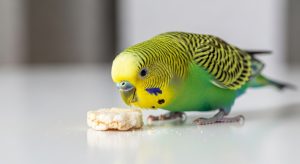
Quick answer: Budgies should not eat most crackers because they are often salty, processed and low in useful nutrition. Plain unsalted rice cake can be offered as a tiny occasional nibble, but vegetables and proper budgie foods are better choices.
This guide explains rice cakes, crackers, salt risk, choking concerns and safer crunchy treats.
Can Budgies Eat Rice Cakes or Crackers? Treat or Trouble?
You’re settling down on the sofa for a movie night, a bowl of snacks in hand. You pop a crunchy rice cake or a savory cracker into your mouth, and suddenly you feel a pair of tiny, curious eyes on you. Your budgie is perched on your shoulder, head tilted, chirping sweetly. The unspoken question hangs in the air: “Can I have some?” It’s a moment every budgie owner knows well. You want to share, but a nagging voice in your head wonders if it’s safe. Are these human treats a delightful snack for your bird, or a hidden danger?
Welcome to the ultimate guide on whether budgies can eat rice cakes and crackers. We’re going to dive deep into this common question, leaving no stone unturned. We’ll dissect the ingredients, uncover the potential risks, and explore why these snacks are often more trouble than they’re worth. More importantly, we’ll give you a fantastic list of safe, crunchy alternatives that your budgie will love even more.
So, before you break off a tiny piece of that snack, let’s find out if it’s a safe treat or a dietary pitfall.
The Big Question: Human Snacks for Tiny Beaks?
Before we zoom in on rice cakes and crackers specifically, let’s address the broader topic of sharing human food with our budgies. While it’s tempting to let them nibble on what we’re eating, it’s crucial to remember that their bodies are vastly different from ours. A budgie’s digestive system is a delicate, finely-tuned machine designed for a diet of seeds, grasses, fruits, and vegetables.
What might be a harmless snack for a human can be a metabolic nightmare for a tiny bird. Their small size means that even a minuscule amount of a harmful substance can have a significant impact. Salt, sugar, unhealthy fats, and artificial additives are processed very differently by their small organs, particularly their kidneys and liver.
Key Takeaway: The foundation of your budgie’s diet should always be a high-quality pellet mix, supplemented with fresh vegetables and a limited amount of seeds and fruits. Human foods should be considered with extreme caution. To learn more about building a healthy diet from the ground up, understanding the essential elements of a balanced budgie meal is a fantastic starting point.
Deconstructing the Rice Cake: A Closer Look
Rice cakes seem innocent enough, right? They’re often marketed as a healthy, low-calorie snack for humans. They’re light, airy, and made from rice. But does that automatically make them safe for a budgie?
What’s in a Plain Rice Cake?
At its core, a plain rice cake is made from one primary ingredient: puffed rice. This is simply rice that has been heated under high pressure, causing it to expand. In theory, a tiny crumb of a 100% pure, plain, unsalted puffed rice cake is not toxic to a budgie. Cooked rice itself is generally considered safe for budgies in very small amounts.
However, “not toxic” doesn’t mean “good for them.” Plain rice cakes are essentially all carbohydrates with negligible amounts of protein, fat, vitamins, or minerals. They are what we call “empty calories.” They fill up your budgie’s tiny crop without providing any of the vital nutrients they need to thrive.
The Hidden Dangers: Salt, Sugar, and Flavorings
This is where rice cakes go from being a nutritionally-void snack to a potentially dangerous one. The vast majority of commercially available rice cakes are not plain.
The Salt Problem
Even rice cakes labeled “lightly salted” contain far too much sodium for a budgie. A budgie’s kidneys are incredibly small and cannot process excess salt. Ingesting salt can quickly lead to salt toxicity (hypernatremia), which can cause:
- Excessive thirst and urination
- Dehydration
- Kidney failure
- Neurological issues like tremors and seizures
- Death
What seems like a few grains of salt to us can be a lethal dose for a budgie.
The Flavoring Fiasco
Flavored rice cakes (like cheese, caramel, or chocolate) are an absolute no-go. They are loaded with a cocktail of artificial flavors, preservatives, powders, and colorings that are not meant for avian consumption. Many savory flavors contain onion or garlic powder, both of which are highly toxic to birds and can cause a serious condition called Heinz body hemolytic anemia, which destroys their red blood cells.
The Sugar Trap
Sweetened rice cakes are just as bad. Processed sugar can lead to a host of health problems in budgies, including obesity, fatty liver disease, hyperactivity, and digestive upset. It can also promote the growth of unhealthy bacteria and yeast in their digestive tract.
The Verdict on Rice Cakes
So, can budgies eat rice cakes? The answer is a very cautious and restrictive yes, but only if you can find a rice cake that is 100% plain puffed rice with absolutely no added salt, sugar, oils, or flavorings. A tiny crumb of such a product is unlikely to cause harm, but it offers no nutritional benefit. Given the risks associated with accidentally giving them a salted or flavored variety, it’s much safer to simply avoid them altogether.
Cracking the Code on Crackers
What about crackers? From saltines to cheesy crisps and whole-wheat wafers, the variety is endless. Surely a plain, simple cracker is okay, isn’t it? Unfortunately, the answer for crackers is even more straightforward: they are generally unsafe for budgies.
The Anatomy of a Cracker
Let’s look at the typical ingredients in even the “plainest” crackers:
- Refined Flour: Offers little nutrition.
- Fats/Oils: Often hydrogenated or unhealthy fats that can contribute to obesity and heart issues.
- Salt: As discussed, this is a major danger.
- Leavening Agents: Such as baking soda or yeast.
- Preservatives: To maintain shelf life.
None of these ingredients are a natural or healthy part of a budgie’s diet.
Why Most Crackers are a No-Go Zone for Budgies
Crackers are often more problematic than rice cakes for several reasons.
High Salt Content
This is the number one reason to avoid crackers. The salt content in most crackers is extremely high, even in those that don’t taste particularly salty to us. Saltine crackers, for example, are literally coated in it. This poses a severe and immediate risk to your budgie’s health.
Unhealthy Fats and Oils
The fats used in crackers are designed for human palates and shelf stability, not avian health. These fats can cause weight gain and put a strain on your budgie’s liver. This is a critical concern, as fatty liver disease is a common and serious health issue in pet birds.
Preservatives and Additives
Just like with flavored rice cakes, crackers are full of chemicals that a budgie’s system is not equipped to handle. These can cause digestive upset and have unknown long-term health effects. Crackers are just one example of seemingly harmless snacks that can be problematic; it’s wise to be aware of all common treats that quietly harm budgies.
The Verdict on Crackers
It’s best to keep all commercial crackers away from your budgie. The combination of high salt, unhealthy fats, and processed ingredients makes them an unsuitable and dangerous snack. The risk of causing serious health problems is simply too high.
The ‘Crunch’ Factor: Why Budgies Love It and Safer Alternatives
So, why is your budgie so interested in your crunchy snack in the first place? It’s often not about the taste but the texture and sound. Budgies are naturally inquisitive and enjoy shredding, chewing, and crunching. This behavior is a form of enrichment that keeps their minds stimulated and their beaks in good condition.
The great news is that you can satisfy this craving with a wide variety of healthy and safe alternatives!
Healthy, Crunchy, and Budgie-Approved Alternatives
Instead of reaching for the rice cakes, offer your feathered friend one of these:
- Fresh Veggies: A small stick of carrot, a piece of celery, a slice of bell pepper, or a broccoli stem all offer a fantastic crunch and are packed with vitamins.
- Sprouted Seeds: Sprouted quinoa, millet, or lentils are nutrient powerhouses and have a satisfying ‘pop’ when eaten.
- Cooked Whole Grains: A small amount of well-cooked brown rice or quinoa can be a wonderful treat. If you’re wondering about the best type of rice, it’s worth exploring the differences between brown vs white rice for budgies.
- High-Quality Pellets: The cornerstone of their diet, many pellet brands like Harrison’s or Roudybush, offer a good crunch that’s nutritionally complete.
- Bird-Safe Cereals: In strict moderation, a single piece of an unsweetened, unsalted puffed grain cereal (like plain puffed millet or rice) can be a safe treat.
- Homemade Birdie Bread or Treats: Get creative in the kitchen! You can bake your own bird-safe ‘crackers’ using ingredients like whole-wheat flour, chopped veggies, and seeds. This way, you control every ingredient. For inspiration, check out these recipes for the best homemade budgie treats.
What to Do If Your Budgie Accidentally Eats a Cracker or Rice Cake
Accidents happen. Maybe a crumb fell on the floor, or a well-meaning guest offered a piece without knowing the risks. If you discover your budgie has eaten a cracker or rice cake, here’s what to do.
Don’t Panic: Assess the Situation
- How much did they eat? A single tiny crumb is less concerning than a whole beak-full.
- What kind was it? Immediately check the ingredients list. Was it salted? Did it contain onion, garlic, or other toxic flavorings?
Steps to Take
If your budgie ate a very small amount of a plain, unsalted variety, they will likely be fine. Remove any remaining pieces and ensure they have access to plenty of fresh, clean water. This will help them flush their system. Monitor them closely for the next 24 hours.
When to Call the Vet
Contact your avian vet immediately if the product was heavily salted, flavored (especially with onion or garlic), or if your budgie consumed a significant amount. You should also call your vet if you notice any of the following signs of illness:
- Lethargy or weakness
- Sitting with fluffed-up feathers
- Changes in the color or consistency of their droppings
- Excessive thirst
- Vomiting or regurgitation
- Difficulty breathing or panting
- Loss of balance or seizures
When it comes to your pet’s health, it is always better to be safe than sorry. A quick phone call to a professional can provide peace of mind or life-saving advice.
Final Thoughts: Treat or Trouble?
So, we return to our original question: are rice cakes and crackers a treat or trouble for our budgies? The verdict is clear: they are overwhelmingly more trouble than they’re worth.
While a tiny piece of a completely plain, unsalted rice cake might not cause immediate harm, it provides no nutritional value and opens the door to potentially fatal risks from salt, sugar, and artificial additives found in most commercial products. Crackers, with their high salt and fat content, are firmly in the “do not feed” category.
Our love for our budgies often manifests in wanting to share our lives—and our food—with them. But the best way to show that love is by protecting their health. Instead of sharing a processed human snack, offer them a crunchy carrot stick or a vibrant piece of bell pepper. By choosing healthy, bird-safe alternatives, you satisfy their natural desire to crunch and chew while providing them with the vital nutrients they need to live a long, happy, and chirpy life.