
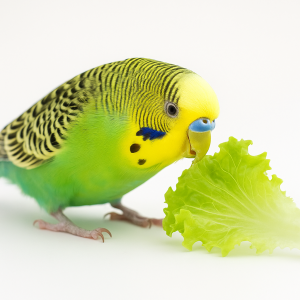
When Fresh Greens Can Surprise You
I discovered something unexpected when I first brought home my budgie, Chester, five years ago. I assumed any fresh vegetable was a good addition to his diet, so I started offering lettuce several times a week without thinking twice. Within a few months, I noticed his feathers looked duller, and his vet—a specialist in avian medicine—gently suggested I was actually replacing essential nutrients with mostly water. That conversation changed how I approached fresh foods entirely. The irony was that I was trying to do right by him, but without understanding what different vegetables actually *do* for a budgie’s health, I was inadvertently underfeeding him in the areas that mattered most.
Romaine lettuce has become a reliable part of our rotation now, but only because I learned the specific conditions that make it work. Unlike iceberg lettuce, which is 96% water and nutritionally sparse, romaine contains meaningful levels of vitamin A, folate, and fibre—nutrients that actively support feather condition, eye health, and digestion. The difference is real, and once you understand it, feeding romaine becomes one of the easiest ways to add variety without the guilt.
Factor 1: Nutritional Profile of Romaine vs Other Lettuces
Not all lettuces are equal. The distinction between iceberg and romaine is significant enough that it should influence your feeding decisions immediately.
Romaine lettuce composition: A 100g serving of raw romaine contains approximately 1.2g protein, 3.3g carbohydrates, 2.1g fibre, and is particularly rich in vitamin A (7,405 IU), folate (136 mcg), and vitamin K. It also provides small amounts of calcium and phosphorus, though the ratio is not ideal for budgies. The water content is around 95%, which is still high but less extreme than iceberg.
Iceberg lettuce comparison: Iceberg is 96% water with minimal nutritional density. It contains less than half the vitamin A of romaine and offers little fibre or meaningful micronutrients. From a budgie’s perspective, iceberg is essentially expensive water. Avian veterinarians routinely recommend avoiding it altogether.
Why this matters for budgies: Budgies have fast metabolisms and require nutrient-dense foods. A food that is 95% water might fill their stomach without providing calories or essential vitamins. This is why romaine can work—it delivers something—whereas iceberg leaves them nutritionally short-changed. The vitamin A content in romaine, in particular, supports eye health and feather pigmentation, two areas where budgies show visible benefit.
Factor 2: Safety Considerations and Preparation
The safety of any fresh vegetable hinges entirely on how it is prepared. This is where many well-intentioned budgie owners inadvertently introduce risk.
Pesticide residue: Conventionally grown lettuce is frequently treated with pesticides. Even if residue is within legal limits for human consumption, budgies are far smaller and metabolize chemicals differently. Always wash romaine thoroughly under running water, rubbing the leaves gently between your fingers. Some keepers prefer to soak lettuce in a solution of water and white vinegar (1 part vinegar to 3 parts water) for 5–10 minutes, then rinse. There is no clinical evidence that vinegar rinses are more effective than water alone, but many experienced keepers report greater peace of mind.
Bacterial contamination: Raw leafy greens have been associated with E. coli and Salmonella outbreaks in recent years. The risk to budgies is real, though not common. Some avian veterinarians recommend offering cooked greens instead of raw, or limiting raw greens to occasional treats. If you choose to offer raw romaine, ensure it is as fresh as possible and discard any leaves that show wilting, browning, or slime.
Proper preparation method: Tear or cut romaine into small, manageable pieces no larger than your budgie’s head. Remove the tough white core at the base. Some keepers blanch (briefly boil) romaine for 30 seconds to reduce bacterial load, then cool it completely before serving. Whilst this reduces some safety risk, it also reduces vitamin content slightly, so the trade-off is a personal choice.
Factor 3: Portion Sizes and Feeding Frequency
Portion control is where most budgie owners either go wrong or miss the opportunity entirely. I see owners offering entire lettuce leaves, or on the flip side, offering greens so rarely that they provide no real benefit.
Portion size: Offer a small piece of washed romaine alongside other vegetables. There is no single lettuce serving in grams suitable for every budgie; ask your avian vet about portions for your bird.
Balance matters: Lettuce is only one part of the fresh-food allowance. VCA’s budgie feeding guidance limits fruits, vegetables and greens together to 20–25% of the daily diet at most. This is not an allowance for lettuce alone. Keep the diet varied and avoid letting one favourite food displace the rest.
Rotation strategy: Rather than offering romaine every day, alternate it with other nutrient-rich vegetables. Bell peppers (all colours), broccoli florets, spinach (in small amounts), carrot, cucumber, and courgette all provide different micronutrients. A simple weekly rotation might look like: Monday (romaine), Wednesday (bell pepper), Friday (broccoli), Sunday (carrot). This approach ensures your budgie gets a broader spectrum of nutrients.
Factor 4: Which Parts of Romaine Are Safe
Even within a single head of lettuce, nutritional value and safety vary by section. Knowing which parts to offer takes confusion out of feeding time.
Outer dark green leaves: These are the most nutrient-dense part of romaine. They contain the highest concentration of vitamins and minerals, and they are also slightly tougher, which makes them easier for budgies to grip and tear. These are your top choice.
Inner pale leaves: The lighter leaves toward the centre are tender and also safe. They contain fewer nutrients than the outer leaves but are still acceptable. Many budgies prefer them because they require less effort to eat.
Central white ribs: The firm central ribs (the part that connects the leaves) are safe in small pieces. Some budgies enjoy stripping these and using them as enrichment. Tear them into manageable segments.
The base/core: The thick white core at the base of the head should be avoided or used only in very small pieces. It is tough and fibrous and could pose a choking risk. Remove it entirely before serving.
Bruised or wilted sections: Any part of the lettuce that shows dark spots, slime, or wilting should be discarded immediately. These are signs of bacterial or fungal growth.
Factor 5: Romaine in the Context of a Balanced Diet
Romaine lettuce is a supplement, never a foundation. Understanding where it sits in your budgie’s nutritional hierarchy prevents well-meaning overreliance.
The role of pellets: A high-quality avian pellet (such as Harrison’s, TOP’s, or Zupreem) should form the backbone of your budgie’s diet. Pellets are nutritionally complete and formulated specifically for avian needs. They provide balanced calcium-to-phosphorus ratios, essential amino acids, and micronutrients in ways fresh foods cannot alone. If your budgie’s pellet intake drops significantly because they are filling up on lettuce or other vegetables, you are moving in the wrong direction nutritionally.
Seeds as enrichment, not staple: Many budgies prefer seeds (millet, sunflower, safflower) to pellets. Seeds are calorie-dense and enjoyable but often lack the nutritional balance of pellets. Romaine can help make pellets more appealing by increasing overall dietary variety, which encourages pellet consumption. This is actually one of the best reasons to offer fresh vegetables regularly.
Water intake: One minor benefit of offering romaine and other watery vegetables is increased water intake, particularly in budgies that do not drink as much as they should. However, fresh water should always be available separately in a clean dish, changed daily. Do not rely on vegetables as a primary hydration source.
Factor 6: Common Concerns and Misconceptions
Myths about budgie nutrition circulate regularly online. Addressing the most common ones helps you make confident feeding decisions.
Myth: “Lettuce has no nutritional value, so why feed it?” Reality: Iceberg lettuce has minimal nutrition, but romaine is genuinely different. It provides measurable amounts of vitamin A, folate, and fibre. The claim “lettuce is just water” is outdated advice based on iceberg comparisons. Romaine does have nutritional merit, even if it is not a primary nutrient source.
Myth: “Feeding raw greens causes digestive upset.” Reality: For most healthy budgies, raw greens do not cause upset. The concern usually relates to contamination (bacteria, pesticides) or overconsumption. A small, clean portion of romaine causes no digestive problems. If your budgie has a history of digestive sensitivity, blanching is a reasonable precaution.
Myth: “Calcium in vegetables is bad because it binds to phosphorus.” Reality: Whilst some vegetables contain oxalates (which bind calcium), romaine is relatively low in oxalates compared to spinach, chard, or parsley. It is not a primary concern for occasional feeding. If you offer romaine 2–3 times per week alongside other varied vegetables, oxalate accumulation is not a realistic risk.
Myth: “Organic lettuce is always safer than conventional.” Reality: Organic produce is treated with fewer synthetic pesticides, but it can still harbour bacterial contamination from soil or water. Washing is essential regardless of whether produce is organic or conventional. The risk difference is real but modest, and budget and availability should inform your choice.
Factor 7: Recognizing When Your Budgie Has Had Enough
Observation is your best tool for understanding whether fresh vegetables are working in your budgie’s diet.
Signs of adequate vegetable intake: Your budgie should show vibrant feather colour, consistent weight, regular appetite for pellets, and active behaviour. Feather condition, in particular, visibly improves within weeks of introducing nutrient-rich vegetables. Eyes should be bright and clear.
Signs of excessive vegetable intake: If your budgie is leaving pellets uneaten in favour of vegetables, or if they are becoming picky, reduce vegetable portions. A budgie should never refuse their main diet for fresh foods. If their weight drops or feathers look dull despite vegetable offerings, the diet is likely out of balance.
Individual preferences: Not all budgies enjoy romaine or vegetables at all. Some are indifferent, and some actively dislike them. This is not a health problem. Budgies eating a complete pellet diet without fresh vegetables can live entirely healthy lives. Fresh foods are an enhancement, not a requirement. If your budgie refuses romaine, offer other vegetables (bell pepper and broccoli are often more appealing), or skip fresh foods altogether if necessary.
Vegetable Feeding Accessories
Affiliate disclosure: BudgieHub earns a commission when you buy through the Amazon links below, at no extra cost to you. These links open Amazon search results, not individually tested product recommendations.
If you want to make vegetable feeding easier and safer, a few tools can help simplify the process.
Holds fresh vegetables or greens securely inside the cage without allowing contamination from perches or droppings. Clips directly to cage bars.
Makes washing and drying romaine leaves quick and thorough. The spinning action removes water and helps dislodge pesticide residue more effectively than hand rinsing alone.
| Vegetable | Frequency | Portion Size | Key Benefit |
|---|---|---|---|
| Romaine Lettuce | 2–3 times/week | Small torn piece; part of the mixed vegetable allowance | Vitamin A, folate, fibre |
| Bell Pepper (any colour) | 2–3 times/week | Small chopped piece; part of the mixed vegetable allowance | Vitamin C, antioxidants |
| Broccoli Florets | 1–2 times/week | 2–3 small florets | Calcium, vitamin K |
| Carrot (raw or cooked) | 2 times/week | Small slice or grated | Beta-carotene, fibre |
| Courgette | 1–2 times/week | Small slice or dice | Hydration, light nutrients |
Frequently Asked Questions
Can budgies eat romaine lettuce?
Yes, budgies can safely eat romaine lettuce in moderation. Romaine is low in oxalates and calcium-binding compounds, making it a better choice than iceberg lettuce. It should be offered as an occasional treat, not a staple food, alongside a varied diet of pellets, seeds, and other fresh vegetables. Always wash it thoroughly before serving to remove pesticides and contaminants.
How often can I feed my budgie romaine lettuce?
Rotate romaine with other vegetables rather than relying on it every day. Offer a small piece, not a handful, and discuss the overall feeding plan with your avian vet. Lettuce should not crowd out the rest of the diet.
Is romaine lettuce better than iceberg lettuce for budgies?
Yes, romaine lettuce is significantly better than iceberg lettuce for budgies. Romaine contains more nutritional value, including higher levels of vitamin A, folate, and fibre. Iceberg lettuce is mostly water and lacks substantial nutrients, making it less beneficial. If you choose to offer lettuce at all, romaine is the preferred choice.
What parts of romaine lettuce can budgies eat?
Budgies can safely eat the outer green leaves, inner pale leaves, and the tender central ribs of romaine lettuce. The outer leaves contain the most nutrients. Avoid the core base, as it can be tough and may pose a choking risk. Always tear or chop the lettuce into manageable pieces before offering it to your budgie.
Are there any risks associated with feeding budgies romaine lettuce?
The main risks are pesticide residue, bacterial contamination, and overconsumption. Romaine lettuce should always be washed thoroughly under running water before serving. Due to the E. coli risks associated with raw lettuce in general, some avian veterinarians recommend limiting raw leafy greens. If you have concerns, consult your avian vet about your budgie’s individual diet.
Can I cook romaine lettuce before feeding it to my budgie?
Yes, you can blanch (briefly boil) romaine lettuce for 30 seconds, then cool it completely before serving. Blanching reduces bacterial load and makes the lettuce softer, which some budgies prefer. However, it also reduces vitamin content slightly. For most healthy budgies, raw, well-washed romaine is safe and retains more nutrients. Choose based on your budgie’s individual needs and your comfort level.
- PetMD Avian Care Centre — vegetable nutrition for pet birds
- USDA FoodData Central — nutritional comparison of romaine vs iceberg lettuce
- VCA Animal Hospitals — avian nutritional requirements and fresh food guidelines
- Birdfact — budgerigar diet and nutrition recommendations
- RSPCA — budgerigar dietary care and feeding guidelines
- Journal of Avian Medicine and Surgery — pesticide residue and contamination risks in fresh produce for captive birds
“`