
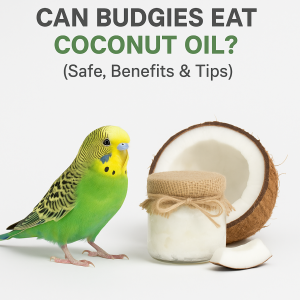
Quick answer: Yes, budgies can safely consume small amounts of coconut oil as an occasional supplement. It may offer benefits such as improved feather condition and a boost in energy, but it should be given sparingly and never replace a balanced diet. Always introduce coconut oil gradually and observe your budgie for any adverse reactions.
Affiliate disclosure: This article may contain affiliate links. If you purchase through them, we may earn a small commission at no extra cost to you. We only recommend items that support safe, evidence-informed budgie care.
Deeper Context: Why Consider Coconut Oil for Budgies?
Coconut oil has gained popularity in human and pet nutrition due to its unique fatty acid profile and potential health benefits. For budgies, which require a carefully balanced diet rich in seeds, fruits, vegetables, and specialised pellets, the idea of adding coconut oil might seem appealing. But is it truly beneficial or safe?
Budgies are small parrots with delicate digestive systems. Their natural diet in the wild consists mainly of seeds, grasses, and occasional fruits and flowers. Coconut oil is not a natural part of their diet, so it’s important to understand how it interacts with their metabolism and overall health.
What Is Coconut Oil?
- Extracted from the meat of mature coconuts.
- Rich in medium-chain triglycerides (MCTs), especially lauric acid.
- Solid at room temperature but melts easily.
- Used in cooking, cosmetics, and pet supplements.
Nutrition & Compounds in Coconut Oil Relevant to Budgies
Understanding the nutritional profile of coconut oil helps clarify its potential effects on budgies.
| Nutrient | Amount per 1 tsp (4.6g) | Potential Role for Budgies |
|---|---|---|
| Calories | 40 | Energy source but high calorie density means small amounts only |
| Saturated Fat | 4g | Provides energy; excess may affect heart health |
| Medium-Chain Triglycerides (MCTs) | ~3g | May support metabolism and immune function |
| Lauric Acid | ~2g | Antimicrobial properties; potential skin and feather benefits |
While coconut oil contains beneficial compounds, budgies require a balanced intake of proteins, vitamins, minerals, and fats primarily from their natural diet.
Risks & Contraindications of Feeding Coconut Oil to Budgies
- High Fat Content: Budgies are prone to fatty liver disease if fed excessive fats.
- Allergic Reactions: Though rare, some birds may be sensitive to coconut oil.
- Digestive Issues: Too much oil can cause diarrhoea or upset stomach.
- Caloric Overload: Excess calories can lead to weight gain and reduced lifespan.
Always consult your avian vet before introducing coconut oil or any supplement to your budgie’s diet.
Preparation & Serving: How to Safely Offer Coconut Oil to Budgies
Introducing coconut oil to your budgie should be done carefully and hygienically.
Step-by-Step Guide
- Choose Virgin or Extra Virgin Coconut Oil: Avoid refined or scented varieties which may contain additives.
- Start Small: Begin with a tiny amount, about a grain of rice-sized dab.
- Mix with Favourite Foods: Blend the oil into soft foods like mashed fruits or vegetables.
- Observe Your Budgie: Watch for any changes in behaviour, droppings, or appetite.
- Increase Gradually: If tolerated well, you can slowly increase to a maximum of 1/8 teaspoon once or twice a week.
- Use Clean Utensils: Always use a clean spoon or knife to avoid contamination.
- Store Properly: Keep coconut oil in a cool, dry place away from direct sunlight.
Checklist for Serving Coconut Oil to Budgies
- Virgin or extra virgin coconut oil only
- Start with very small quantities
- Mix with soft foods or offer on a clean dish
- Monitor your budgie’s health closely
- Limit frequency to 1-2 times per week
- Consult your avian vet before starting
Portion & Frequency Recommendations
| Age/Condition | Recommended Portion | Frequency | Notes |
|---|---|---|---|
| Adult Healthy Budgie | Up to 1/8 tsp (approx. 0.5g) | 1-2 times per week | As a supplement only |
| Young Budgie (under 6 months) | Very minimal or none | Not recommended | Developing digestive system |
| Budgie with Health Issues | Only under vet advice | As directed | May need to avoid fats |
Signs of Problems & What To Do
After introducing coconut oil, watch for any signs that your budgie may not be tolerating it well.
- Diarrhoea or loose droppings
- Reduced appetite or refusal to eat
- Fluffed-up feathers or lethargy
- Excessive weight gain
- Changes in breathing or behaviour
Vet Guidance: When to Consult and What to Ask
Always involve your avian vet when making changes to your budgie’s diet, especially with supplements like coconut oil.
- Ask if coconut oil is suitable for your budgie’s age and health status.
- Discuss appropriate portion sizes and frequency.
- Seek advice if your budgie has pre-existing liver or digestive issues.
- Request guidance on external use for feather or skin care.
- Get recommendations for alternative supplements if coconut oil is unsuitable.
Regular check-ups help ensure your budgie remains healthy and happy with any dietary additions.
FAQs About Budgies and Coconut Oil
Q: Can coconut oil help with budgie feather plucking?
A: Coconut oil may improve skin and feather condition when applied externally, but it is not a cure for feather plucking, which often has behavioural or medical causes.
Q: Is coconut oil better than other oils for budgies?
A: Coconut oil has unique MCTs, but other oils like flaxseed or olive oil provide essential fatty acids important for budgies. Variety and balance are key.
Q: Can I add coconut oil to my budgie’s water?
A: No, coconut oil does not dissolve in water and can cause contamination. It should be mixed with food or offered separately.
Q: How long does it take to see benefits from coconut oil?
A: Any improvements in feather condition or energy may take several weeks of consistent, moderate use.
Related Articles
- [[link:Can Budgies Eat Carrot]]
- [[link:Budgie Molting Guide]]
- [[link:Best Oils for Budgies]]
- [[link:Budgie Diet Essentials]]
{AMAZON_TAG}
Key Takeaways
- Coconut oil is safe for budgies in very small amounts and infrequent servings.
- It may offer benefits such as improved feather condition and energy support.
- High fat content means it should never replace a balanced diet.
- Start with tiny portions and monitor your budgie closely for adverse effects.
- Consult an avian vet before introducing coconut oil or any new supplement.
- External application is possible but should be done cautiously and under vet advice.
Recommended on Amazon
We’ve hand-picked useful items related to Can Budgies Eat Coconut Oil? (Safe, Benefits & Tips).