
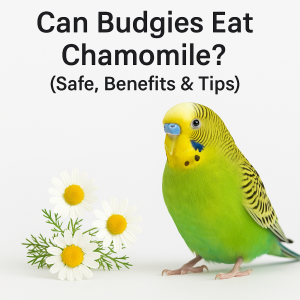
Quick answer: Chamomile may be offered only in very small amounts if it is plain, unsweetened, caffeine-free, and free from oils or flavourings. It is optional, not a diet staple, and should be stopped if your budgie shows any digestive or behaviour change.
Affiliate disclosure: This article may contain affiliate links. If you purchase through them, we may earn a small commission at no extra cost to you. We only recommend items that support safe, evidence-informed budgie care.
Deeper Context: Why Consider Chamomile for Budgies?
Budgerigars, affectionately known as budgies, enjoy a varied diet primarily consisting of seeds, fruits, and vegetables. Herbal additions like chamomile have gained interest among bird owners for their potential soothing properties. Chamomile (Matricaria chamomilla) is a mild herb traditionally used in human herbal teas for relaxation and digestive support.
For budgies, chamomile is not a staple food but can be a beneficial occasional treat. Understanding its effects, safe usage, and preparation is essential before offering it to your feathered companion.
What Is Chamomile?
Chamomile is a daisy-like flower known for its calming effects in herbal medicine. It contains several bioactive compounds, including flavonoids and essential oils, which contribute to its mild sedative and anti-inflammatory properties.
Why Budgies Might Benefit
– May help reduce mild stress or anxiety
– Could aid digestion and soothe upset stomachs
– Provides a natural source of antioxidants
Nutrition & Compounds in Chamomile Relevant to Budgies
Chamomile contains several compounds that may be beneficial when consumed in small quantities:
- Flavonoids: Antioxidants that help protect cells from oxidative stress.
- Apigenin: A flavonoid with mild calming effects.
- Essential oils: Including bisabolol and chamazulene, which have anti-inflammatory properties.
- Vitamins & Minerals: Trace amounts of vitamins A and C, calcium, and magnesium.
These compounds can contribute to overall wellbeing but should be offered sparingly to avoid overwhelming your budgie’s delicate system.
Risks & Contraindications
While chamomile is generally safe, there are important precautions to consider:
- Allergic reactions: Rare but possible; discontinue use immediately if signs appear.
- Overconsumption: Too much chamomile can cause digestive upset or lethargy.
- Interactions: If your budgie is on medication, consult a vet before offering chamomile.
- Contamination risk: Only use organic, pesticide-free chamomile to avoid toxins.
Preparation & Serving: Step-by-Step Guide
Offering chamomile safely involves proper preparation and serving methods. Here’s a simple checklist to follow:
- Source organic chamomile: Use dried flowers or fresh blossoms from a trusted supplier.
- Wash thoroughly: Rinse fresh chamomile under cold water to remove dust or insects.
- Dry completely: Pat dry with a clean towel or air dry to prevent mould.
- Serve fresh or dried: Offer a small pinch of dried flowers or a fresh blossom directly in the cage or on a treat stick.
- Observe your budgie: Watch for interest and any signs of discomfort or allergy.
- Limit quantity: Only a small amount once or twice a week is recommended.
Chamomile Serving Checklist
- Organic, pesticide-free chamomile
- Clean, dry flowers
- Small pinch or single flower per serving
- Fresh water available at all times
- Monitor for adverse reactions
Portion & Frequency Recommendations
Budgies are tiny birds with sensitive digestive systems, so moderation is key. Below is a simple table to guide portion sizes and frequency:
| Age/Condition | Portion Size | Frequency | Notes |
|---|---|---|---|
| Adult Budgies | 1 small dried flower or 1 fresh blossom | 1-2 times per week | Monitor for tolerance |
| Young Budgies (under 6 months) | Very small pinch, less than adult portion | Once per week or less | Introduce gradually |
| Budgies with health issues | Consult vet before offering | Only if approved | May not be suitable |
Signs of Problems & What To Do
After offering chamomile, watch your budgie carefully for any unusual signs. Common symptoms of intolerance or allergy include:
- Itching or feather plucking
- Swelling around the eyes or beak
- Difficulty breathing or wheezing
- Diarrhoea or vomiting
- Lethargy or loss of appetite
Immediate Steps to Take
- Remove chamomile from the cage
- Provide fresh water and a quiet environment
- Observe for worsening symptoms
- Contact your avian vet promptly
Vet Guidance: When to Seek Professional Advice
While chamomile is generally safe, always consult your avian vet if:
- You plan to introduce chamomile for the first time
- Your budgie has pre-existing health conditions
- You notice any adverse reactions after feeding chamomile
- You want advice on herbal supplements and diet balance
Veterinarians can provide tailored advice and ensure your budgie’s diet supports optimal health.
Frequently Asked Questions (FAQs)
Can I give my budgie chamomile tea?
Yes, but only very weak, cooled chamomile tea with no additives. Offer just a few drops and ensure your budgie drinks plenty of fresh water.
Is chamomile safe for baby budgies?
Use extreme caution with young budgies. If you choose to offer chamomile, do so in very small amounts and infrequently, ideally after consulting a vet.
Can chamomile replace medication for stress or illness?
No. Chamomile is a mild supplement and should never replace professional veterinary treatment.
Are there any other herbs safe for budgies?
Yes, herbs like parsley, basil, and coriander can be safe in moderation. See [[link:Safe Herbs for Budgies]] for more details.
Can dried chamomile flowers be stored for long?
Store dried chamomile in an airtight container away from light and moisture. Use within 6 months for best freshness.
Key Takeaways
- Chamomile is safe for budgies in small, occasional amounts.
- It may offer calming and digestive benefits but is not a substitute for veterinary care.
- Always use organic, pesticide-free chamomile and prepare it properly.
- Introduce chamomile gradually and monitor your budgie for any adverse reactions.
- Consult an avian vet before adding chamomile to your budgie’s diet, especially if your bird is young or unwell.
- Keep chamomile servings small and infrequent—typically 1-2 times per week.
For more on budgie nutrition and safe treats, explore our guides on [[link:Can Budgies Eat Carrot]] and [[link:Budgie Molting Guide]].
{AMAZON_TAG}
Recommended on Amazon
We’ve hand-picked useful items related to Can Budgies Eat Chamomile? (Safe, Benefits & Tips).