
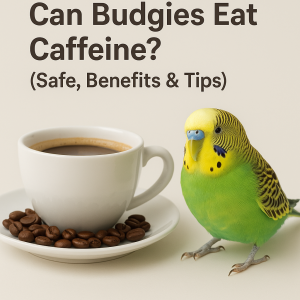
Quick answer: No. Budgies should never have caffeine from tea, coffee, energy drinks, cola, chocolate, supplements, or flavoured foods. Caffeine can affect a small bird quickly, so call an avian vet if exposure is possible or symptoms appear.
Affiliate disclosure: This article may contain affiliate links. If you purchase through them, we may earn a small commission at no extra cost to you. We only recommend items that support safe, evidence-informed budgie care.
Deeper Context: Why Caffeine and Budgies Don’t Mix
Caffeine is a stimulant found in coffee, tea, chocolate, energy drinks, and some sodas. While humans consume caffeine daily with moderate effects, birds like budgerigars (budgies) have very different metabolisms and sensitivities. Even small amounts of caffeine can be dangerous for these tiny parrots.
Budgies are delicate creatures with fast metabolisms and sensitive nervous systems. Caffeine overstimulates their heart and nervous system, leading to symptoms such as rapid breathing, tremors, and seizures. In severe cases, caffeine poisoning can be fatal.
“Never offer your budgie any food or drink containing caffeine. It’s simply not safe.” – Avian Veterinary Experts
Nutrition & Compounds: What Makes Caffeine Harmful to Budgies?
Caffeine belongs to a class of compounds called methylxanthines, which act as central nervous system stimulants. In humans, caffeine increases alertness and reduces fatigue. In birds, however, these compounds can:
- Increase heart rate dangerously
- Cause hyperactivity and nervousness
- Lead to dehydration
- Disrupt sleep and rest patterns
- Trigger seizures or cardiac arrest in extreme cases
Unlike mammals, birds metabolise caffeine very slowly, which means the toxic effects last longer and accumulate more easily.
Risks & Contraindications: What Happens If Your Budgie Consumes Caffeine?
Signs of caffeine poisoning in budgies can appear quickly and include:
- Restlessness or hyperactivity
- Trembling or shaking
- Rapid breathing or panting
- Increased heart rate
- Vomiting or diarrhoea
- Seizures or collapse
Ingesting caffeine can also exacerbate pre-existing conditions such as heart disease or respiratory problems.
Preparation & Serving: Safe Treats and Alternatives to Caffeine for Budgies
Instead of caffeine, offer your budgie healthy, bird-safe treats that provide energy and enrichment without risk. Here’s a simple checklist for preparing safe snacks:
- Choose fresh fruits like apple slices (without seeds), blueberries, or grapes
- Offer vegetables such as carrot sticks, spinach, or broccoli florets
- Include small amounts of millet spray or specially formulated budgie treats
- Wash all produce thoroughly to remove pesticides
- Remove any uneaten fresh food after 2 hours to prevent spoilage
Step-by-Step Guide to Preparing Budgie Treats
- Wash your hands and clean all utensils.
- Rinse fruits and vegetables under cold water.
- Cut into small, manageable pieces suitable for your budgie’s size.
- Remove any seeds, pits, or stems that could be harmful.
- Place treats in a clean dish or clip onto the cage.
- Observe your budgie while eating to ensure safety.
Portion & Frequency: How Much and How Often?
Budgies have small stomachs and require a balanced diet. Treats should only make up a small portion of their daily intake.
| Treat Type | Recommended Portion | Frequency |
|---|---|---|
| Fresh Fruit | 1-2 small pieces (e.g., 1 grape or 2 blueberries) | 2-3 times per week |
| Fresh Vegetables | 1-2 small pieces (e.g., carrot stick or broccoli floret) | 3-4 times per week |
| Millet Spray | 1 small spray | Once or twice a week |
Signs of Problems & What To Do
If your budgie accidentally ingests caffeine or shows any unusual symptoms, act quickly:
- Remove any remaining caffeine-containing food or drink immediately.
- Observe your budgie closely for signs of distress.
- Keep your budgie calm and in a warm, quiet environment.
- Contact an avian vet without delay for advice and treatment.
Vet Guidance: When to Seek Professional Help
Veterinarians specialising in avian care are best equipped to handle caffeine poisoning. Early intervention can save your budgie’s life. Your vet may:
- Perform a physical examination and monitor vital signs
- Provide supportive care such as fluids and medications to stabilise heart rate
- Recommend observation or hospitalisation depending on severity
Regular check-ups and discussing your budgie’s diet with your vet can help prevent accidental poisoning and ensure optimal health.
FAQs
Can caffeine be found in any bird foods or treats?
No, reputable bird foods and treats do not contain caffeine. Always check ingredient labels carefully.
Is tea safe for budgies if it’s decaffeinated?
Even decaffeinated tea may contain trace amounts of caffeine and other compounds unsuitable for birds. It’s best to avoid giving tea altogether.
What are safe energy-boosting foods for budgies?
Fresh fruits, vegetables, and millet sprays provide natural energy without harmful stimulants.
Can caffeine cause long-term damage to budgies?
Repeated or high-dose caffeine exposure can cause lasting heart or neurological damage. Avoid any caffeine exposure to protect your budgie’s health.
How can I keep my budgie entertained without caffeine?
Provide toys, social interaction, and foraging opportunities to keep your budgie mentally and physically stimulated.
Figure: Healthy Budgie Treats
For more on feeding your budgie a balanced diet, check out [[link:Budgie Diet Essentials]] and [[link:Can Budgies Eat Carrot]].
{AMAZON_TAG}
Key Takeaways
- Caffeine is toxic to budgies and should never be given.
- Even small amounts can cause serious health problems.
- Safe treats include fresh fruits, vegetables, and millet spray.
- Watch for signs of poisoning and seek vet care immediately if suspected.
- Consult your avian vet regularly about your budgie’s diet and health.
Recommended on Amazon
We’ve hand-picked useful items related to Can Budgies Eat Caffeine? (Safe, Benefits & Tips).