
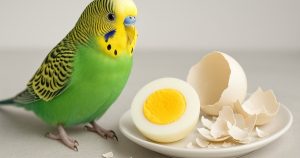
Quick answer: Budgies can eat properly cleaned, baked and crushed eggshell as a calcium source, but it must be prepared safely to reduce contamination risk. Many owners use cuttlebone or mineral blocks instead because they are simpler and cleaner.
This guide explains safe eggshell preparation, calcium needs, portion control and when to ask an avian vet about supplements.
Why You’re Asking About Eggshells
If you’ve just cracked an egg in your kitchen and watched your budgie’s head perk up with interest, you’ve probably wondered whether those discarded shells are actually useful. I’ve been in that exact moment myself — it’s natural to want to make use of everything on hand, especially when something seems like it could be nutritious.
The truth is, eggshells do contain calcium your budgie needs. But like many things in budgie care, the details matter enormously. There’s a significant difference between offering a boiled shell and a raw one, between a sensible portion and an excessive one. This guide walks you through exactly what avian vets and nutrition experts recommend.
Understanding Budgie Calcium Needs
Before you start saving eggshells, it helps to understand why calcium matters in the first place. Budgies — especially females during breeding season — require consistent calcium for strong bones, healthy feathers and proper muscle function.
A balanced budgie diet already contains calcium from quality pellets, fresh vegetables (particularly leafy greens like spinach and kale) and cuttlebone or mineral blocks. The question with eggshells is whether they’re a useful addition or simply redundant.
Eggshells are roughly 95% calcium carbonate, making them one of the most calcium-dense foods available. The calcium in eggshell is also bioavailable, meaning your budgie’s body can absorb and use it. For birds in moulting periods or females laying eggs, that bioavailable calcium can be genuinely helpful — but only in the right form and quantity.
The Bacterial Risk Problem — And How to Fix It
The most common mistake is offering raw eggshells. While the shell itself doesn’t contain the bacteria found inside the egg, it can become contaminated during collection, storage and handling.
Salmonella and other harmful bacteria can live on the surface of raw eggshells. Your budgie’s digestive system is smaller and more sensitive than a human’s, making bacterial infections a serious concern. Symptoms of illness from contaminated food include lethargy, loss of appetite, ruffled feathers and changes in droppings — signs that warrant immediate veterinary attention.
The fix is simple: always boil eggshells before offering them to your budgie. Boiling for 10 minutes at a rolling heat kills bacteria while preserving the calcium content. The shell remains just as nutritious after boiling, but now it’s safe.
Step-by-Step Eggshell Preparation Method
- Boil the shells: Place clean eggshells in boiling water for 10 minutes. This eliminates surface bacteria.
- Drain and cool: Remove shells with a slotted spoon and place them on a clean paper towel to cool completely (at least 15 minutes).
- Dry in the oven: Spread cooled shells on a baking tray and bake at 180°C for 10–15 minutes until completely dry and brittle.
- Crush into pieces: Once cool, crush shells by hand or in a small bowl into pea-sized or smaller pieces. Avoid powder — pieces are easier to monitor.
- Store safely: Transfer dried eggshell pieces into an airtight container. Store in the refrigerator for up to 2 weeks.
Safe Portion Sizes and Feeding Frequency
How much eggshell is actually appropriate? This is where many budgie owners either overfeed or underfeed.
A sensible starting amount is a single pea-sized piece, offered 2–3 times per week. This gives your budgie’s body a regular calcium boost without risking imbalance. If your budgie has never had eggshell before, observe their droppings and behaviour for the first few days — most birds tolerate it perfectly, but individual responses vary.
Watch for any changes: looser droppings, reduced appetite or disinterest in regular food can signal that eggshell isn’t sitting well with your individual bird. If anything looks off, skip the eggshell for a week and return to a normal diet.
Remove any uneaten eggshell pieces after 2 hours to prevent spoilage or accidental overeating later in the day.
The Female Budgie Advantage — But Don’t Overdo It
Female budgies laying eggs experience genuine increased calcium demand. During the weeks leading up to and during egg-laying, hens benefit from extra bioavailable calcium. This is one situation where eggshell supplementation makes measurable sense.
However, even for laying hens, eggshell should be part of a larger calcium strategy, not the entire strategy. A complete approach includes:
- Quality pellets formulated for egg-laying birds (typically with 0.6–0.8% calcium)
- Fresh calcium-rich vegetables like kale, rocket and bok choy
- A cuttlebone or mineral block available at all times
- Occasional boiled eggshell (2–3 times weekly)
This combination ensures your hen has reliable calcium without the risk of hypercalcaemia (excess calcium), which can stress kidneys over time.
What About Calcium Supplements Instead?
You might wonder whether prepared calcium supplements are safer or more effective than eggshell. Both have merit. Commercial calcium powders (like those containing calcium carbonate or phosphorus-balanced formulations) offer consistency and no bacterial risk. However, they require careful dosing and can sometimes contain fillers.
Eggshells offer the same mineral profile with a ‘whole food’ appeal, but require proper preparation. Neither is inherently superior — the best choice depends on your comfort level with food preparation and your budgie’s individual response.
If you’re considering a calcium supplement, speak to an avian vet first. Over-supplementation is possible, and an expert can recommend the right approach for your specific bird.
Common Eggshell Feeding Mistakes
Beyond the bacterial issue, several other mistakes can undermine the benefit of offering eggshells:
Mistake 1: Offering too much too often. Eggshell is a supplement, not a staple food. Daily eggshell or portions larger than a pea can disrupt your budgie’s mineral balance. Stick to 2–3 times weekly in small pieces.
Mistake 2: Crushing into powder. Fine powder is harder to monitor and can get inhaled or wasted. Pea-sized pieces give you control and let you see exactly what your budgie consumes.
Mistake 3: Mixing eggshell with other new foods. If your budgie shows a digestive reaction to eggshell, you’ll want to know which food caused it. Introduce eggshell alone, with a gap of several days before trying any other new foods.
Mistake 4: Assuming eggshell replaces pellets or vegetables. It doesn’t. Eggshell is one tool in a complete nutrition plan. A diet of pellets, vegetables and occasional fruit is the foundation; eggshell is an optional enhancement.
Signs Your Budgie Isn’t Tolerating Eggshell Well
Most budgies do fine with properly prepared eggshell, but watch for these indicators that it might not suit your individual bird:
- Looseness or changes in dropping consistency within 24 hours of eggshell
- Reduced appetite or picking at food
- Lethargy or reduced activity
- Ruffled feathers or signs of discomfort
- Weight loss over several days
If you notice any of these, stop offering eggshell for at least a week and let your budgie’s system reset. Then you can try again with a smaller portion. If problems persist, eggshell simply may not be right for that bird — and that’s perfectly fine. Your budgie can live a long, healthy life without it.
The Broader Context: Eggshell Within a Balanced Diet
Eggshell works best as one element of a thoughtful feeding strategy. To understand how it fits in, it helps to review what a complete budgie diet actually looks like.
According to avian nutrition guidelines, a healthy budgie diet should include:
- Pellets (60–70% of diet): High-quality, vet-approved pellets formulated for budgies (brands like Harrison’s, TOP’s or Vetafarm are commonly recommended)
- Fresh vegetables (20–30% of diet): Leafy greens, broccoli, bell peppers, carrots, courgette
- Fruit (5–10% of diet): Apple, berries, melon — small portions due to natural sugar
- Supplements (occasional): Cuttlebone, mineral block, boiled eggshell, sprouted seeds
Within this framework, eggshell occupies a small, optional role. It’s not a shortcut; it’s a finishing touch for owners who want to be thorough about nutrition. If you’re already offering quality pellets and fresh vegetables, you’re meeting your budgie’s calcium needs. Eggshell just adds a bit of extra margin.
Alternative Calcium Sources
If preparing boiled eggshells feels like too much effort, or if your budgie doesn’t seem interested, several other calcium-rich foods do the job:
- Cuttlebone: The most traditional and popular option. It’s always available, requires no preparation, and budgies naturally gnaw on it. One cuttlebone lasts weeks.
- Mineral block: Similar to cuttlebone but denser. Good for additional beak exercise.
- Dark leafy greens: Kale, spinach, rocket and bok choy are naturally high in calcium and should already be part of your fresh vegetable rotation.
- Broccoli: About 47mg of calcium per 100g raw. Offer occasionally as part of your vegetable mix.
- Sesame seeds: Very high in calcium (975mg per 100g). Offer a small pinch once or twice weekly. No more — they’re also high in fat.
A budgie with access to a cuttlebone and a varied diet of greens and quality pellets is almost certainly getting adequate calcium. Eggshell is an optional bonus, not a necessity.
Moulting Periods and Increased Calcium Demand
There’s one situation where eggshell supplementation genuinely matters: during moult.
When budgies shed and regrow feathers, their bodies work overtime. According to avian nutrition experts, calcium demands can rise during heavy moult periods. This is when the combination of regular calcium sources plus occasional eggshell makes practical sense.
If your budgie is in the thick of moulting (losing lots of feathers, looking a bit unkempt), offering small eggshell pieces 2–3 times weekly, alongside a cuttlebone and quality pellets, provides good nutritional support. Once the moult finishes, you can return to your normal routine.
For more detail on what moulting looks like and how to support your budgie through it, see our complete moulting cycle guide.
Storage and Food Safety Considerations
How you store prepared eggshells matters as much as how you prepare them.
After drying, place cooled eggshell pieces in an airtight container. A small glass jar or food-grade plastic container works well. Keep it in the refrigerator to slow any microbial growth. Under these conditions, dried eggshell stays good for up to 2 weeks.
Don’t leave prepared eggshell at room temperature for more than a few hours — the moisture content makes it prone to mould, even after baking. And never offer eggshell that smells off, looks discoloured or shows any signs of mould.
If you’re preparing eggshells regularly (say, twice weekly), it’s easier to make a small batch and store it throughout the week than to prepare fresh shells every time.
Special Considerations for Older Budgies
Older budgies sometimes benefit from gentle calcium supplementation. As birds age, bone density naturally decreases. However, older birds also sometimes develop kidney sensitivity, making excessive mineral intake riskier.
If your senior budgie (8+ years old) is eating well and has a good diet, small eggshell portions 1–2 times weekly are usually fine. But if your older bird has any history of kidney or metabolic issues, check with your vet before adding eggshell. A vet can advise based on your individual bird’s bloodwork and health profile.
When NOT to Offer Eggshells
Some situations call for skipping eggshell entirely:
- If your budgie has kidney disease: Any mineral supplementation requires vet approval. Excess calcium stresses compromised kidneys.
- If your budgie is on medication: Certain medications interact with mineral supplements. Always ask your vet.
- If your budgie is very young (under 8 weeks): Young chicks have different nutritional needs. Stick to their designated diet until they’re fully weaned.
- If your budgie shows any signs of illness: Wait until fully recovered and cleared by a vet. A sick bird’s digestive system needs consistency, not experimentation.
- If you’re uncertain about cleanliness or storage: If there’s any doubt about whether shells were properly boiled or stored, skip it. Food safety matters.
The Science Behind Eggshell Bioavailability
One reason eggshell is worth considering is its bioavailability — the extent to which your budgie’s body can actually absorb and use the calcium it contains.
Calcium carbonate (the main component of eggshell) has good bioavailability when consumed with adequate acid in the digestive tract. Your budgie’s stomach naturally provides this acidic environment, so the calcium in eggshell is efficiently absorbed. This is why eggshell can be a genuinely useful supplement, not just filler.
Compare this to some plant sources of calcium (like spinach), which contain compounds that reduce calcium absorption. Eggshell offers straightforward, reliable calcium without these interference factors.
Product Recommendations: Supplements and Support
If you’re interested in a structured approach to calcium supplementation, or if preparing eggshells feels too hands-on, these products offer reliable alternatives:
| Product | Best For | Price Range | Links |
|---|---|---|---|
| Cuttlebone (Mister bird or Vitakraft) | Continuous, low-effort calcium availability; most traditional option | £3–6 | |
| Mineral Block (Vitakraft or Beaphar) | Longer-lasting alternative to cuttlebone; denser texture for beak exercise | £4–8 | |
| Harrison’s High Potency Formula (pellets) | Complete nutrition including calcium; replaces need for many supplements | £12–20 | |
| TOP’s Pellets (high-variety mix) | Complete nutrition with mineral balance; easier than preparing eggshell | £15–22 |
The truth is, a good cuttlebone and quality pellets handle calcium needs for most budgies. Eggshell and other supplements are genuinely optional — useful for owners who want to maximise nutrition, but not essential if other bases are covered.
Frequently Asked Questions
Can budgies eat raw eggshells?
Raw eggshells carry a risk of bacterial contamination, particularly Salmonella. It’s much safer to offer only boiled eggshells that have been cooled completely. Boiling eliminates bacteria while preserving calcium content.
How much eggshell can a budgie eat safely?
A small piece (roughly the size of a pea) 2–3 times per week is a sensible starting point. Monitor your budgie’s digestion and adjust frequency based on their individual response. Remove uneaten pieces after 2 hours.
Is eggshell a complete calcium supplement for budgies?
Eggshell contains bioavailable calcium, but it should not be your budgie’s only source. A balanced diet of quality pellets, fresh vegetables and occasional eggshell provides comprehensive nutrition.
What are the signs of too much calcium in a budgie?
Excess calcium is rare but can contribute to kidney strain over time. Signs include lethargy, reduced appetite or changes in droppings. If concerned, speak to an avian vet.
Can female budgies eat more eggshell than males?
Female budgies laying eggs benefit from additional calcium. However, the difference is modest with eggshell. A varied diet with pellets, calcium-rich vegetables and occasional eggshell meets most hens’ needs without overfeeding.
What’s the best way to prepare eggshells for budgies?
Boil eggshells for 10 minutes, then bake them at 180°C for 10–15 minutes to dry completely. Crush into small, pea-sized pieces. Store dried eggshells in an airtight container in the fridge for up to 2 weeks.
Final Thoughts: Eggshell as Part of Thoughtful Care
Offering boiled eggshell to your budgie is safe, straightforward and genuinely nutritious — if you’re willing to prepare it properly. It’s not magic, and your budgie won’t suffer if you never offer it. But for owners who want to go the extra mile with nutrition (particularly during moult or for laying hens), it’s a genuine option backed by sound reasoning.
The key is keeping it in context: eggshell works best as one part of a broader feeding strategy that centres on quality pellets, fresh vegetables and consistent calcium access (via cuttlebone or mineral block). When viewed this way, eggshell becomes what it actually is — a helpful supplement, not a replacement for the fundamentals.
Start small, watch your individual bird’s response, and don’t hesitate to skip it if it doesn’t seem to suit your budgie. As with all aspects of budgie care, paying attention to your own bird’s needs always trumps following any generalised advice.
- PetMD, “Budgie Nutrition and Diet Guide” — https://www.petmd.com/
- VCA Animal Hospitals, “Nutrition in Birds” — https://vcahospitals.com/
- Birdfact, “Budgerigar Care and Health” — https://www.birdfact.com/
- Harrison’s Bird Foods, “Avian Nutrition Information” — https://www.harrisonsbirdfoods.com/
- TOP’s Parrot Food, “Nutrient Composition” — https://www.topsparrotfood.com/
- British Small Animal Veterinary Association (BSAVA), Avian Health Guidelines