
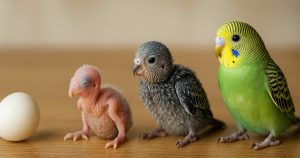
Quick answer: Budgie chicks usually develop from egg to fledgling over several weeks, but timing varies by parents, clutch conditions and individual health. Eggs typically hatch after an incubation period, chicks grow rapidly, and fledging happens only when the young bird is strong enough to leave the nest safely.
Breeding budgies needs preparation, space, nutrition, hygiene and experienced support. Do not handle eggs or chicks unnecessarily, and contact an avian vet or experienced breeder if parents abandon chicks, chicks look weak, crops are not filling, there is injury, severe size difference, chilling or any sudden decline.
Budgie Egg to Fledgling: Timeline Basics
Use timelines as a guide, not a guarantee. The safest approach is careful observation, minimal disturbance and prompt expert help when something looks wrong.
What is the Timeline for Budgie Development?
Understanding the timeline of budgie development is crucial for ensuring the health and well-being of these delightful birds. From the moment a budgie egg is laid to the time the chick becomes a fledgling ready to explore the world independently, these birds undergo significant changes. On average, a budgie takes about 45 days to progress from egg to fledgling. During this period, providing the right environment and care can influence their growth positively.
In a more detailed breakdown, the first stage involves the egg being laid, which requires a stable environment with consistent warmth and humidity. Following the incubation phase, the hatching stage presents the most delicate period where the chick emerges from the egg. As the chick grows into a nestling, it begins to develop feathers and open its eyes, gradually gaining awareness of its surroundings. Finally, the fledgling stage marks the transition to independence, characterized by the chick’s readiness to leave the nest and learn to fly.
How to Recognize Each Stage of a Budgie’s Growth
Each stage of a budgie’s growth is marked by distinct physical and behavioral changes. Recognizing these stages allows for timely interventions and appropriate care. Here’s a brief overview:
The Egg Stage
- Day 1-5: Eggs are laid and incubated. It’s crucial to maintain consistent warmth.
- Day 6-10: The embryo develops rapidly. Handle with care to avoid causing harm.
During the egg stage, the embryo undergoes significant development. Maintaining the right temperature and humidity is essential. Too much handling can disrupt the embryo’s development and potentially lead to its demise. It’s advised to handle eggs only when absolutely necessary and with clean, dry hands to avoid transferring oils or bacteria that could compromise the eggshell’s integrity.
The Hatchling Stage
- Day 11-15: Chicks begin to hatch. They appear naked and blind.
- Day 16-20: Down feathers start to appear, and chicks become slightly more active.
Once the chick hatches, it is entirely dependent on its parents or caretakers for warmth and nutrition. Hatchlings are vulnerable and should be monitored closely to ensure they are being fed adequately. The appearance of down feathers during this stage is a significant milestone as it provides the chick with its first layer of warmth and protection.
The Nestling Stage
- Day 21-30: Feathers develop rapidly, and chicks begin to see and explore.
- Day 31-35: Chicks start to show personality and interact more with their environment.
Nestlings become more active and curious about their surroundings. This is the time to introduce safe, gentle interactions to encourage socialization and mental stimulation. As their eyes open and feathers grow, they become more visually and physically adept, which is crucial for their transition to the fledgling stage.
The Fledgling Stage
- Day 36-45: Chicks are ready to leave the nest. They begin to fly and become more independent.
Fledglings start to test their wings and explore beyond the nest. This stage is critical for muscle development and learning to fly. Providing a safe space for them to practice flying is essential. In this phase, the diet should also be adjusted to cater to their increased energy needs as they become more active.
Why Monitoring Budgie Growth is Crucial
Monitoring the development of budgies is vital to ensure that they are growing healthily and to catch any potential health issues early. Regular checks can help identify signs of malnutrition, illness, or developmental delays. Providing the right diet and environment at each stage supports optimal growth and health.
For example, during the egg stage, consistent temperature and humidity levels are crucial. Any irregularities can lead to developmental issues. In the hatchling and nestling stages, regular weight checks can help ensure the chicks are gaining weight appropriately. Sudden changes in behavior or physical appearance should be addressed with a veterinarian to rule out any underlying health concerns.
Step-by-Step Guide: Caring for Budgie Eggs and Chicks
Proper care from the egg stage to fledgling is essential for healthy development. Here’s a guide to help you through each step:
What You Need:
- Clean nesting box
- Proper lighting and temperature control
- Suitable diet for breeding pairs
Step 1: Prepare the Nesting Environment (1 hour)
– Set up a nesting box with soft materials. Ensure a stable environment with minimal disturbances. Pro Tip: Use a dim light to simulate natural conditions.
Creating a suitable nesting environment is foundational for budgie breeding. The nesting box should be placed in a quiet area, away from direct sunlight and drafts. Materials like shredded paper or soft wood shavings can provide comfort and insulation for the eggs and chicks. A dim light can mimic the natural habitat, helping the parents feel secure and less stressed.
Step 2: Monitor Incubation (Daily)
– Check the temperature regularly. Avoid handling eggs unnecessarily. Warning: Sudden temperature changes can harm developing embryos.
Incubation is a delicate time. It’s essential to maintain a temperature between 98.6°F and 101.3°F (37°C to 38.5°C) and humidity around 50-60%. Any significant deviation can affect the embryo’s development. Using a reliable thermometer and hygrometer can help in maintaining the optimal conditions.
Step 3: Assist During Hatching (1-2 days)
– Watch for signs of hatching. Ensure chicks have access to warmth and are not disturbed. Important: Do not attempt to help chicks out of the egg unless necessary.
During hatching, patience is key. The process can take several hours, and while it may be tempting to assist, doing so can harm the chick. Only intervene if the chick appears to be struggling after several hours, and even then, it should be done with extreme care.
Step 4: Feed and Hydrate Chicks (Daily)
– Provide a nutrient-rich diet suitable for growing birds. Keep water clean and accessible. Mistake to Avoid: Overfeeding can lead to health issues.
The diet for chicks should be rich in proteins and fats, supporting rapid growth. Fresh water should be available at all times, but ensure that the container is shallow to prevent drowning. Overfeeding can cause digestive issues, so it’s important to monitor their intake and adjust as needed.
Step 5: Support Developing Chicks (Weekly)
– Encourage gentle interactions. Monitor feather growth and health. Pro Tip: Introduce soft toys to stimulate mental development.
As chicks grow, they become more interactive. Providing safe toys and gentle handling can encourage mental stimulation and socialization. Regular checks on feather growth can also help you spot any nutritional deficiencies or health issues early.
Budgie Growth Chart: Daily Milestones Explained
Understanding daily milestones helps track progress and identify potential issues early. Here’s a simplified chart highlighting key developments:
| Day | Milestone | Importance | Indicator |
|---|---|---|---|
| 1-5 | Egg incubation | Critical temperature phase | Stable warmth |
| 6-10 | Embryo development | Rapid growth | Fragile eggs |
| 11-15 | Hatching begins | First exposure to world | Naked chick |
| 16-20 | Feather development | Initial protection layer | Down feathers |
| 21-30 | Vision and mobility | Exploration begins | Active movements |
| 31-35 | Social interactions | Learning from environment | Personality shows |
| 36-45 | First flights | Independence stage | Leaving the nest |
Each milestone indicates a specific developmental phase. Monitoring these can help ensure that chicks are progressing as expected. If any deviations are noticed, such as delayed feather growth or lack of activity, it might be necessary to consult an avian specialist.
Common Mistakes Budgie Breeders Make
Understanding common pitfalls can help prevent mistakes that impact the health and growth of budgies.
Mistake #1: Overhandling Chicks (60% of Breeders)
The Problem: Handling chicks too much can cause stress and developmental delays.
The Fix: Limit handling to necessary checks and interactions.
Warning Signs: Chicks appear stressed or lethargic after handling.
Alternative: Observe from a distance and involve handling only when essential.
Handling can be stressful for young chicks, especially if done too frequently or improperly. Stress can manifest as lethargy or reluctance to interact. By limiting handling to essential checks and allowing the chicks to become familiar with human presence from a distance, stress can be minimized.
Mistake #2: Inadequate Diet (45% of Breeders)
The Problem: Poor nutrition can lead to growth issues.
The Fix: Provide a balanced diet rich in proteins and vitamins.
Warning Signs: Slow growth or feather abnormalities.
Alternative: Consult a vet for dietary recommendations.
A well-balanced diet is crucial for healthy development. Lack of essential nutrients can lead to stunted growth and poor feather quality. Consulting a veterinarian can provide tailored dietary plans to ensure the chicks receive all necessary nutrients.
Mistake #3: Ignoring Environmental Factors (55% of Breeders)
The Problem: Inconsistent lighting and temperature affect growth.
The Fix: Maintain a stable environment with regulated conditions.
Warning Signs: Chicks are inactive or exhibit abnormal behavior.
Alternative: Use automated systems to control environmental factors.
Environmental consistency is vital. Automated systems for temperature and lighting can help maintain stable conditions, reducing the risk of stress and developmental issues. Observing chick behavior can provide insights into their comfort levels, with inactivity often indicating a need for environmental adjustments.
Expert Tips from Avian Specialists
Expert insights can guide breeders through complex aspects of budgie care.
Dr. Lisa Thompson, Avian Veterinarian (15 Years Experience): “Ensuring a stable environment is key. Consistency in temperature and light can significantly affect the health of developing chicks.”
According to recent studies, maintaining a varied diet enhances the immune system of young budgies, reducing illness rates.
Avian specialists emphasize the importance of environmental and dietary consistency. Regular consultation with an experienced vet can provide invaluable guidance tailored to the specific needs of your budgies, helping to ensure their healthy development.
Frequently Asked Questions
Is it safe to handle budgie eggs?
NO. Handling budgie eggs can endanger the embryo. Brief reason: Oils and pressure from hands can damage the eggshell. However, if necessary, use clean hands and minimal contact.
How often should I check on the nesting box?
PARTIALLY. Daily checks are advisable but avoid excessive disturbance. Brief reason: Ensure safety and proper conditions without causing stress.
What if my budgie chick isn’t growing feathers?
IT DEPENDS. Lack of feather growth can indicate nutritional issues or genetic problems. Action: Consult a vet for a detailed assessment.
How can I encourage my budgie chick to start flying?
YES. Provide a safe, open environment and encourage practice. Brief reason: Flight practice aids muscle development. Tip: Use gentle encouragement and rewards.
Can budgie chicks be raised without the parents?
POSSIBLY. Hand-rearing is possible but requires significant effort and expertise. Consideration: It involves frequent feeding and careful temperature regulation. Recommendation: Consult with an avian specialist before attempting.
Key Takeaways: Budgie Growth Checklist
– Monitor daily: Check temperature and nesting conditions regularly.
– Balanced diet: Provide nutrient-rich food suitable for each growth stage.
– Limited handling: Avoid excessive handling to reduce stress.
– Encourage exploration: Support natural development and independence.
Related Articles You’ll Love
– Budgie Care: 10 Essential Tips for Beginners (2025 Guide)
– Parrot Nutrition: 7 Ways to Improve Your Bird’s Diet
– Understanding Bird Behavior: A Complete Guide
Expert Disclaimer
This guide is intended for informational purposes only. Always consult with an avian veterinarian for specific advice related to your birds.
About This Guide
This guide is based on expert reviews and the latest research in avian care. Last updated in November 2025, it includes practical advice for budgie breeders. For more information, contact our team of avian specialists.
Recommended Products
- Living World – Millet Spray for Birds, 3.5 Oz – Premium Treat for Budgies, Canaries, Finches, Cockatiels and Other Pet Birds
- Wild Harvest Daily Blend Nutrition Diet Parakeet, Canary And Finch, Bird Food, 5 Pounds
- Kaytee Fiesta Parakeet Food, Nutritious and Fun Blend, Supports Skin, Feather, Digestion, Brain and Heart Health, 2 pounds
- Penn-Plax Bird-Life 2-in-1 E-Cuttlebone & Mineral Block – Banana & Berry Flavor – Great for All Birds – 2 Pack
- Hari Mineral Block for Birds with Dried Vegetables, Calcium Supplement Bird Treat
- Swing Hanging Standing Chewing Toy Hammock Climbing Ladder, Cage Colorful Toys Suitable for Budgerigar, Parakeet, Conure, Cockatiel, Mynah, Love Birds, Finches
- Bird Perches Cage Toys Parrot Wooden Platform Play Gyms Exercise Stands with Acrylic Wood Swing Ferris Wheel Chewing for Animals Green Cheeks, Baby Lovebird, Chinchilla, Hamster Budgie
- Bird Perch Bird Toys Parakeet Toys,Bird Cage Accessories Wooden Chew Toys Perch Stand for Parrot Conure Cockatiel Lovebird Parrotlet Budgie Finches and Other Small to Medium Sized Birds