
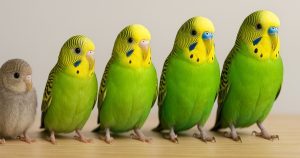
Quick answer: Budgies move through clear life stages: chick, fledgling, juvenile, young adult, mature adult and senior. Age clues include forehead bars, iris rings, cere colour, behaviour, moulting and activity level, but exact age is hardest to judge once a budgie is fully mature.
This guide explains the main budgie age stages, what changes to expect, and which signs help estimate age safely.
Table of Contents
Quick Answer: How Budgies Age
What Are the Stages of Budgie Growth?
Budgie growth stages are both fascinating and intricate, beginning from the moment they hatch. Understanding these stages is crucial for providing the best care possible for your feathered companion. From their vulnerable infancy to their lively senior years, each stage demands specific attention and care. This comprehensive guide delves into these stages, examining behavioral changes and offering practical care tips.
Stage 1: Budgie Hatchlings (0-3 Weeks)
Physical Development: Hatchlings are initially blind and heavily reliant on their parents. They are covered with sparse down feathers.
During this initial phase of life, the primary focus is on survival and dependency. Hatchlings are incredibly delicate, weighing only a few grams. Their eyes remain shut, and their movements are largely confined to instinctive reactions to warmth and feeding prompts. The thin layer of down feathers provides minimal insulation, underscoring the crucial role of parent budgies in offering warmth and protection.
Behavioral Changes: At this stage, they depend entirely on parent feeding and warmth, with no significant environmental interactions.
The hatchlings’ dependency on their parents is total at this stage, relying on them for food, warmth, and protection. Their cries or chirps serve only as signals of hunger or discomfort. Parent budgies are diligent, feeding their young a regurgitated, nutrient-rich mixture multiple times daily. This period is pivotal for bonding between chicks and their parents, amidst rapid growth and development.
Care Tips: Ensure the nesting area is safe and parents are well-nourished. Intervene only if the parents neglect the chicks.
Maintain the nesting box in a quiet, secure location away from disturbances and predators. Provide the parent budgies with high-quality food, rich in calcium and protein, to support their chicks’ nutritional needs. Avoid handling the hatchlings unless absolutely necessary, as disturbance can stress both the parents and the chicks.
Stage 2: Juvenile Budgies (1-3 Months)
Physical Development: Budgies begin to grow primary feathers and start resembling adult birds.
Juvenile budgies undergo substantial transformations during this period. Their primary feathers develop rapidly, preparing them for their initial flights. The transition from downy fuzz to sleek feathers marks a critical milestone, as they begin to resemble smaller versions of adult budgies.
Behavioral Changes: They start exploring their surroundings and learning basic flying skills.
Juvenile budgies become increasingly active and curious about their environment. They practice flapping their wings and make initial clumsy attempts at flight. This stage is filled with exploration and learning, as they gain independence from their parents. Socialization with siblings and interaction with humans are crucial for their behavioral development.
Care Tips: Provide a safe space for initial flights. Ensure a nutrient-rich diet to support rapid growth.
Create a secure environment where juvenile budgies can practice flying without injury risk. Introduce perches at varying heights to encourage climbing and wing exercises. Offer a balanced diet that includes seeds, fruits, and vegetables to meet their nutritional needs. Supervised playtime outside the cage helps them develop confidence and agility.
Stage 3: Adolescent Budgies (3-6 Months)
Physical Development: Full feathering is achieved, and sexual dimorphism becomes apparent.
Adolescent budgies reach full feathering, showcasing vibrant plumage and distinct features. At this stage, sexual dimorphism, or visible differences between males and females, may emerge. This includes changes in cere color (the fleshy area above the beak) and behavior.
Behavioral Changes: Adolescents are curious and energetic, often testing boundaries.
Adolescent budgies exhibit heightened curiosity and energy levels. They explore their surroundings with enthusiasm and test boundaries, both with peers and human caretakers. This period is crucial for establishing social hierarchies and learning social cues from interactions with other budgies.
Care Tips: Introduce toys to engage their curiosity. Start basic training for socialization.
Provide a variety of toys, including swings, bells, and puzzles, to keep adolescent budgies mentally stimulated. Engage them in basic training activities, such as step-up commands and recall exercises, to enhance their social skills. Regular handling and positive reinforcement build trust and strengthen the bond between budgie and owner.
Stage 4: Young Adult Budgies (6 Months – 1 Year)
By six months to a year, budgies grow to their full size and achieve sexual maturity. This stage marks the transition from adolescence to adulthood, as they settle into their physical form and behaviors become more stable.
Behavioral Changes: They become more independent and may show interest in mating.
Young adult budgies exhibit increased independence and confidence. They may display mating behaviors, such as courtship dances and vocalizations, as they explore their reproductive instincts. This life period is characterized by active social engagement and the establishment of pair bonds.
Care Tips: Provide opportunities for social interaction. Introduce a balanced diet to maintain health.
Foster social interaction by allowing young adult budgies to spend time with other birds or family members. Ensure their diet remains balanced, with a mix of seeds, pellets, and fresh produce to support overall health. Regular veterinary check-ups help monitor their development and catch potential health issues early.
Stage 5: Adult Budgies (1-3 Years)
Physical Development: Budgies are at their physical peak.
During the adult stage, budgies are at the peak of their physical capabilities. Their plumage is vibrant, and they exhibit excellent flying skills. This stage is marked by optimal health and vitality, provided they receive proper care and nutrition.
Behavioral Changes: They exhibit stable personalities and are highly social.
Adult budgies develop stable personalities and are often highly sociable. They engage in playful interactions, both with humans and other birds, and exhibit a strong desire for companionship. This stability makes them reliable companions and engaging pets.
Care Tips: Regular vet check-ups and mental stimulation are essential for well-being.
To maintain the health and well-being of adult budgies, schedule regular veterinary check-ups to monitor their condition and address any emerging issues. Provide mental stimulation through interactive toys and activities to keep their minds sharp and engaged. Continued social interaction is key to preventing boredom and loneliness.
Stage 6: Mature Budgies (3-6 Years)
Physical Development: Slight signs of aging may appear, like subtle feather dulling.
As budgies enter the mature stage, they may show subtle signs of aging. This can include slight dulling of feathers and a decrease in energy levels. However, with proper care, mature budgies can continue to lead active and fulfilling lives.
Behavioral Changes: Budgies may become calmer but can still be playful.
Mature budgies often exhibit a calmer demeanor, yet they retain their playful nature. They may prefer quieter activities and longer periods of rest but can still enjoy interactive play and socialization. This stage is about balance, blending active engagement with relaxation.
Care Tips: Adjust diet to include joint-supporting nutrients. Encourage gentle play.
Modify the diet of mature budgies to include nutrients that support joint health and vitality, such as omega-3 fatty acids and antioxidants. Encourage gentle play through activities that promote movement and mental stimulation, while respecting their changing energy levels.
Stage 7: Senior Budgies (6+ Years)
In their senior years, budgies may experience more noticeable aging signs. These can include feather loss, reduced activity, and changes in weight. Senior budgies require attentive care to ensure their comfort and quality of life.
Behavioral Changes: They may become less active and more prone to health issues.
Senior budgies often become less active and may prefer resting to vigorous activity. They are more susceptible to health issues, such as arthritis or respiratory problems, and may show a preference for familiar routines and environments.
Care Tips: Provide easy access to food and water. Consult a vet for age-related health plans.
Ensure food and water are easily accessible to accommodate their reduced mobility. Regular veterinary consultations help address age-related health concerns and adjust care plans accordingly. Create a comfortable and secure environment to support their well-being in their golden years.
Common Mistakes Budgie Owners Make (AVOID THESE!)
Mistake #1: Ignoring Dietary Needs (50% of Owners)
The Problem: Many owners fail to adjust diets as budgies age, leading to nutritional deficiencies.
The Fix: Research and provide age-appropriate diets rich in essential nutrients.
Warning Signs: Weight changes, feather quality decline.
Alternative: Consult a vet for diet plans.
Many budgie owners overlook the importance of adjusting dietary needs as their pets age. A diet that was suitable for a juvenile budgie may not meet the nutritional requirements of a senior bird. This oversight can lead to health problems such as obesity, malnutrition, or deficiency-related issues. Consulting a veterinarian for tailored diet plans ensures that budgies receive the nutrients they need at each life stage.
Mistake #2: Lack of Social Interaction (40% of Owners)
The Problem: Budgies are social creatures and need interaction.
The Fix: Spend daily time interacting with your budgie.
Warning Signs: Excessive squawking, feather plucking.
Alternative: Consider a companion budgie if feasible.
Budgies are inherently social animals that crave interaction and companionship. A lack of social engagement can result in behavioral issues such as excessive squawking, feather plucking, or withdrawal. To prevent loneliness and boredom, owners should dedicate time each day to interact with their budgies through play, training, or simple companionship. Introducing a companion budgie can also help meet social needs if feasible.
Mistake #3: Neglecting Environmental Enrichment
The Problem: A static environment can lead to boredom and stress.
The Fix: Regularly update toys and cage setup.
Warning Signs: Destructive behavior, lethargy.
Alternative: Rotate toys and provide new challenges.
A monotonous environment can adversely affect a budgie’s mental health, leading to stress and destructive behaviors. Regularly rotating toys and rearranging cage setups provide new challenges and stimulation, keeping budgies engaged and entertained. Incorporating natural elements like branches and foraging toys can further enrich their living space.
Step-by-Step Guide: How to Care for Budgies at Each Life Stage
What you need: Nutritional foods, toys, space for flying, vet contact.
Step 1: Hatchling Care (0-3 Weeks)
– Ensure parents are feeding well. (Daily)
– Maintain a warm environment. (24/7)
– Avoid handling unless necessary. (Daily)
During the hatchling stage, focus on supporting the parent budgies in their role. Observe feeding routines to ensure the chicks are receiving adequate nutrition, and make adjustments if necessary. Keep the nesting area warm and free from disturbances to provide a secure environment for growth.
Step 2: Juvenile Care (1-3 Months)
– Introduce safe flying spaces. (Weekly)
– Provide nutrient-rich foods. (Daily)
– Begin gentle socialization. (Daily)
As juveniles grow, encourage exploration by creating safe flying spaces. Introduce a variety of nutrient-rich foods to support their rapid development. Begin socialization through gentle handling and interaction to build trust and confidence.
Step 3: Adolescent Care (3-6 Months)
– Offer varied toys for mental stimulation. (Weekly)
– Practice basic training commands. (Daily)
– Monitor health with regular vet visits. (Monthly)
Adolescent budgies thrive with mental stimulation and learning opportunities. Provide a diverse selection of toys and engage them in basic training exercises to enhance cognitive and social skills. Regular veterinary check-ups help ensure their health and development are on track.
Step 4: Adult Care (6 Months – 3 Years)
– Ensure regular social interaction. (Daily)
– Maintain a balanced diet. (Daily)
– Schedule annual health checks. (Yearly)
Adult budgies require consistent social interaction to maintain their well-being. Offer a balanced diet that meets their nutritional needs, and schedule annual health checks to monitor their condition and address any emerging concerns.
Step 5: Senior Care (6+ Years)
– Adjust diet for joint support. (Daily)
– Simplify the environment for ease of access. (Weekly)
– Increase vet visits as needed. (Biannually)
For senior budgies, adapt care practices to accommodate their changing needs. Modify their diet to include joint-supporting nutrients, and simplify their environment to make it easier to navigate. Increase veterinary visits to catch and manage age-related health issues early.
Budgie Behavioral Changes: What to Expect
- Juveniles: High energy, exploratory.
- Adolescents: Testing boundaries, learning social cues.
- Adults: Socially stable, interactive.
- Seniors: Less active, may require more rest.
Behavioral changes in budgies are a natural part of their aging process. Juveniles are characterized by their boundless energy and curiosity, exploring their environment with enthusiasm. Adolescents test boundaries and learn important social cues through interactions with peers and humans. Adults are socially stable, enjoying interactive play and companionship. Seniors, on the other hand, may require more rest and a calm environment, as they become less active and more prone to health issues.
Expert Tips for Budgie Care
- Pro Tip: Rotate toys weekly to keep your budgie engaged.
- Pro Tip: Use natural perches to support foot health.
- Pro Tip: Ensure fresh water is always available to prevent dehydration.
Rotating toys weekly prevents boredom and keeps budgies mentally stimulated. Natural perches, such as those made from untreated wood, promote foot health by providing varied textures and surfaces for gripping. Fresh water should always be readily available to prevent dehydration, especially in warmer climates or dry environments.
Frequently Asked Questions (Expert Answers)
Is it normal for a budgie to lose feathers as it ages?
Yes, mild feather loss can be normal, but excessive loss should be checked by a vet.
Feather loss can occur as budgies age, but excessive or sudden loss may indicate underlying health issues. It’s important to monitor feather condition and consult a veterinarian if you notice significant changes.
How often should I take my budgie to the vet?
Adolescent and adult budgies should see a vet annually, while seniors may require biannual visits.
Regular veterinary visits are crucial for maintaining a budgie’s health. While annual check-ups are sufficient for younger birds, seniors may benefit from more frequent visits to address age-related concerns.
What is the best diet for senior budgies?
A diet rich in vitamins, especially A, and joint-supporting nutrients like omega-3.
Senior budgies require a diet tailored to their aging needs. Incorporate foods rich in vitamins and joint-supporting nutrients to promote overall health and mobility.
Can budgies get bored?
Yes, they need mental stimulation through toys and interaction to prevent boredom.
Budgies are intelligent creatures that thrive on mental stimulation. Providing a variety of toys and engaging them in interactive play helps prevent boredom and associated behavioral issues.
Should I get a companion for my budgie?
If your budgie is often alone, a companion can provide social interaction and reduce loneliness.
A companion budgie can provide valuable social interaction, reducing loneliness and promoting mental well-being. Consider factors such as space, time, and resources before introducing a new bird.
Do budgies need a varied diet?
Yes, budgies thrive on a varied diet that includes seeds, pellets, fruits, and vegetables.
A varied diet ensures budgies receive the nutrients they need for optimal health. Incorporating a mix of seeds, pellets, fruits, and vegetables provides essential vitamins and minerals.
How can I tell if my budgie is stressed?
Signs of stress in budgies include feather plucking, changes in vocalizations, and altered eating habits.
Recognizing stress in budgies can help address issues before they become more serious. If your budgie exhibits signs of stress, evaluate their environment and routine for possible stressors.
What are some safe cleaning practices for budgie cages?
Use bird-safe disinfectants and avoid harsh chemicals when cleaning cages.
Maintaining a clean cage is essential for your budgie’s health. Use bird-safe cleaning products and regularly change cage liners to create a healthy environment.
Key Takeaways: Budgie Care Checklist
- Checkmark Provide age-appropriate diets.
- Checkmark Ensure regular social interaction.
- Checkmark Schedule routine vet visits.
- Checkmark Rotate toys and enrich the environment.
- Checkmark Adapt care strategies as your budgie ages.
To provide the best care for your budgie, focus on age-specific dietary needs, regular social interaction, and consistent veterinary care. Enrich their environment with rotating toys and activities, and adapt your care strategies to meet the changing needs of your budgie as they age.
Related Articles You’ll Love
- Budgie Behavior: Understanding Their Language
- How to Choose the Right Toys for Your Budgie
- The Importance of Diet in Budgie Longevity
- Creating a Safe and Stimulating Environment for Budgies
Medical/Expert Disclaimer
About This Guide
Recommended Products
- Living World – Millet Spray for Birds, 3.5 Oz – Premium Treat for Budgies, Canaries, Finches, Cockatiels and Other Pet Birds
- Wild Harvest Daily Blend Nutrition Diet Parakeet, Canary And Finch, Bird Food, 5 Pounds
- Kaytee Fiesta Parakeet Food, Nutritious and Fun Blend, Supports Skin, Feather, Digestion, Brain and Heart Health, 2 pounds
- Penn-Plax Bird-Life 2-in-1 E-Cuttlebone & Mineral Block – Banana & Berry Flavor – Great for All Birds – 2 Pack
- Hari Mineral Block for Birds with Dried Vegetables, Calcium Supplement Bird Treat
- Swing Hanging Standing Chewing Toy Hammock Climbing Ladder, Cage Colorful Toys Suitable for Budgerigar, Parakeet, Conure, Cockatiel, Mynah, Love Birds, Finches
- Bird Perches Cage Toys Parrot Wooden Platform Play Gyms Exercise Stands with Acrylic Wood Swing Ferris Wheel Chewing for Animals Green Cheeks, Baby Lovebird, Chinchilla, Hamster Budgie
- Bird Perch Bird Toys Parakeet Toys,Bird Cage Accessories Wooden Chew Toys Perch Stand for Parrot Conure Cockatiel Lovebird Parrotlet Budgie Finches and Other Small to Medium Sized Birds