
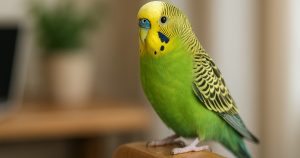
Quick answer: Many budgies live around 5 to 10 years, and some live longer with excellent care, genetics, diet, exercise, hygiene and prompt veterinary attention. Lifespan varies, so focus on daily care habits rather than a single guaranteed number.
This guide explains the main factors that affect budgie lifespan and what owners can do to support a healthier life.
Budgie Life-Stage Care Check
Choose your budgie’s age and the area you want to improve. You will get a focused next step, not a lifespan promise.
This check is educational and cannot estimate an individual bird’s lifespan or diagnose illness. Prompt avian-vet care matters when a budgie seems unwell.
How Long Do Budgies Live? Average Lifespan, Key Factors and Care Guide (2026)
According to PetMD, pet budgies typically live 7–15 years in captivity. Birdfact puts the more typical range at 6–12 years, noting that how long a budgie lives depends largely on diet, environment, and access to veterinary care — factors that are mostly within your control.
I’ve kept budgies for over a decade, and the difference good and bad care makes to how long they live is striking. This guide covers the factors that actually matter, with sources from avian vets and published research, and specific product recommendations where they’re genuinely useful.
Budgie lifespan: what the sources say
Different sources give slightly different ranges, which reflects genuine variation depending on care quality, budgie type, and breeding background:
| Source | Typical lifespan | Notes |
|---|---|---|
| PetMD | 7–15 years | In captivity with proper care |
| Birdfact | 6–12 years | More typical real-world range |
| Journal of Avian Medicine and Surgery | Median 5.2 years | Reflects average across all keeping conditions, including poor ones |
| Wild budgerigars | 4–6 years | Predators, climate, disease |
| English (show) budgies | 6–9 years | More intensive selective breeding |
| World record (Charlie, Guinness) | 29 years 2 months | Confirmed record; exceptional outlier |
Sources: PetMD, Birdfact, Journal of Avian Medicine and Surgery (median lifespan data)
The low median figure from the Journal of Avian Medicine and Surgery reflects the general pet-keeping population, where many birds receive suboptimal care. Birds kept well regularly reach the upper end of these ranges. In many cases, the difference between a shorter-lived and longer-lived pet budgie comes down to management factors such as diet, housing, and access to veterinary care.
Factor 1: Diet
The Association of Avian Veterinarians and most avian nutrition guides recommend that a balanced diet — built around a quality pellet base, supplemented with fresh vegetables — is far preferable to a seed-heavy diet. Seeds are energy-dense but low in key vitamins, particularly vitamin A, and high in fat.
A seed-only diet is one of the most commonly cited factors in avian vet consultations for budgies presenting with liver and nutritional problems. Seeds are not toxic — they’re a natural food for budgerigars — but as a sole diet they lack the full range of nutrients birds need long-term. The problems that develop gradually include:
- Nutritional deficiencies, particularly vitamin A, which maintains healthy respiratory tissue, skin, and immune function
- Liver disease related to a high-fat diet combined with limited exercise — a common finding on avian vet examinations
- Weight issues from an energy-rich but nutritionally narrow diet
- ~70% — quality pellets or a pellet-enriched seed mix as the foundation
- ~20% — fresh vegetables: leafy greens, broccoli, carrot, courgette, sweet potato
- ~10% — seeds as variety and treats, not the staple
Transitioning from seeds: Budgies can be slow to accept new foods. Mix pellets into seeds gradually over several weeks, increasing the pellet proportion slowly. A bird that refuses food entirely will lose weight quickly — go at their pace.
Recommended pellets — UK, Australia & US
One of the best-known and most frequently recommended organic pellets for small birds. Developed in consultation with avian vets, certified organic, and widely used by bird keepers and avian professionals making dietary improvements. A common starting point for owners moving away from a seed-heavy diet.
The higher-protein, higher-fat version of the above, designed for birds with increased nutritional needs. Commonly used during the initial diet transition period (first 6 months), moulting, illness recovery, or breeding. Many avian vets recommend starting on this formula when converting a seed-fed bird.
A popular European seed mix that includes VAM (vitamin, amino acid, mineral) pellets. Not as complete as a pure pellet diet, but considerably better than plain seed mixes and a good stepping stone for birds that resist full conversion. Widely available in UK pet shops.
Factor 2: Veterinary care
Budgies are prey animals, which means they instinctively mask signs of illness for as long as possible. By the time a budgie looks visibly unwell, problems are often already well established. This is why avian vets consistently recommend annual wellness exams — not because anything is necessarily wrong, but because early detection makes a significant difference to outcomes.
When looking for a vet, seek out one with specific avian experience or an exotic animal practice rather than a standard small-animal vet. Many areas have avian specialist vets, and it’s worth finding one before you need them urgently.
- Fluffed feathers for more than a few hours — a common early illness signal
- Tail bobbing when breathing — often indicates respiratory effort
- Sitting on the cage floor — one of the more serious warning signs
- Changes in droppings lasting more than 24 hours
- Discharge from nostrils or eyes
- Noticeable weight loss (weigh weekly using kitchen scales)
- Clicking, wheezing, or laboured breathing
Factor 3: Cage size and environment
Wild budgerigars are one of the most nomadic bird species in Australia — they travel in large flocks across vast distances in search of food and water. In captivity, adequate space and environmental stimulation are important for their physical and psychological wellbeing.
As a practical minimum, a single budgie’s cage should be large enough for several unobstructed wing-flaps between perches — generally at least 60cm long. For a pair, wider is better. Length is more important than height, as budgies tend to fly horizontally.
Cage products worth considering
If you currently have a small cage, upgrading to a proper flight cage is one of the more meaningful improvements you can make. Look for bar spacing around half an inch and a cage wide enough for your bird to actually fly between perches rather than just hop. The Prevue Hendryx range is well-regarded in the UK budgie-keeping community for the value it offers.
Standard cage perches are usually single-diameter dowel rods, which means a bird’s foot stays in the same position all day. Natural wood perches of varying widths — apple, willow, or manzanita are all suitable — give feet a genuine workout and help prevent the foot problems that commonly appear in older budgies kept on uniform perches. Replacing the included dowels takes about ten minutes.
Budgies in the wild spend much of their day foraging and exploring. A rotating selection of foraging toys, puzzle feeders, and shredding toys keeps captive birds mentally engaged. The key is rotation — swapping toys every few days maintains novelty. A set of 6 gives you enough variety to keep things interesting over two to three weeks.
Factor 4: Sleep
Budgies are crepuscular in their activity patterns — most active at dawn and dusk, with a long rest period overnight. Most avian care guides recommend 10–12 hours of dark, quiet sleep each night. In a busy household with lights and TV, a breathable cage cover can help create a more consistent sleep routine.
A straightforward solution for homes where lights or noise make it hard for a budgie to settle. Cotton is preferable to polyester for airflow. Measure your cage before ordering — most standard cages take a cover around 60×40×50cm. Not essential in quiet households, but genuinely useful in busy ones.
Factor 5: Social contact
Budgerigars are highly social birds that live in large flocks in the wild. Bird Vet Melbourne, an avian specialist practice, notes that budgies are highly social and require regular interaction with their human or bird flock. In practice, many avian vets observe that paired birds tend to display more natural behaviours — allopreening, mutual feeding, and settled sleep — compared with singly-housed birds.
This doesn’t mean a single budgie can’t thrive — many do, particularly with significant daily human interaction. But if your lifestyle means the bird spends long periods alone, a companion budgie is worth considering. Introduce carefully over several weeks using a quarantine period first.
Factor 6: Genetics and breeding
Genetics plays a role in lifespan potential, though the research here is less clear-cut than for diet and environment. What is well-established is the difference between budgie types:
- Standard (American/Australian) budgerigars — descended from wild stock, typically live 8–12 years with good care according to Birdfact
- English (show) budgerigars — selectively bred for size and feathering, typically live 6–9 years; the intensive selective breeding has been associated with weaker constitutions
Beyond type, buying from a responsible breeder who prioritises health — rather than purely colour or conformation — is generally recommended. A bird from a reputable source with known parentage and health history is likely to have better prospects than a pet-shop bird of unknown origin.
Factor 7: Household toxins — particularly PTFE
This is one of the most important practical points in this guide, and it’s one that many new budgie owners aren’t aware of until something goes wrong.
According to VCA Animal Hospitals and the Merck Veterinary Manual, overheated PTFE (polytetrafluoroethylene) — the non-stick coating used in most cookware, irons, some heating elements, and other household products — releases toxic gases when heated beyond around 280°C. These gases are colourless and odourless.
Cornell University College of Veterinary Medicine notes that in one study on budgerigars, exposure for nine minutes or longer resulted in death in 97% of the birds. The Pet Poison Helpline lists PTFE toxicosis as one of the most common airborne poisonings seen in pet birds. Birds do not need to be in the same room as the cookware for poisoning to occur.
- Non-stick cookware — most commonly implicated; risk rises sharply when pans overheat or run dry
- Irons and ironing board covers — many are PTFE-coated
- Self-cleaning ovens — the high-heat cycle can generate toxic fumes; many budgie owners remove birds from the home during self-clean cycles
- Certain heat lamps — some heat bulb coatings contain PTFE
- Aerosol sprays and scented candles — separate hazard; combustion and aerosol particles are also problematic for avian respiratory systems
The most reliable prevention is removing PTFE-coated cookware from your home and replacing it with stainless steel or cast iron alternatives. If that’s not possible, ensure excellent ventilation whenever cooking.
Used by avian vets and professional breeders as a bird-safe disinfectant for cages and equipment. Effective against bacteria, fungi, and viruses when diluted correctly (1:250 for surfaces), and breaks down into safe compounds after use. Worth keeping if you want a cleaner you don’t need to worry about. Most household cleaners — Zoflora, Dettol, bleach — are not safe to use around birds.
Budgie lifespan vs other pet birds
| Bird | Typical lifespan | Commitment |
|---|---|---|
| Budgie (budgerigar) | 6–15 years (well cared for) | Medium — 8–15 year relationship |
| Cockatiel | 15–20 years | Medium-high |
| Lovebird | 10–15 years | Medium |
| Conure | 15–25 years | High |
| African Grey | 40–60 years | Lifetime commitment |
| Canary | 5–10 years | Low-medium |
| Finch | 4–7 years | Low-medium |
Practical care summary
- Move away from a seed-only diet — introduce a quality pellet base alongside fresh vegetables
- Establish care with an avian vet and book annual wellness checks, not just sick visits
- Use a cage large enough for genuine flight between perches — at least 60cm long
- Replace standard dowel perches with natural wood perches of varying diameters
- Ensure 10–12 hours of dark, quiet sleep — a breathable cover helps in busy homes
- Remove or replace PTFE non-stick cookware from your kitchen
- Provide daily social interaction or consider a companion bird if your schedule is busy
Frequently asked questions
Related guides on BudgieHub
Sources referenced in this guide
- PetMD — How Long Do Parakeets Live?
- Birdfact — How Long Do Budgies Live?
- Journal of Avian Medicine and Surgery — median captive budgerigar lifespan 5.2 years (cited in multiple avian care sources)
- VCA Animal Hospitals — Teflon (PTFE) Poisoning in Birds
- Cornell University College of Veterinary Medicine — PTFE Toxicosis
- Environmental Working Group — Canaries in the Kitchen (PTFE research review)
- PubMed Central — PTFE Toxicosis in Recently Hatched Chickens (Shuster et al., 2012)
- Bird Vet Melbourne — avian specialist care guidance for budgerigars
About this guide: Written by YOUR NAME, budgie owner and publisher at BudgieHub. Last updated March 2026. Next scheduled review September 2026. This guide is for general information only and does not replace advice from a qualified avian veterinarian.